Once street allies against Awami League for decades, the ruling BNP and opposition Jamaat-e-Islami are now heading towards confrontation over reforms, the sidelining of opposition voices and the politicisation of state institutions.
The growing divide has pushed the Jamaat-led 11-party alliance into a new phase of street mobilisation, with plans for a grand rally in Dhaka on 14 November after its ongoing long march.
At the rally, the alliance is considering giving the government a time-bound ultimatum over its demands and preparing for tougher programmes if those demands are not addressed, according to senior alliance leaders.
Jamaat’s street programmes, launched just months after the formation of the BNP government, have created unease within the ruling party. While Jamaat has criticised BNP over what it says is a failure to implement July National Charter and meet public expectations.
If Jamaat continues its street campaign, BNP and its affiliated organisations are also preparing to remain active with counter-programmes. Political analysts warn that prolonged confrontation between the two sides could increase tensions.
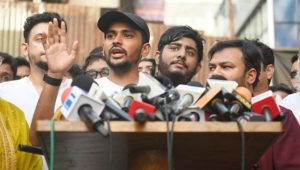
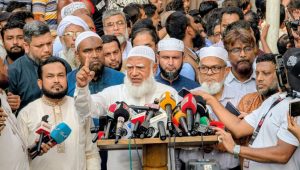
Jamaat Assistant Secretary General Hamidur Rahman Azad told TIMES, “By moving away from the reform process, BNP has betrayed the July movement and the party will soon face the consequences. Programmes will be announced to press for reform implementation, stop ignoring the opposition in all sectors and meet public demands.”
BNP Standing Committee member and reserved-seat MP Selima Rahman, however, described Jamaat’s statements and its recent long march as “reckless”.
Meanwhile, the opposition has criticised the proposal for a fresh referendum announced by Home Minister Salahuddin Ahmed after Sunday’s meeting of the Special Committee on Constitutional Amendments, describing it as ridiculous.
Pressure campaign planned
The Jamaat-led alliance is preparing to intensify pressure on the government through its 14 November rally.

If BNP does not take steps to implement the July Charter, the alliance may issue an ultimatum of one week or a similar timeframe before announcing tougher programmes.
The alliance has already organised long marches in divisional cities since September, demanding implementation of the July Charter and reductions in fuel, gas and electricity prices.
After programmes in Khulna on 10 October and Sylhet on 24 October, the alliance has planned the Dhaka rally for 14 November. However, discussions are underway within the alliance to postpone it by one or two weeks to increase participation.
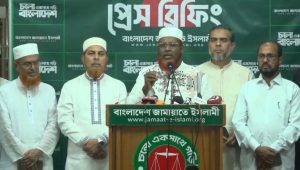
Jamaat Assistant Secretary General and head of the party’s media department Ahsanul Mahboob Zubair told TIMES, “We are not on the streets for party demands; we are raising public demands.”
“In the future, we will criticise every injustice of the government and, if necessary, respond appropriately on the streets. We want to organise the grand rally on a large scale. The next programmes will come from there,” he said.
Several alliance partners have also indicated support for the upcoming programmes.
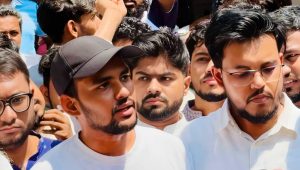
National Citizen Party (NCP) Joint Convener Sarwar Tusher said, “The opposition will not sit idle. BNP will have to face the consequences of breaking its promises. We are already in programmes. In the future, NCP will also remain on the streets with its own programmes alongside alliance programmes.”




BNP changes stance on Jamaat
Although BNP is not giving much importance to Jamaat’s threats of agitation, it is preparing to remain active on the streets.
The ruling party no longer views its former ally as a political partner, while relations between the leadership of the two parties have deteriorated.
BNP chairman’s Adviser Syed Moazzem Hossain Alal told TIMES, “At different times, Jamaat had alliances or understandings with Awami League, while it supported BNP in forming the government in 1991.”
“In 2001, two Jamaat leaders became ministers in the BNP-led alliance government. However, during the 1/11 period, Jamaat refused to take responsibility for the corruption of the BNP government. To understand whose friend Jamaat is, one needs to examine its long political history,” he added.
Alal said Jamaat’s movement did not warrant significant attention, but BNP would remain cautious on the streets to counter the activities of what he described as the fascist group and Jamaat.
BNP Standing Committee member Selima Rahman said, “From the beginning, Jamaat has been moving in a fascist manner. While BNP wants national unity to move forward a country with a fragile economy, Jamaat does not want that.”
“That is why the party did not nominate anyone to the constitutional reform committee. Even then, BNP wants national unity on issues concerning the country,” she added.
BNP-affiliated organisations have recently organised programmes protesting against what they describe as attempts to destabilise the country. At these events, BNP leaders have targeted Jamaat more frequently than Awami League.
Where is politics heading?
The changing equation between BNP and Jamaat could reshape the broader political landscape. If the two sides remain locked in a cycle of confrontation and counter-programmes, managing the situation could become a challenge for the government.
The growing bitterness has also raised questions over whether the dispute is rooted in differences over reform implementation or reflects a broader struggle over future political influence.
Abdul Latif Masum, a retired professor of the Department of Government and Politics at Jahangirnagar University and a political analyst, said a prolonged BNP-Jamaat confrontation could create space for Awami League, which faces ban on its political activities, to regain political ground.
He warned that this could contribute to political instability, while the government may face the dual challenge of dealing with AL activities and managing internal tensions.
Reform dispute behind divide
The disagreement between BNP and Jamaat became more visible after the election over how constitutional reforms should be implemented.
BNP supports reforms through the constitutional process, while Jamaat’s alliance wants a separate “Constitution Reform Council” to implement the July National Charter and the outcome of a referendum.
Jamaat MPs took oath as members of parliament as well as members of the Reform Council, but BNP lawmakers did not.
On 13 July, when a 12-member special committee on constitutional amendments was formed, Jamaat and NCP opposed its structure and declined to nominate representatives.
Differences also emerged over 133 ordinances issued by the interim government.
A parliamentary special committee recommended that 98 ordinances remain unchanged, 15 be amended before becoming laws and 20 not be immediately converted into laws.
Later, it was announced that 97 ordinances would be passed unchanged, 13 would be passed with amendments and seven would lapse.
The Jamaat-led alliance has strongly opposed changes and cancellations involving several important ordinances, including those related to referendums, judicial appointments, the Supreme Court Secretariat, the Anti-Corruption Commission, the Human Rights Commission, the Police Commission and the prevention and remedies of enforced disappearances.
From alliance to rivalry
BNP and Jamaat formed an alliance in 1999 and remained political partners for decades, but cracks began appearing after the 2024 mass uprising.
Although tensions existed ahead of the 2026 election, there was believed to have been some level of understanding between the two sides.
After the election, BNP formed the government, while the Jamaat-NCP alliance became the opposition.
The relationship deteriorated further over reform issues, BNP’s reserved-seat female MPs supervising development activities in constituencies represented by opposition lawmakers, alleged discrimination against opposition MPs in government allocations and accusations of politicisation across sectors.
The former allies have since moved from cooperation to confrontation.