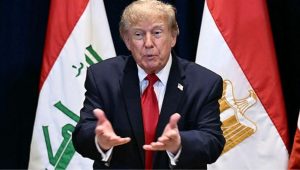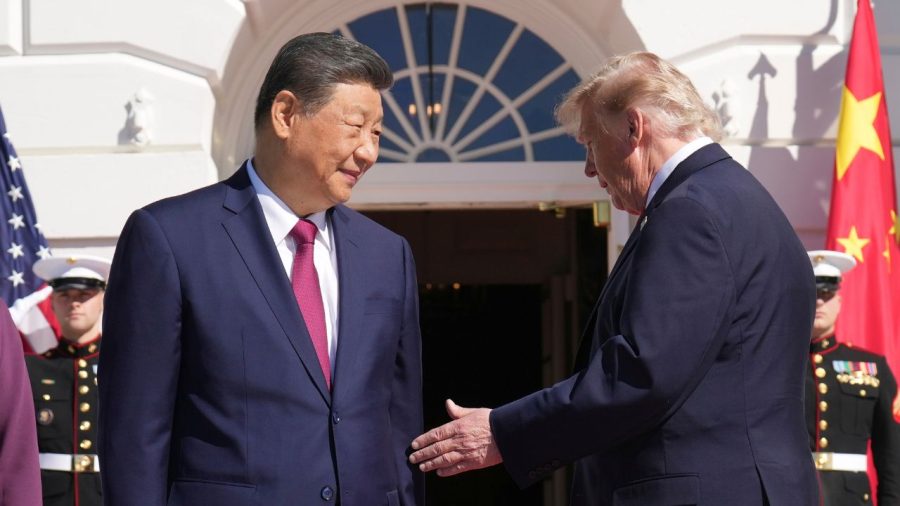



President Donald Trump’s high-profile summit with Chinese leader Xi Jinping in Washington last week projected an image of close ties, but the limited agreements that followed highlighted continuing divisions between the two countries, analysts said.
The meeting produced consensus on reducing tariffs on a $60 billion batch of non-sensitive goods, but no timeline was set for implementation, while a broader trade agreement was pushed into next year.
Analysts said the outcome reflected a relationship that has settled into a “managed stalemate” rather than a major diplomatic breakthrough, report Reuters.
“The US-China relationship has settled into a managed stalemate,” said Craig Singleton, senior director for China at the US-based Foundation for Defense of Democracies.
“The elaborate pageantry matters precisely because there is still relatively little substantive progress to showcase,” he said.
The absence of a Chinese business delegation accompanying Xi also underlined the difficulties in overcoming US concerns about Chinese investment, raising doubts over a proposed two-way investment arrangement announced by the leaders at a Beijing summit in May.

“The Trump-Xi summit created a positive political atmosphere but did nothing to narrow differences, or reduce mutual suspicions,” said Drew Thompson, a senior fellow at the S. Rajaratnam School of International Studies in Singapore.
Although White House officials had lowered expectations ahead of the meeting, analysts said the summit still offered political benefits for Beijing.
Joe Mazur, a geopolitics analyst at Beijing-based consultancy Trivium, described the summit as a “PR win” for China, saying the diplomatic display overshadowed the limited substance of the talks.
Trump made an effort to welcome Xi, breaking protocol by greeting him at the airport — the first time a US president had done so for a foreign leader in 11 years.



At a lavish state banquet attended by senior officials and technology executives, Trump said the two leaders had “never gotten along better”.
“The extraordinary courtesy the Americans extended to Xi Jinping met and far exceeded China’s expectations,” said Shen Weizhong, a former Chinese foreign ministry official and vice president of the Beijing-based Global Governance Institution.
“The Chinese do not feel that a visit necessarily has to result in a specific number of agreements, or in tariff reductions or other such outcomes … The mere fact that they meet, nod to one another, and shake hands speaks volumes,” Shen said.
Analysts said Xi has little incentive to make major concessions, with China’s dominance in rare earth production giving Beijing leverage over industries ranging from technology and automobiles to defence.
Despite Trump’s tariff threats, China’s trade with the rest of the world has continued to expand, analysts said.
Trump did secure some concessions. China has proposed reducing tariffs on several US agricultural products, including corn and dairy goods, according to a commerce ministry list released on Monday.
In return, Washington will lower tariffs on Chinese imports including toys, fireworks and Christmas decorations.
The move could provide relief to US farmers, an important voting bloc for Trump, ahead of midterm elections expected to be challenging for his Republican Party.
However, commodity analysts noted that soybeans — one of the largest US agricultural exports — were not included on China’s list, leaving future purchases vulnerable if relations deteriorate.
China also gave little indication that it would help Trump end the Iran war, which has contributed to a decline in the US president’s approval ratings.
Soon after Xi left Washington, Chinese Vice President Han Zheng criticised US positions on Iran and its threats against Cuba during a UN General Assembly meeting in New York.
Xi also pressed Trump on Taiwan, the self-governed island claimed by Beijing, despite Trump avoiding the issue in his public remarks.
That marked a contrast with the May summit, when Trump described a proposed $14 billion US arms sale to Taiwan as a “negotiating chip” with China.
Washington has defended regular meetings between Trump and Xi as necessary to maintain stability between the world’s two largest economies.
However, Jeremy Chan, a senior analyst at political risk consultancy Eurasia Group, said continued engagement could also give Beijing time to delay US actions it opposes, including arms sales to Taiwan.
“That’s a major strategic win for the Chinese and a major loss for Taiwan and a lot of US allies and partners in the region,” said Chan, a former US diplomat in China.