


The government has decided to fix the prices of essential medicines to reduce treatment costs and keep healthcare affordable, approving updated guidelines for the National Essential Drug List and expanding it to 295 items by adding 135 new drugs.
The Council of Advisers took the decision on Thursday at its regular weekly meeting held at the Chief Adviser’s Office, with Chief Adviser Muhammad Yunus in the chair.
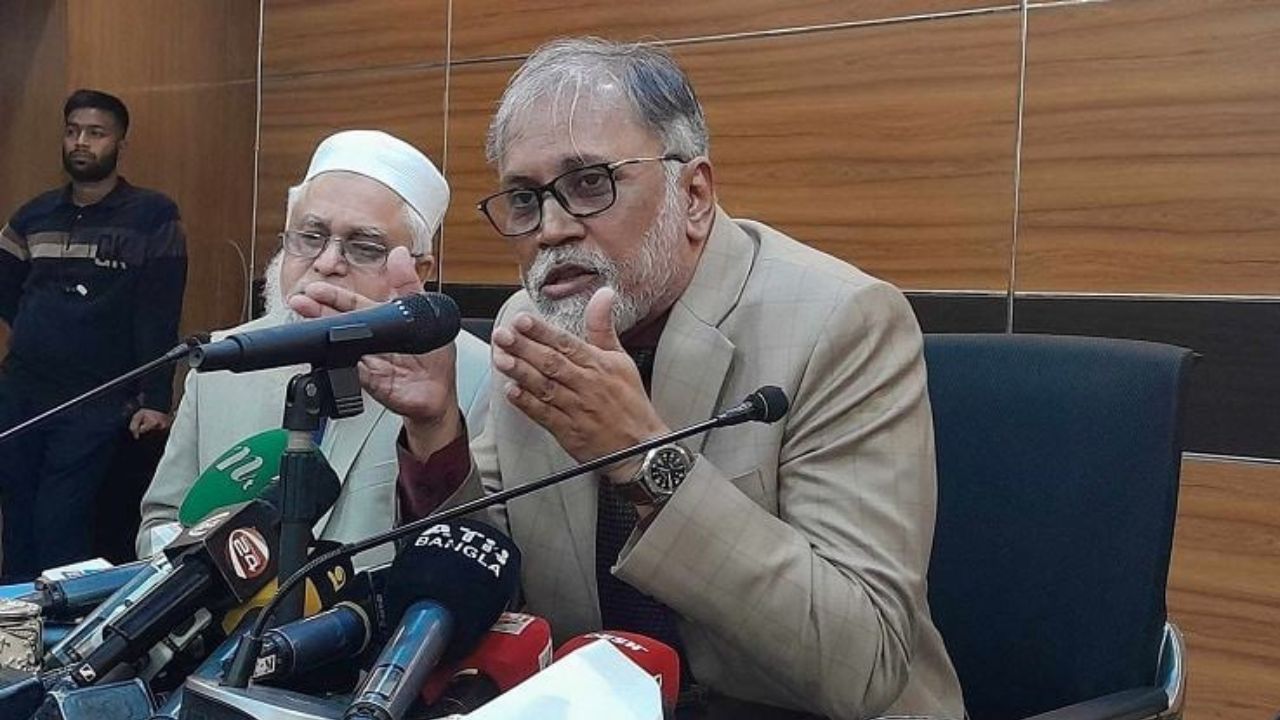
“For people’s treatment and access to medicines, sellers will be required to sell these drugs at prices fixed by the government,” said Sayedur Rahman, chief adviser’s special assistant for health affairs, while briefing reporters at the Foreign Service Academy in the capital.
“A list of essential medicines has already been prepared. Some one or two more items may be included in the list as the meeting of the advisory council has made a request in this regard,” he added.

Sayedur said the government took the decision after a taskforce held talks with the stakeholders involved in drug manufacturing and marketing.
“Some four-year time will be given to implement this so that the industry can gradually cope with the price list. So, the decision will not have any negative impact on industry as the pharmaceutical companies will get enough time to implement this,” he said.
“Every year the prices will be reduced step by step and within four years they will have to come to the prices fixed by the government,” he added.



Sayedur said that the objectives, set through the drug policy formulated in 1982 to develop the domestic pharmaceutical industry and to make medicines easily accessible to the people, gradually weakened over time.
In 1994, price controls were lifted from all medicines and limited to only 117 drugs. As this framework remained unchanged for nearly three decades, the number of medicines outside the controlled list kept increasing and has now reached around 1,300.
“As a result, significant disparities in medicine prices have emerged. Nearly two-thirds of people’s total healthcare expenditure is spent on medicines. Yet, Bangladesh has no protective system such as health insurance or a national health service. In this reality, there is no alternative but to update the essential medicines list,” he said.
Sayedur said these medicines are sufficient to treat about 80% of all diseases affecting people.
“So, this can be said to be a landmark decision to reduce the treatment cost,” he said.
“Those who are selling essential drugs at a higher rate, they must gradually come down to the price level fixed by the government. Those who are selling it below the rate, if they wish they may adjust it or remain where they are,” he added.
Sayedur also said the government plans to establish a dedicated Drug Pricing Authority in the future, responsible solely for determining medicine prices.
“Initially, it will function as a Drug Price Authority and gradually evolve into a full-fledged authority. This will help remove existing barriers to access to medicines,” he said.