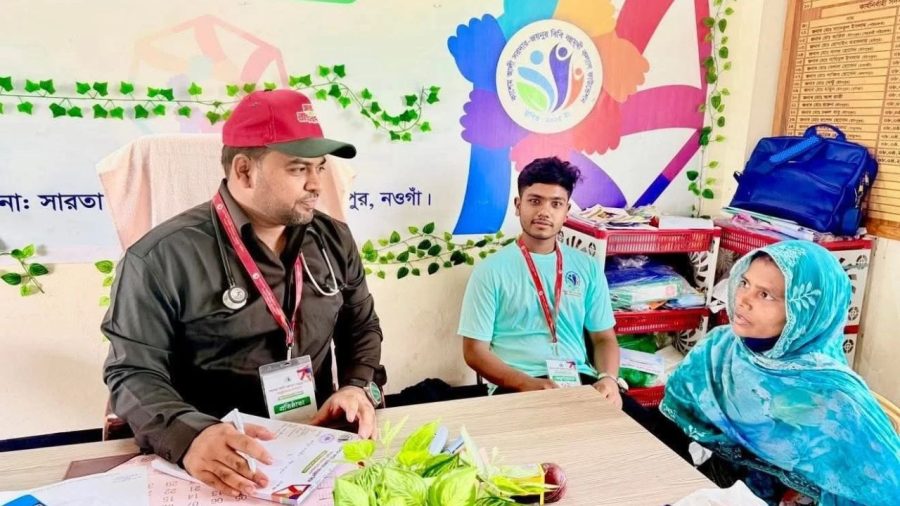



A patient comes seeking medical advice but leaves with food for the family. Another arrives worried about an illness but finds help with a household financial crisis. At a rural marketplace in Naogaon, cardiologist SM Rahiduzzaman Rana is extending the meaning of medical care beyond the reach of his stethoscope.
Every month, Rana, who works at Sir Salimullah Medical College and Mitford Hospital in Dhaka, brings free medical services to Sarata Sarashon Bazar in Mahadebpur upazila. But his initiative does not end with consultations and prescriptions. Through a foundation established in memory of his grandparents, he also provides financial and food assistance to disadvantaged families, supports students and contributes to local religious institutions.
For around one and a half years, the doctor has been working to address not only the health concerns of people in his native area but also the wider hardships that shape their everyday lives.
On a designated day each month, the marketplace becomes a gathering point for people seeking different forms of support. Announcements through loudspeakers inform residents of the free medical camp, drawing patients from nearby villages. While some wait to consult the doctor, others approach the team to explain their financial difficulties and seek assistance.

The initiative reflects Rana’s belief that helping people requires looking beyond their immediate medical needs.
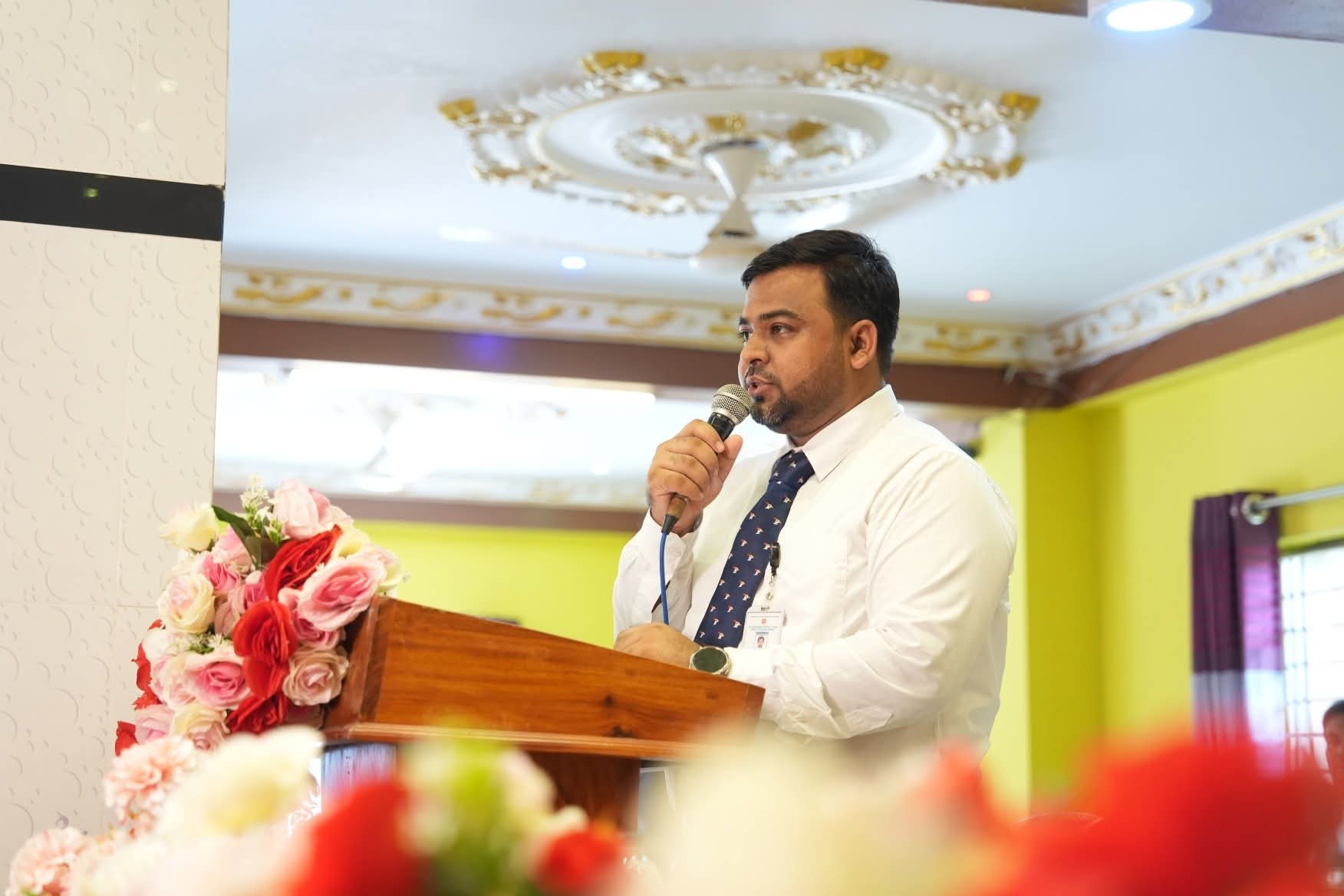
To preserve the memory of his grandparents, he established the Kashem Ali Sardar-Joynur Bibi Multipurpose Welfare Foundation. A team of more than 60 members now helps run its activities, which include free medical camps, financial assistance for struggling families, educational support, incentives for meritorious students and contributions to the development of mosques and madrasas.
The foundation’s motto captures its broader approach to service: “Standing beside people, fostering humanity, serving creation and seeking the Creator’s satisfaction.”



For Iti Ara Begum of Sarata village, the foundation’s support has meant help with a concern that no medical prescription could resolve. Her husband and children work as day labourers, and the family struggles financially. With her daughter’s marriage approaching, she had little means to meet the expenses.
She approached Rana and received financial assistance.
“He has helped us financially to a great extent,” she said.
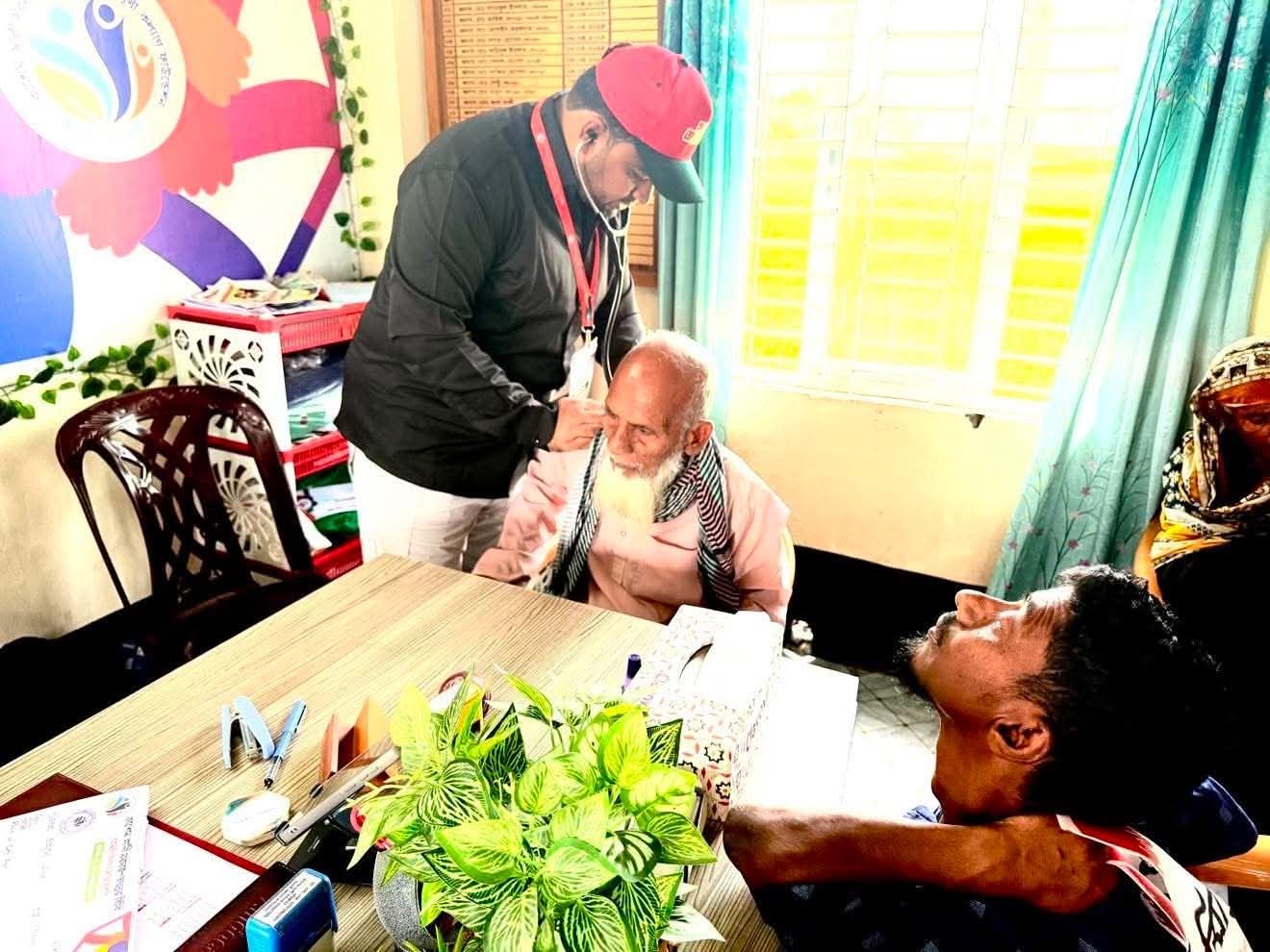
Wazed Ali, a retired madrasa teacher from Sarata West Para, said the monthly camps had provided local residents with an opportunity to receive medical care free of charge.
“Every month, a specific day is set aside, and announcements are made through loudspeakers to inform people about the free medical services. He provides care with great attention,” he said.
According to the foundation, 1,057 people from marginalised communities have received medical care through its activities over the past one and a half years.
Rana told TIMES that he hoped to expand the initiative beyond his own locality.
“My wife and I are both doctors. We are financially comfortable as a family, and we want to use what we have to stand beside people in need,” he said.
Mahadebpur Upazila Nirbahi Officer Manjura Musharraf said the initiative could inspire others to engage in similar work, adding that the upazila administration would provide assistance if needed.