
One rain softened afternoon, we felt like taking a dip back in time!
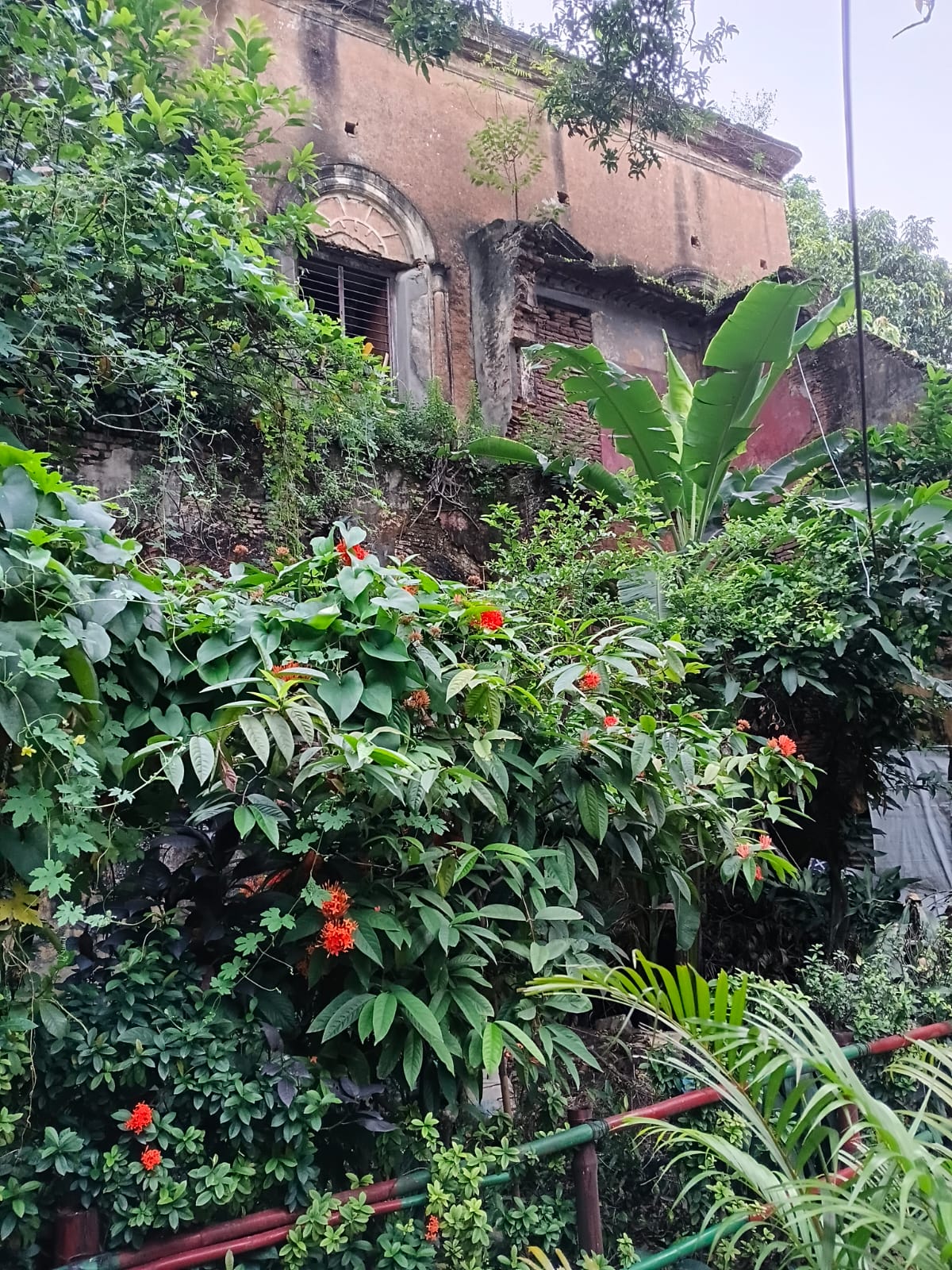
Surrounded by walls that tell compelling tales, we wanted to look at large roots covering a crumbling building, whispering forbidden trysts.
On a Friday, went to the place in Dhaka where history, poetry, revolutionary spirit and fresh vegetarian food blend to create an unforgettable experience.
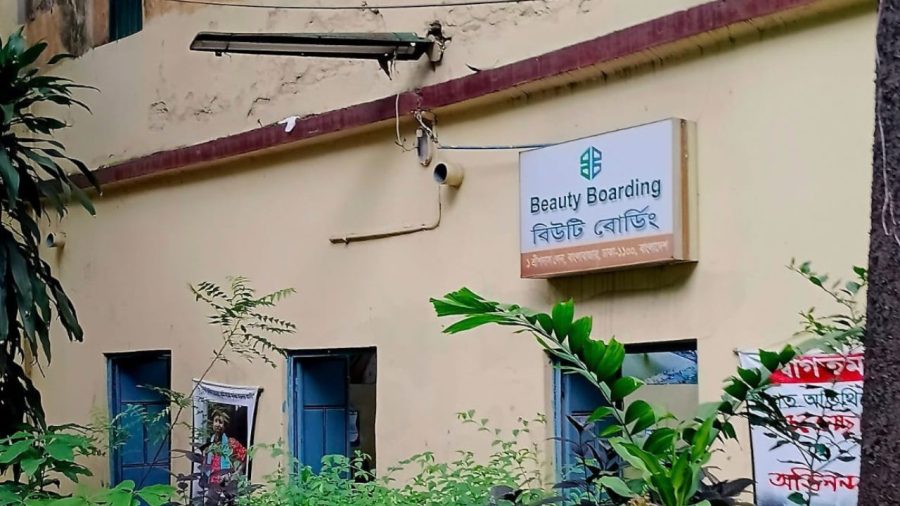
This is Beauty Boarding: the spot where time is stuck in the early 20th century.
Well, almost, because you need to put away those CCTV cameras, strategically placed at wall corners.
Bangla Bazar is at the end of the old part of Dhaka, near the Jagannath College and the Victoria Park so your best time to go would be the weekend, especially Friday when most shops are closed and traffic moves like a dream.

Here’s a short history of the place: once, the two storied house belonged to an aristocrat who left after partition in 1947.
This was the office of a Bangla paper called Sonar Bangla.
In 1951, the paper also left.
The place was then rented by Nalini Mohon Saha, who started a restaurant cum boarding house named after his eldest daughter Beauty.




Well, that’s the basic history but Beauty Boarding would soon become a melting pot for intellectuals, thinkers, poets and mavericks of Dhaka’s burgeoning culture scene.
Eminent poets Nirmaledu Goon, Syed Shamsul Huq, Abu Zafar Obaidullah, Rafiq Azad used to come here in the afternoon to sip tea, talk about poetry, social changes and of course, the existential angst, which works as a catalyst for all writers.
The open space with greenery in front of the Beauty Boarding restaurant still provides chairs and tables to those wanting to spend some time in introspection.
Although on a Friday afternoon, this area was dominated by the young, taking photos on their phones.


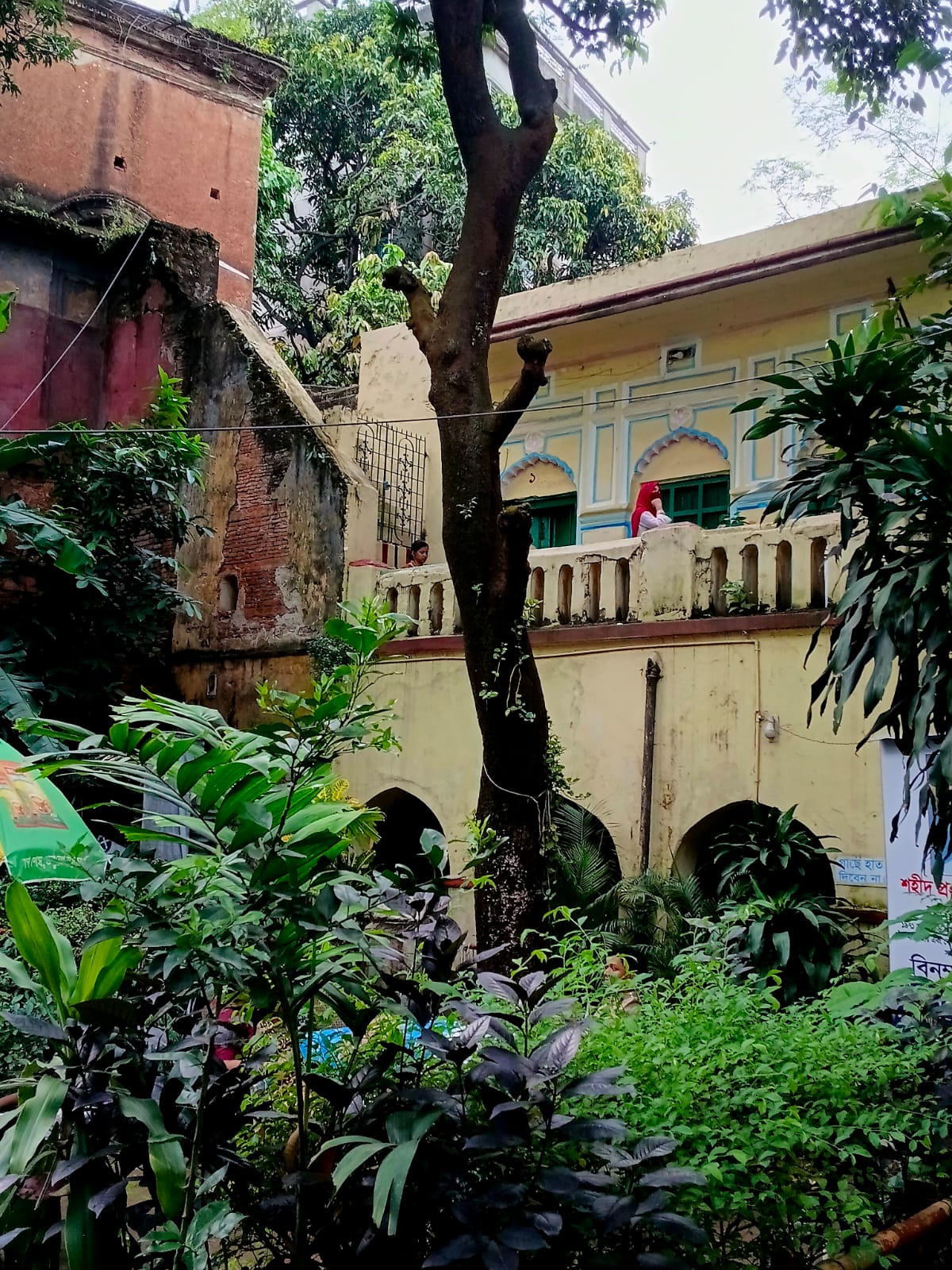
The air was boisterous, the mood, exuberant.
Honestly speaking, to really savour the atmosphere of Beauty Boarding and perhaps to meet a few spirits of poets of the past, one has to stay here in one of the rooms.
Both air-conditioned and non-air conditioned rooms are available although I would suggest the latter because you are here to take a dip back in time, for luxury, go somewhere else.
The boarding house building had been repainted, the house where the aristocratic family lived about a hundred years ago, is covered by moss, trees and roots.
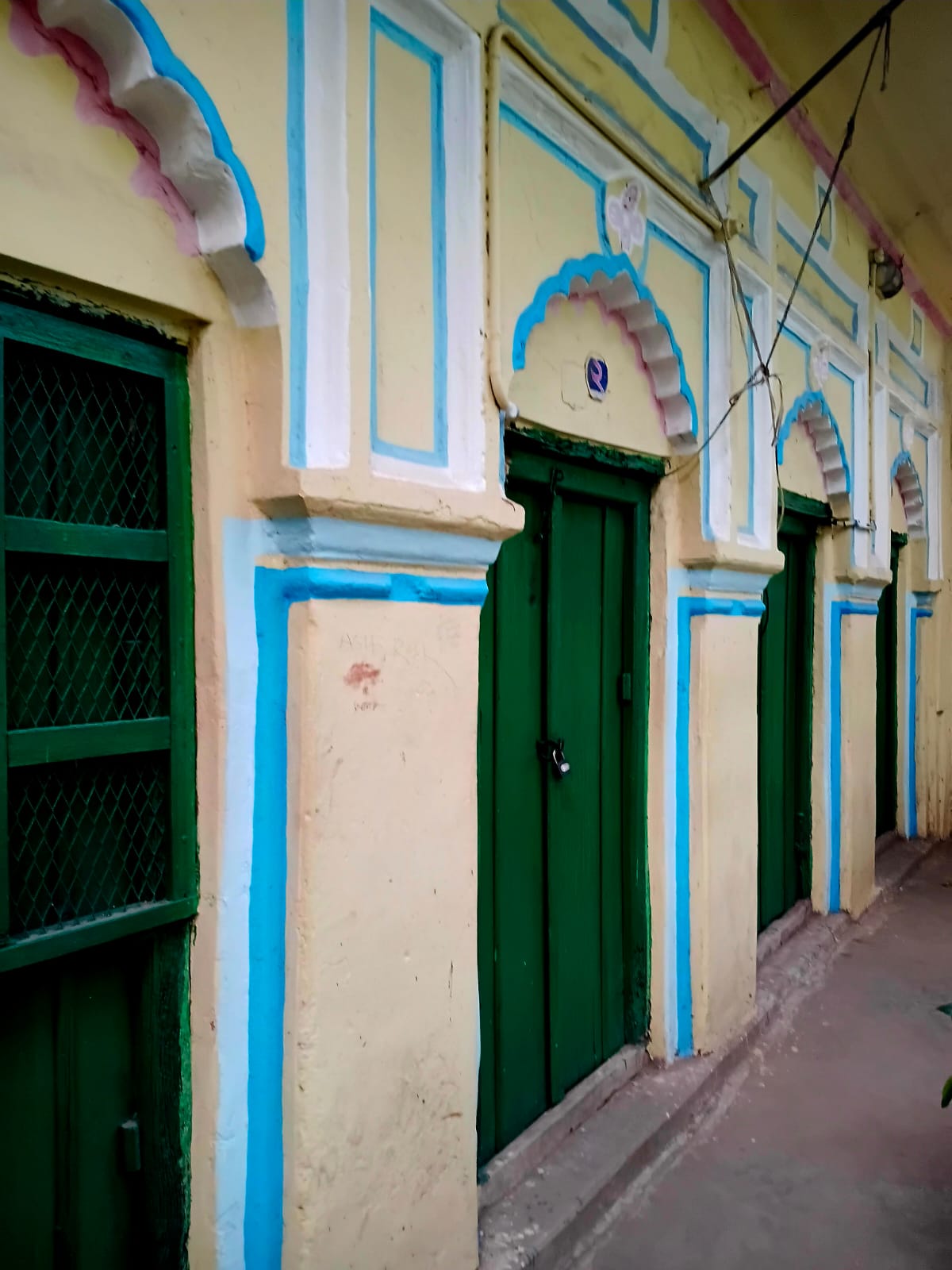
This gives the structure a deliciously haunting look – as if, when evening falls, the spirits of the Zamindars would rise to open the dance chamber.
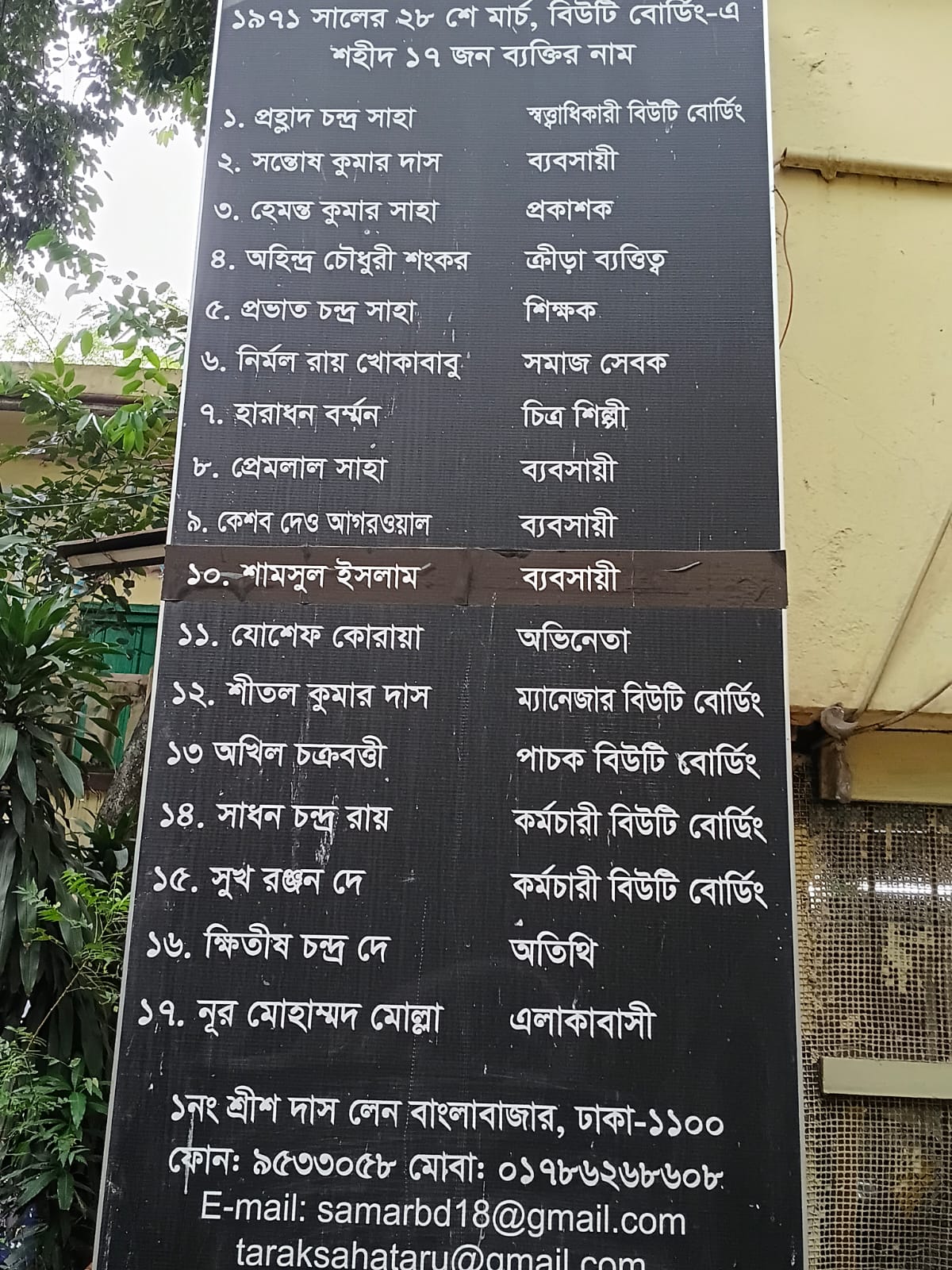
Story has it that along with poets, young political activists also used this place to meet and Beauty Boarding was the spot of a grisly atrocity on 28 March 1971 when 17 people, including Nalini Mohon Saha’s descendant, Prahlad Chandra Saha was, killed.
In the 80s, artists, poets who united with the people to stand against the autocratic regime used to come here.
However, in the last two decades, this has become more of a museum of sorts attracting people wishing to experience some leisurely moments amidst history.
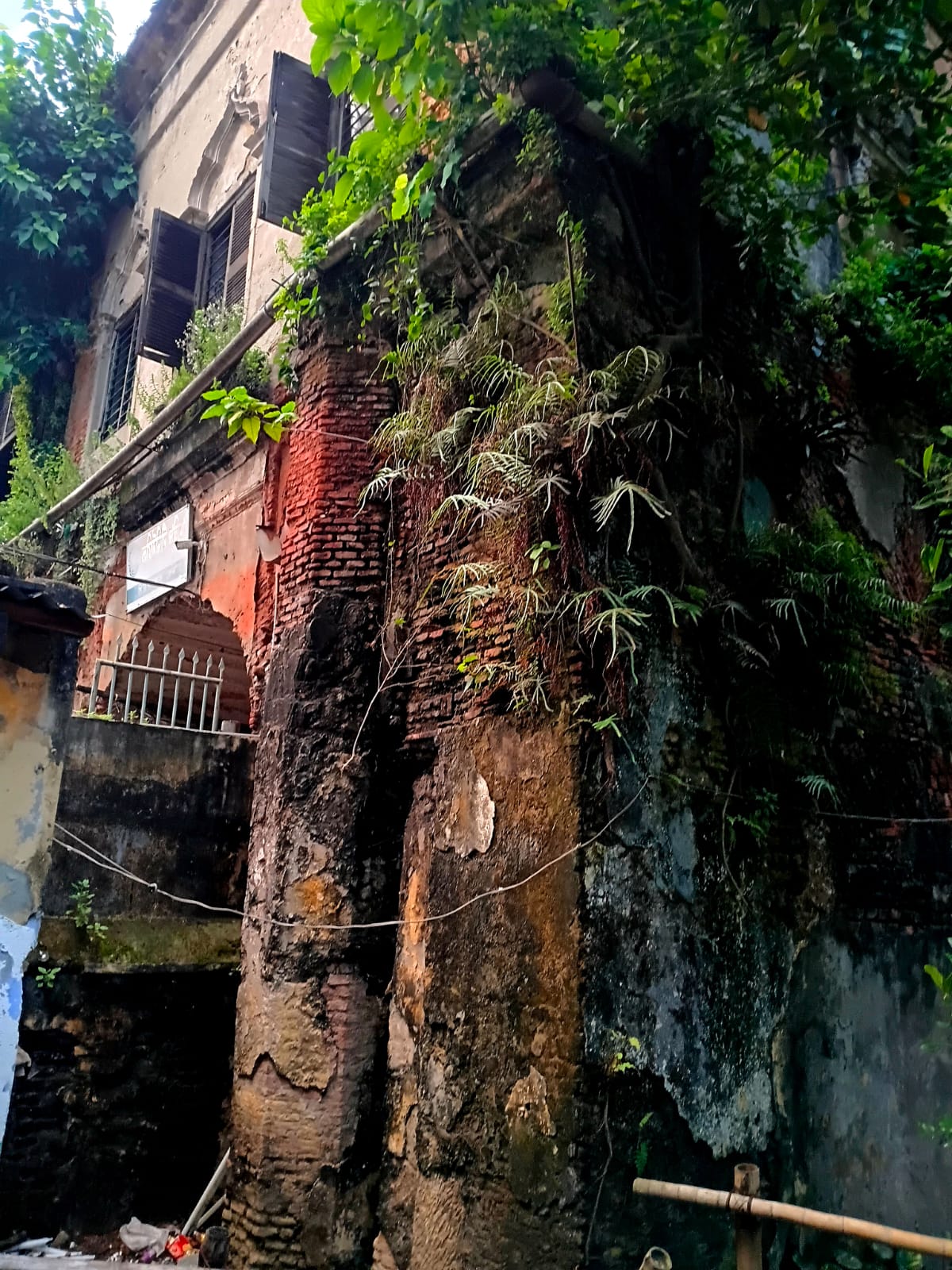
Well, if you are seeking something a little more profound then spend a night or a whole day and let the building and the trees open up to you once the environment becomes quiet.
Sit on the stairs or on the open space and you may hear the air recite lines from late Abu Zafar Obaidullah’s famous poem:
Those who cannot listen to poetry will hear the destructive roar of a tempest, those who cannot listen to poetry will be deprived of the right of the horizon, those who cannot listen to poetry will remain slaves forever…