

Most people treat common lawn grass as a mundane garden nuisance requiring constant mowing, yet its oversized botanical cousin stubbornly refuses to stay grounded.
Stems of bamboo are entirely hollow inside, yet this remarkable plant withstands formidable physical loads, offering structural strength that rivals timber.
It grows at staggering speeds, feeds giant pandas, forms resonant musical flutes, filters industrial pollutants via bamboo charcoal, and builds houses.
For communities across Asia, including Bangladesh – where bamboo has traditionally built homes, bridges, and household crafts – this giant turf is an integral part of rural life and culture.

Every year on 18 September, representatives across the globe observe World Bamboo Day to celebrate nature’s most flexible overachiever.
What can’t this flexible giant do?
When examining bamboo’s applications, the list reads like an absurdly overachieving resume for a garden plant. In traditional Asian architecture and crafts, hollow stems have built fences, bridges, household items, and complete dwellings for centuries.
Modern architects and designers now specify bamboo for lightweight structural design, flooring, furniture, tableware, packaging, paper, and textiles.

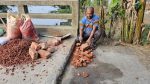


Technologically, bamboo fibres and charcoal filters are deployed in modern industry, alongside advanced composite materials.
Beyond construction, bamboo strikes a musical chord. Its hollow stalks naturally resonate, forming traditional flutes and drums across cultures.
In the kitchen, young shoots of suitable species are prized delicacies in Asian cuisine, appearing in soups, salads, hot dishes, and beverages – though diners must ensure shoots are properly processed and from edible varieties.
Economically, growing, processing, and selling bamboo provides vital income for rural farmers, craft artisans, designers, and entrepreneurs.
Because its root system remains intact after cutting, the plant rapidly regenerates without requiring replanting, conserving soil and helping restore degraded land.
Not automatically squeaky clean
Despite its eco-friendly reputation, experts warn against automatically labelling bamboo an “ideal eco-friendly material.”
Its true environmental benefit depends strictly on responsible cultivation and management.
Destroying natural forests or replacing valuable ecosystems with unmanaged plots damages natural habitats.
Serving as an enduring symbol of resilience, flexibility, and adaptability, bamboo offers immense future promise – provided we manage this overachieving grass with care.