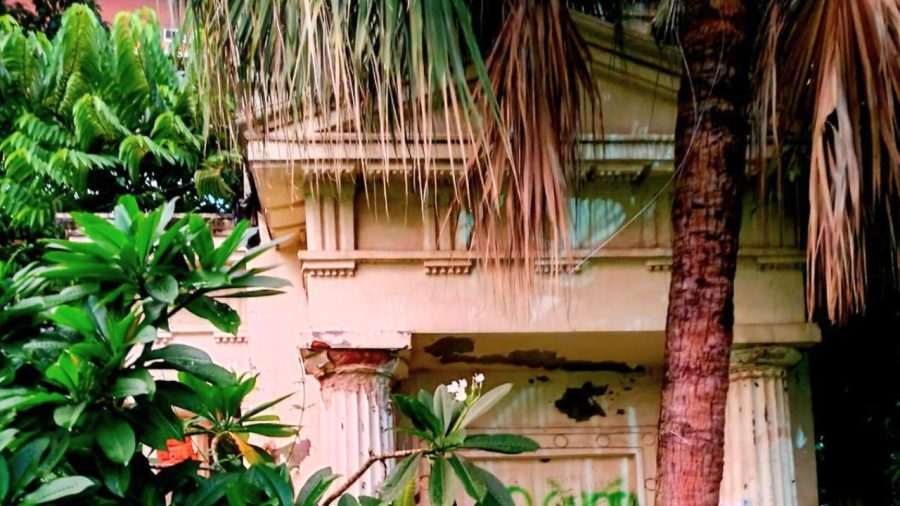

The whole of Wednesday, the sky was grey, rain was intermittent and, when we went inside the TSC of the University of Dhaka, a drizzle began.
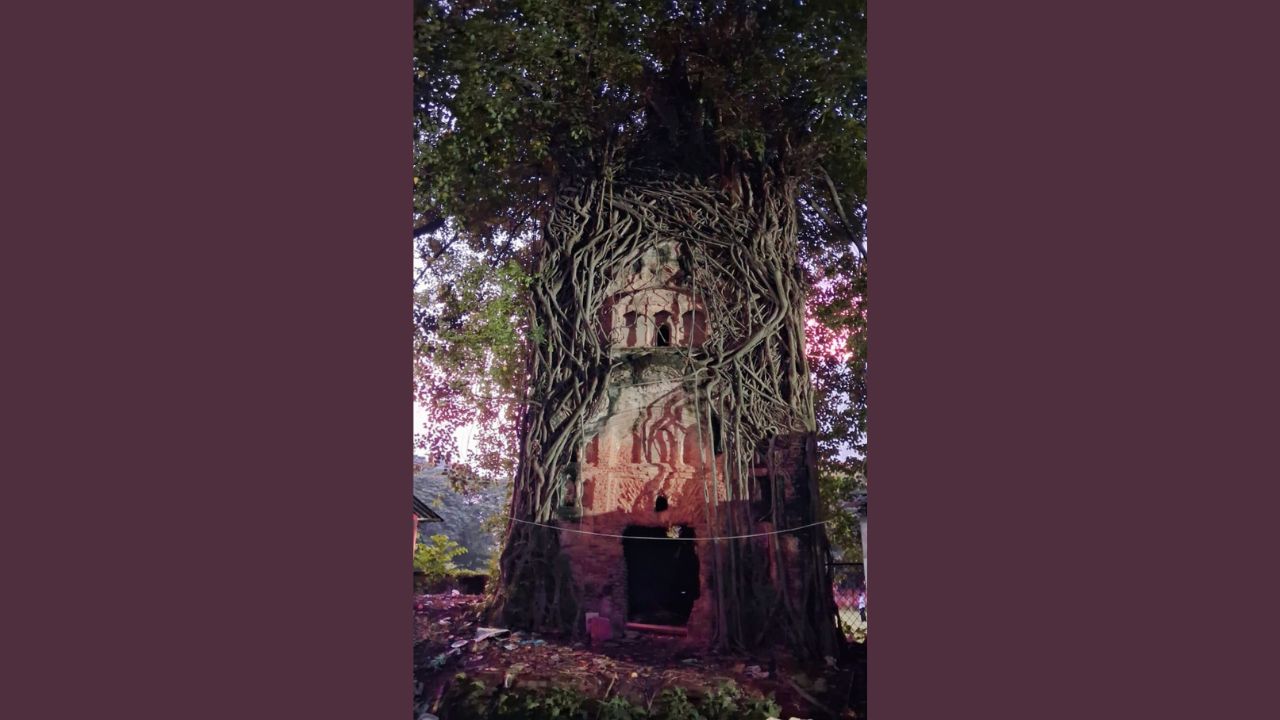
The twilight plus the rain created a hypnotic aura while the structure at the other end of the small field within the TSC beckoned the inquisitive visitor.
Are you seeking something extraordinary? Perhaps you want a little bit of mystery, enigma and a chance to cut off the digital age and imagine a twilight rendezvous with Artemis, the Goddess of wilderness and the moon!
Or, you may be a history buff, intrigued by Greek architecture within the Dhaka University campus.
Sadly, a large number of young people who come to TSC to spend time with friends on the green open space do not know that they are sitting very close to a mausoleum, predating the university.
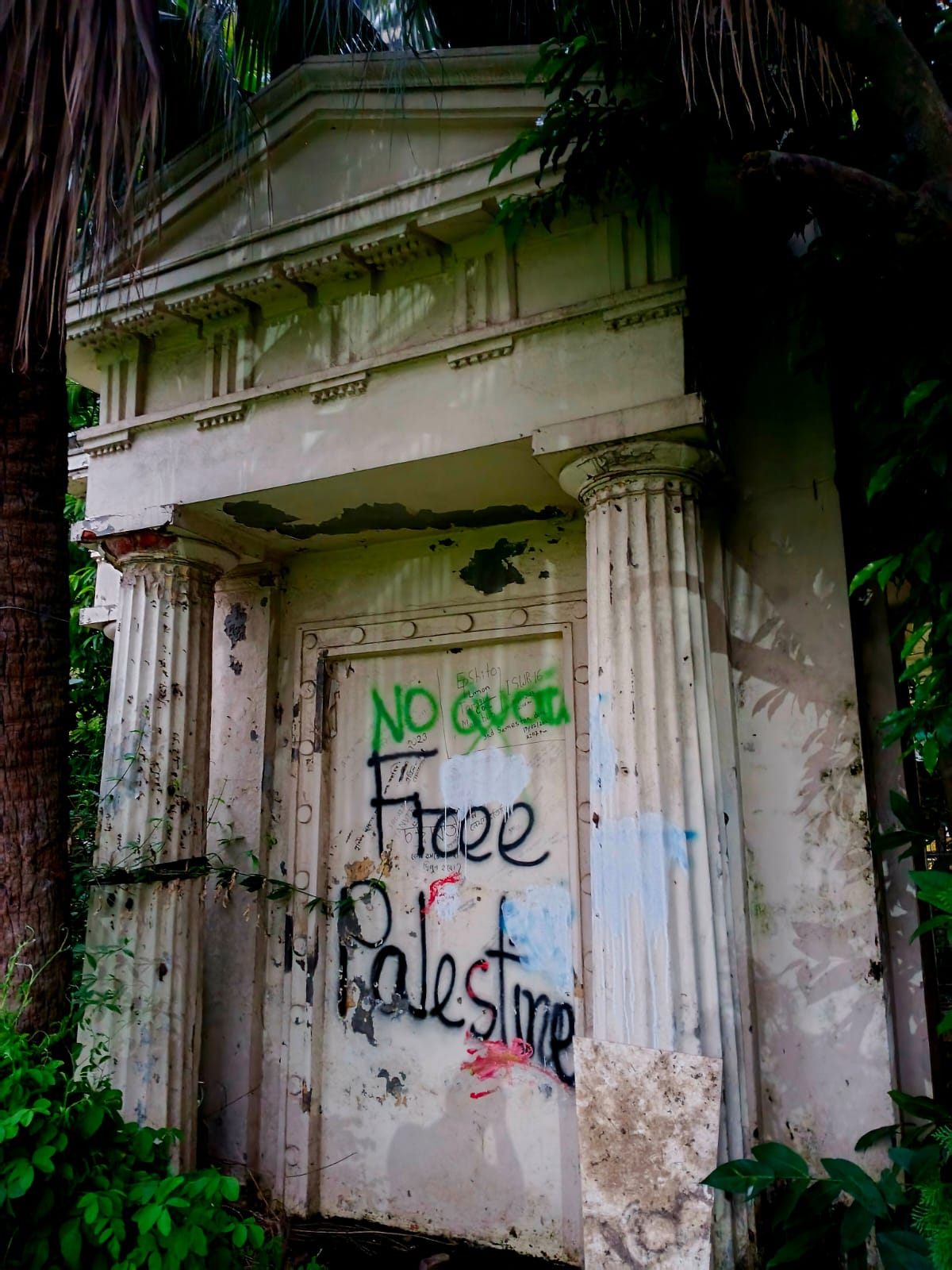
Built in the year 1900, the memorial houses remains of several Greek people who lived and then died in Dhaka.
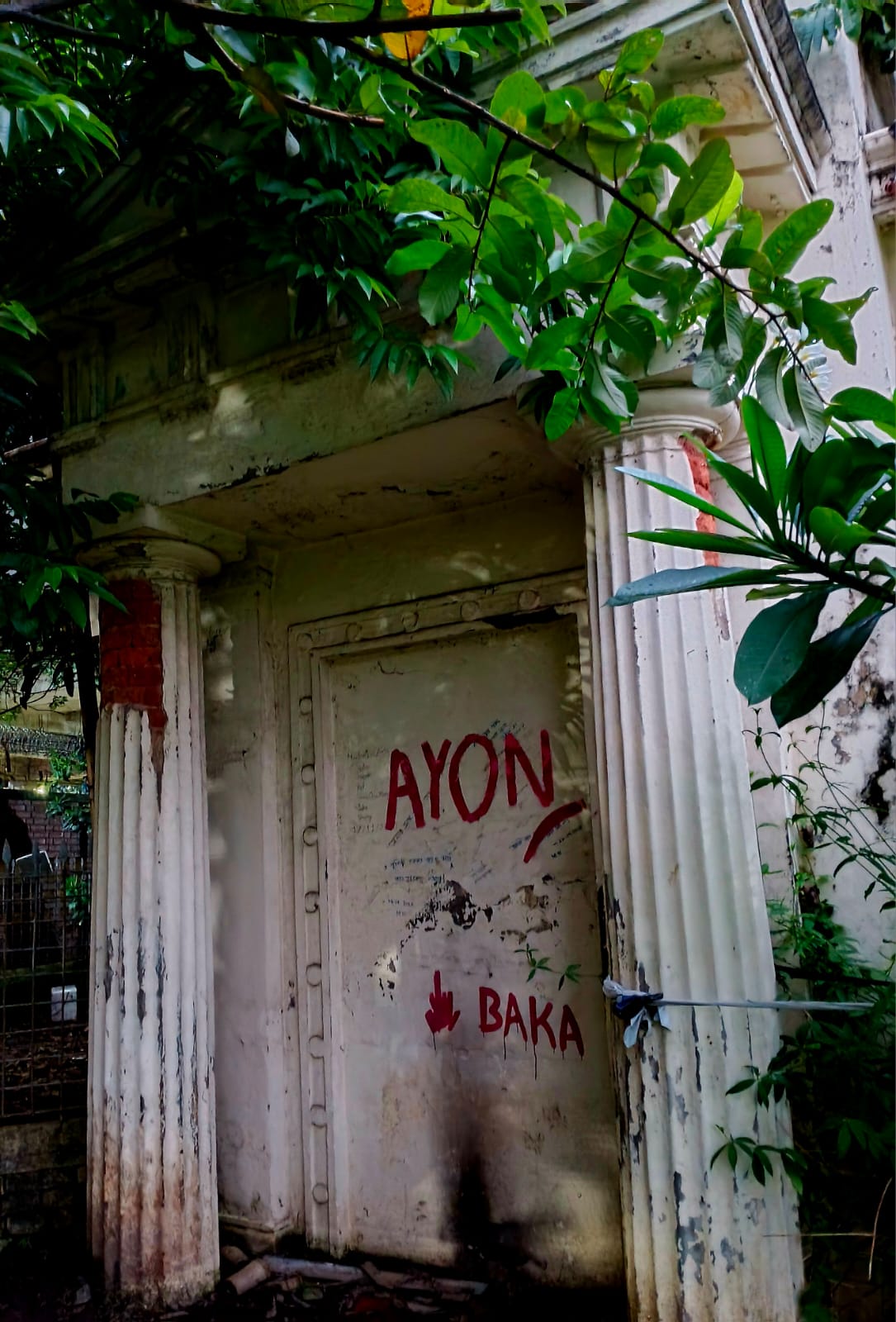
Unfortunately, the gate to the temple is now firmly locked and there isn’t a plaque in front of it to narrate the history of the structure plus the small but influential Greek community that lived and thrived in Dhaka.

The Greeks were the last Europeans to come to Dhaka and according to history, between 1770 and 1800, the city had a sizeable Greek community engaged in jute and salt trade.
What is most fascinating about this memorial is that one of the gravestones inside the temple houses the remains of one John Demetrius, who was, as per the inscriptions inside the temple, killed by a tiger during a hunting expedition in Mirpur in 1836.
This means that around 190 years ago, Mirpur, now a pulsating part of Dhaka, was a dense forest inhabited by wild animals, including tigers.



The question is, was it a Royal Bengal tiger or was it a Bagdash, an Indian Civet, which attacked and killed John?
Maybe he was badly mauled, dying later of wounds.
One of the Gravestones inside the temple belongs to John’s brother, Basil, who was a clerk at the church of St Thomas and a teacher at Dhaka College.
Over time, the Greek community in Dhaka dwindled and by the turn of the 20th century, only a handful remained.
The mausoleum was reportedly renovated in 1997 with assistance from the Greek government, but today, it’s almost totally covered by trees and vegetation.
Lamenting the current state of the temple, Zahirul Islam, a journalist and a history enthusiast, said, “The structure is a significant landmark of Dhaka carrying the lost history of a community.”
This should be restored/preserved as a heritage site with a plaque placed in front with its history written in Bangla and English, he added.
A better idea came from Dipok Chowhan, a staffer at DU’s Physical Training Centre.
The university has several historical structures and every one with brief history along with pics can be featured on two to three large billboards placed at strategic points within the campus, he opined.
Rakibul Hasan, a filmmaker, feels the Greek mausoleum and the spooky aura surrounding it can be a perfect opening shot for a thriller.
At the top of my head, I can think of a plot – a bibliophile comes across an old diary and in it finds a letter narrating a pagan ritual in front of a Greek structure in Dhaka in the year 1908.
The story can end with the decryption of a message written within the lines under the gravestones.
All very Da Vinci Code like but think seriously, the temple can add to the atmosphere of a fast-moving historical suspense flick.
This Greek memorial is one of the few historical structures in Dhaka, which piques my interest, as I never cease to be a fascinated by it.
Is it because very little is known about the Greeks who lived here or is it because the memorial exudes a supernatural aura?
Whatever the case, as we were leaving, trees surrounding the temple seemed to whisper – you must come back again, on another cool evening, with a fading twilight and a little rain!