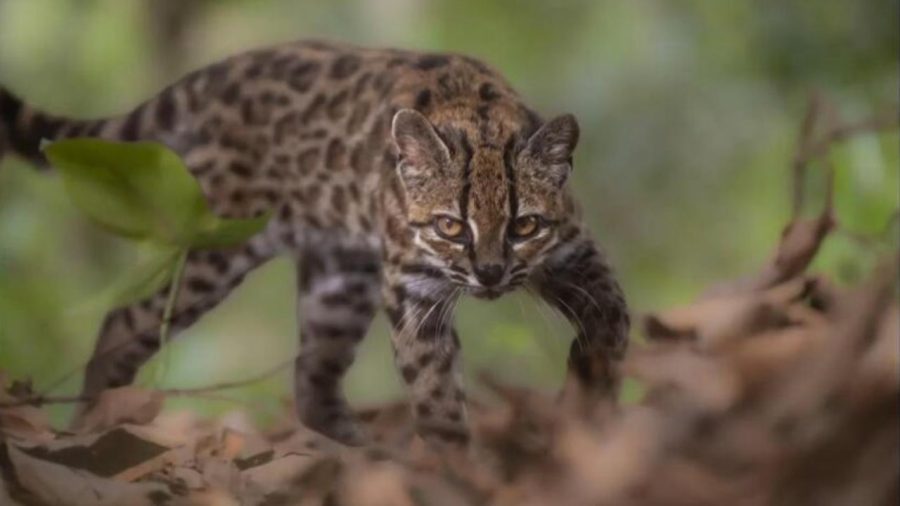

A new wildcat species, Leopardus tilcayo, has been formally identified in Bolivia following the accidental rescue of an orphaned kitten and nearly 10 years of scientific research.
The discovery, announced in a study published in Current Biology, marks the first formal description of a new cat species in more than a century, since the pampas cat was reported in 1923.
The wildcat inhabits the Bolivian Yungas, a cloud forest belt along the eastern slopes of the Andes. Although local communities had long recognised the animal, scientists had previously assumed it belonged to another species found in the region, reports Al Jazeera.
Before the study, the wildcat had neither a scientific name nor a formal description in published research.
Accidental rescue leads to discovery
The investigation began when a local resident found an orphaned kitten near the edge of a forest. Believing it to be a stray domestic cat, he took it home, where it lived with his family for about a year until 2016.
However, the animal’s wild instincts eventually became difficult to manage after it began chasing neighbours’ chickens.

The family later surrendered the animal to Senda Verde, a wildlife refuge. Staff at the facility contacted biologist Paola Nogales Ascarrunz, lead scientist of the Bolivian Felids Research Program, to examine the kitten.
Nogales Ascarrunz said such cases are common in Bolivia, particularly after wildfires, when young orphaned animals are captured and sold through the illegal pet trade. They are often surrendered once owners realise they cannot keep them.
During her examination, Nogales Ascarrunz observed the animal’s small, scrunched face, short, rounded ears, long whiskers and leopard-like spots. She determined that it was too large and wild to be a domestic cat.




The animal was initially suspected to be Leopardus tigrinus, or the tigrina, a small spotted cat found across Central and South America. However, differences in the shape and size of its spots raised questions about its classification.
Genetic research reveals distinct species
Confirming the animal’s identity required nearly 10 years of research, international genetic collaboration and DNA extracted from century-old museum skulls.
Meanwhile, co-researcher Lescroart and scientists from Belgium, Brazil, Bolivia, the United States, Colombia, the United Kingdom and Peru collected tiger cat DNA across South America to address long-standing taxonomic uncertainties.
The researchers combined existing genomic data from northeastern Brazil, Colombia and southern Brazil with new samples from the Guianas, Peru and Bolivia.
Their analysis identified five distinct species within the tiger cat group, compared with the two to four species previously expected.
Researchers described tiger cats as a group of “cryptic species”—animals that appear almost identical physically but are genetically distinct.
The combined continental dataset confirmed that the Bolivian wildcat was genetically separate from other known tiger cats.
Indigenous name reflects local knowledge
The species was given the scientific name tilcayo, based on indigenous terminology used locally to distinguish the animal from other small spotted wildcats, including Geoffroy’s cats and margays.
The term has no known meaning in Spanish or Quechua. It has instead been passed down orally through generations without an accompanying origin story.
Species division raises conservation concerns
Tiger cats are collectively classified as “vulnerable” on the International Union for Conservation of Nature (IUCN) Red List.
However, conservationists warn that dividing the group into five distinct species significantly reduces the estimated population of each species. This could mean that individual species require urgent, targeted protection.
Genomic evidence shows long-term population declines across most tiger cat lineages, with some populations falling by as much as 80 per cent from historical levels.
The findings also correspond with observations from Bolivian elders, who say they have seen progressively fewer tilcayos in the forests.