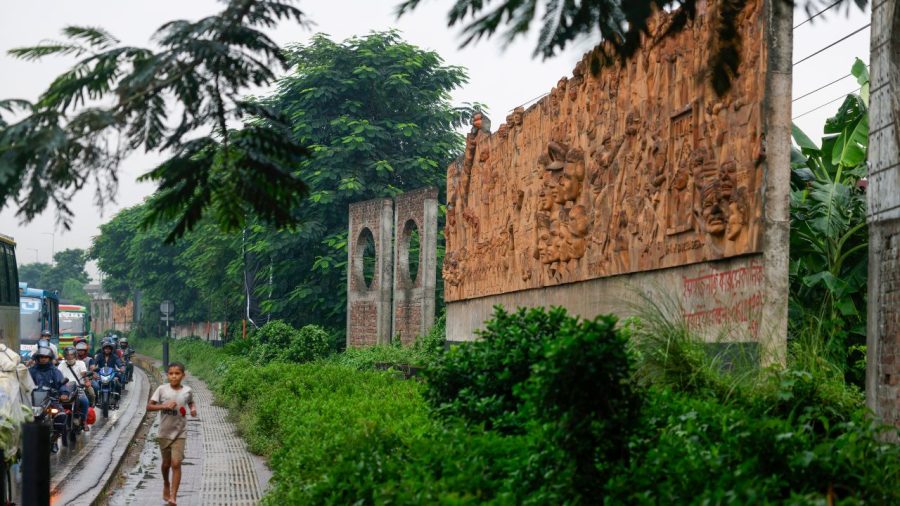

On Airport Road, as one passes through Banani, a picturesque brick-and-terracotta structure catches the eye.
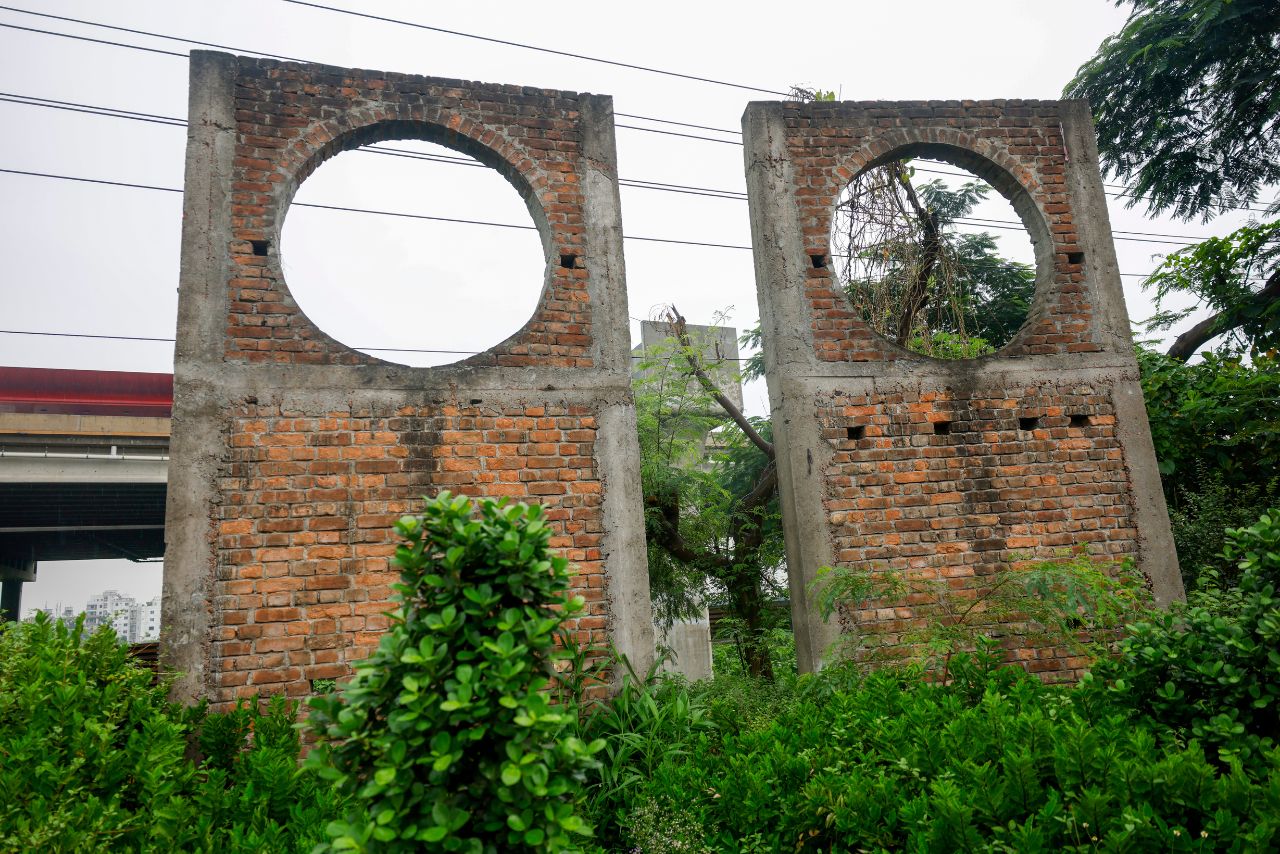
Circular openings cut into the pillars frame the sky beyond them. But a closer look tells a different story.
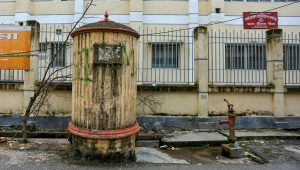
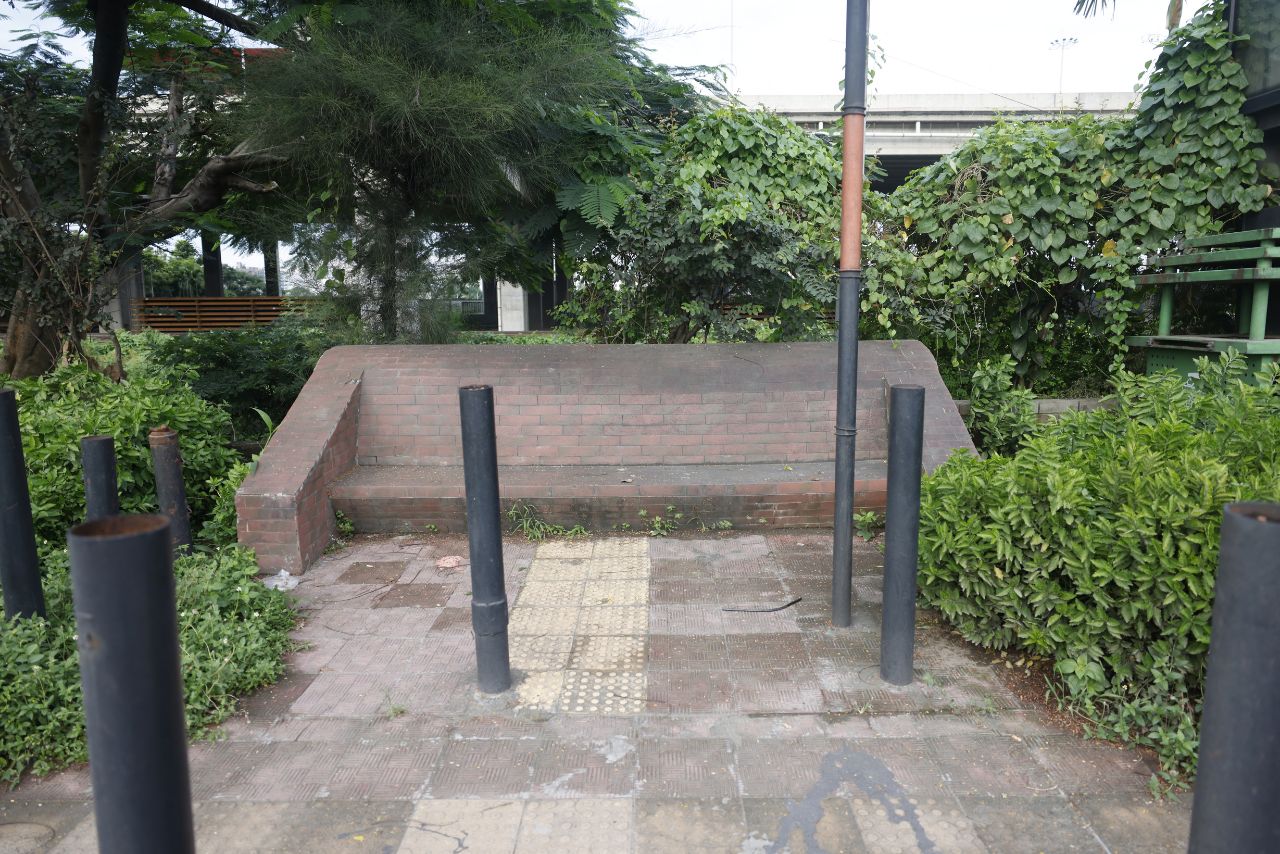
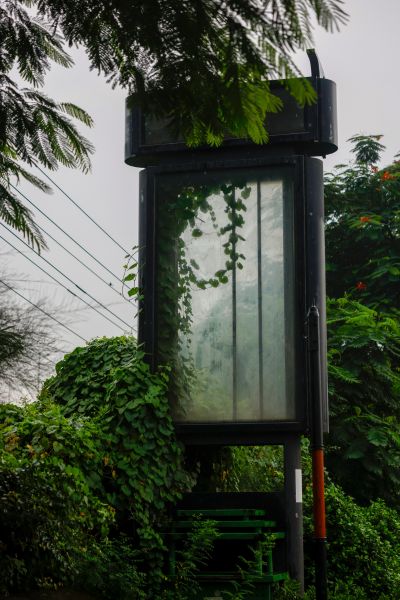
Wild vines have crept down the concrete, spreading across the structure and swallowing the dustbins beneath them.
The lamps, once fixed to the light posts, have been stolen.
A dark, grimy layer now coats the mural, dulling the faces and scenes that were once meant to stand out.
At first glance, it could easily be mistaken for the remains of an abandoned wall or an unfinished construction project.

Yet, these two pillars once carried the faces of seven of Bangladesh’s most revered war heroes.
Opposite the five-star Le Méridien hotel, the structure once featured a massive terracotta relief panel depicting scenes from the Liberation War, faces frozen in time during moments of struggle.
The installation, named “Bir Saptak,” was built under the supervision of the Army’s Special Works Organization (SWO-West) after the Banani flyover opened, leaving a large open space underneath.
The idea was to transform the otherwise empty stretch into something green, meaningful, and visually connected to the city.




More than Tk20 crore was spent on the project. Around Tk60 lakh went into lighting alone.
There was a time when the monument was surrounded by lush vines and flowering plants.
As evening fell, the lights would come alive, illuminating the faces of the seven men who gave their lives to the birth of a nation.
Now, rusting structures and wild vegetation have taken over the site so thoroughly that it is difficult to imagine it as the carefully designed civic installation it once was.
Following the political change on 5 August 2024, Bir Saptak became one of many public structures associated with the Liberation War that gradually slipped further into neglect.
The Roads and Highways Department was responsible for maintaining the installation.
Speaking about the monument, several officials of the department said that because it had not been built as part of a formal government project, it had not received the kind of regular maintenance attention normally given to government infrastructure.
For architect Ehsan Khan, who designed Bir Saptak, the deterioration is particularly frustrating.
He told TIMES that the installation was conceived as part of the landscape design of the Airport Road area.
There had previously been a structure known as Dhaka Gate at the site.
After it was demolished, plans were made to create a gateway there, eventually giving rise to the idea of what Khan calls a “green monument.”
The fading condition of Bir Saptak, Khan believes, reflects a broader problem with how the country treats its physical reminders of the Liberation War, stating that many such structures commemorating the Liberation have fallen into neglect.
For a monument built to honour the seven “bir sreshtho” who gave their lives for Bangladesh, the creeping vines and stolen lamps tell a story not just of neglect, but of forgetting.
And as the faces of Bir Saptak fade beneath layers of grime, so too does the city’s memory of what they stood for.