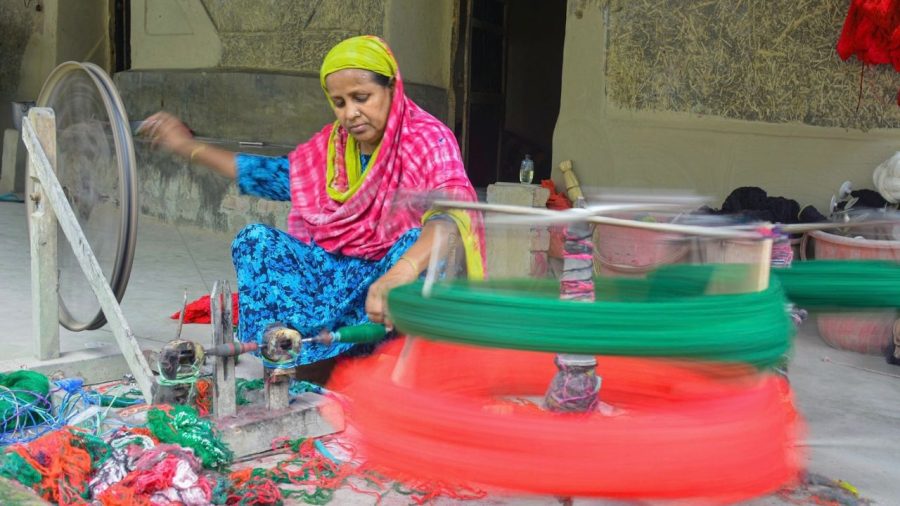

Once, these threads were used to weave stories of the future. Today, the same threads have become a symbol of the struggle for survival.
In Mohanpur village of Akkelpur Upazila, Joypurhat District, several families are fighting to preserve a traditional craft passed down through generations.
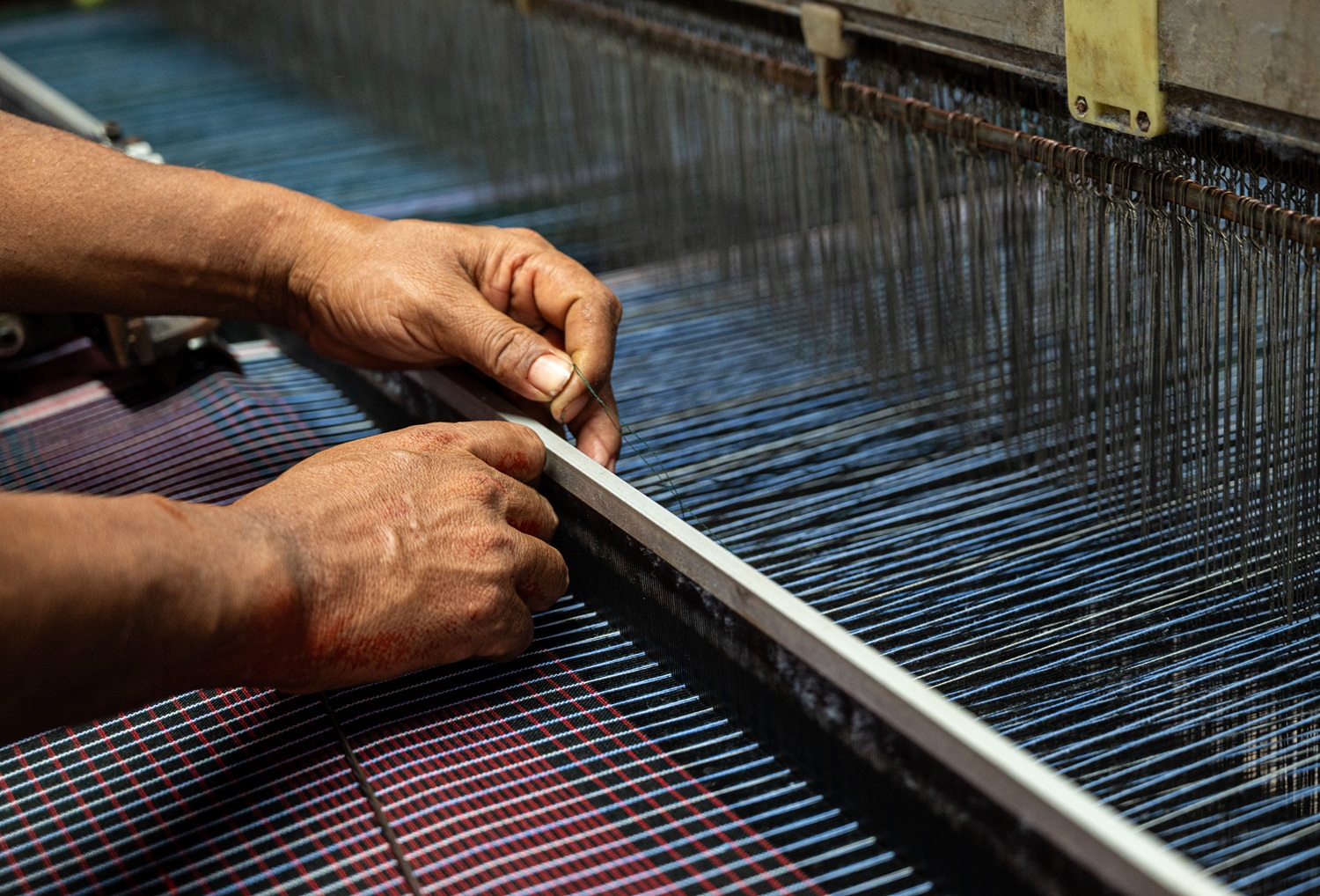
The handloom industry, once an important part of rural life, is now gradually disappearing as modern machines and mass-produced textiles replace traditional weaving.

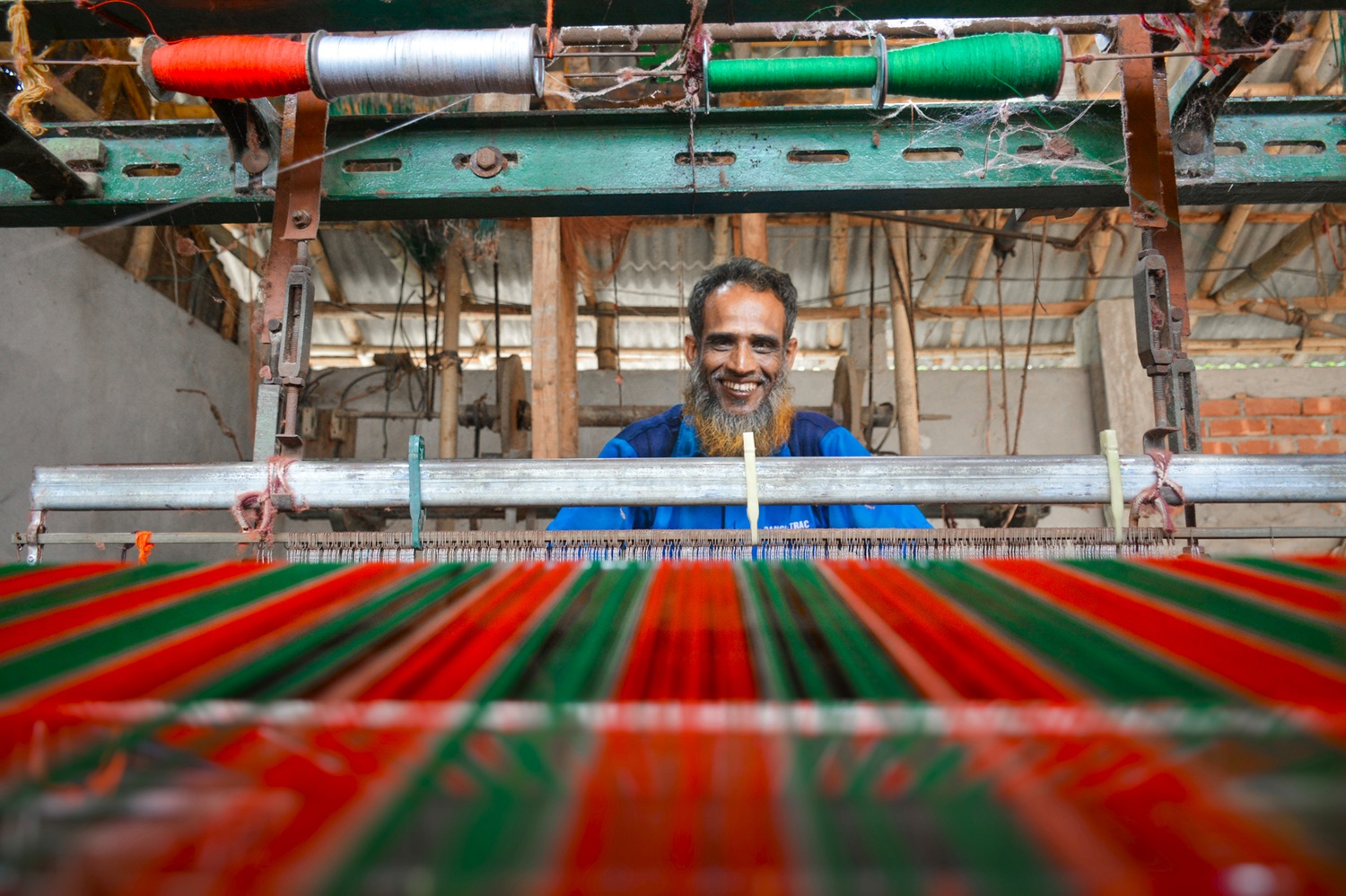
Yet, some families continue to keep this age-old profession alive. Using colourful threads, they produce gamchas, lungis, blankets, mats, and other everyday items by hand.
The rhythmic click-clack of the loom still echoes through their courtyards: a sound that was once the heartbeat of rural Bengal, now growing fainter with each passing year.




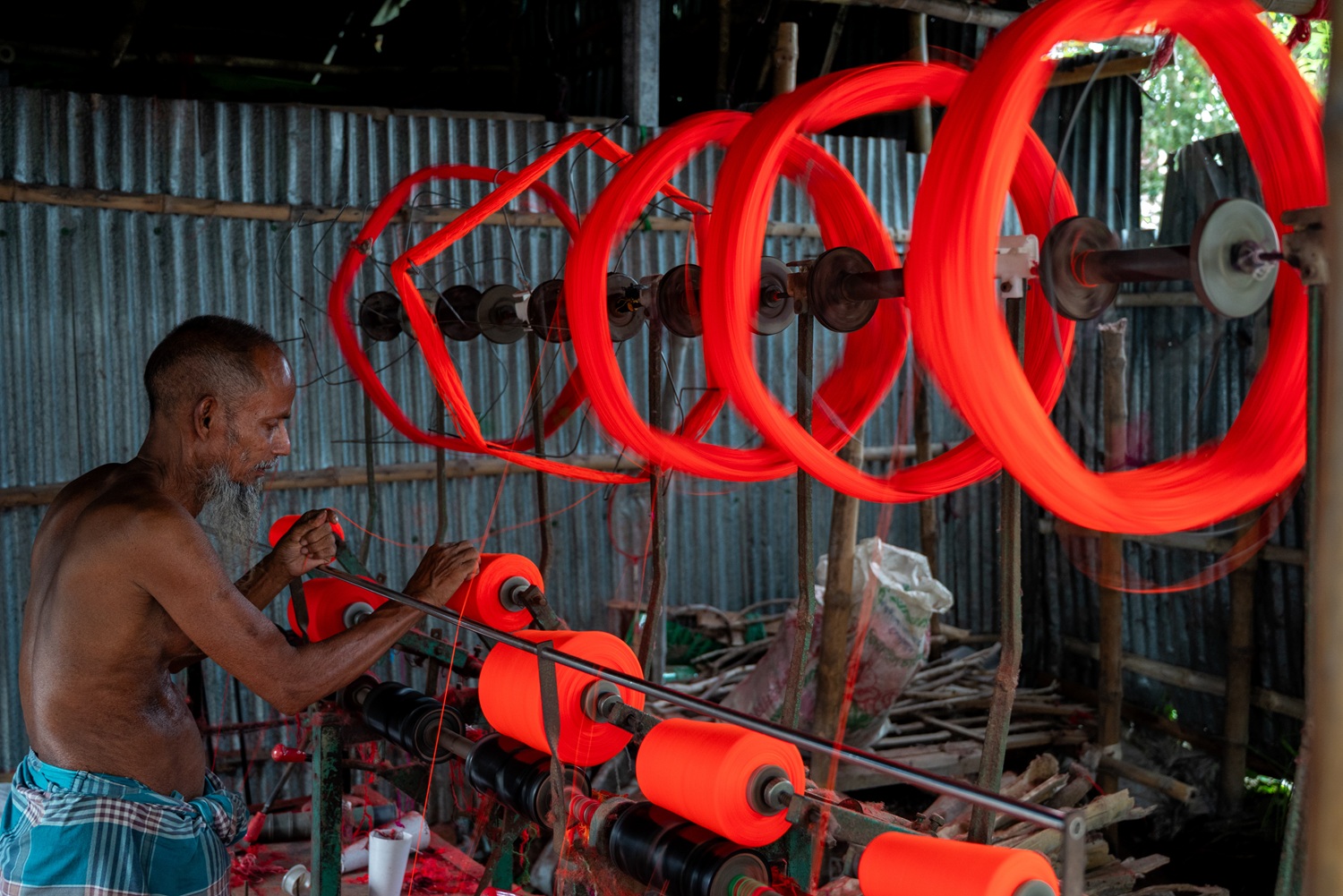
For them, every thread carries more than a product. It carries family heritage, generations of knowledge, and a continuing struggle to preserve a traditional craft that is slowly fading away.
The weavers work long hours for modest returns, competing with factory-made goods that are cheaper and faster to produce. Yet, they persist, not out of profit, but out of pride.
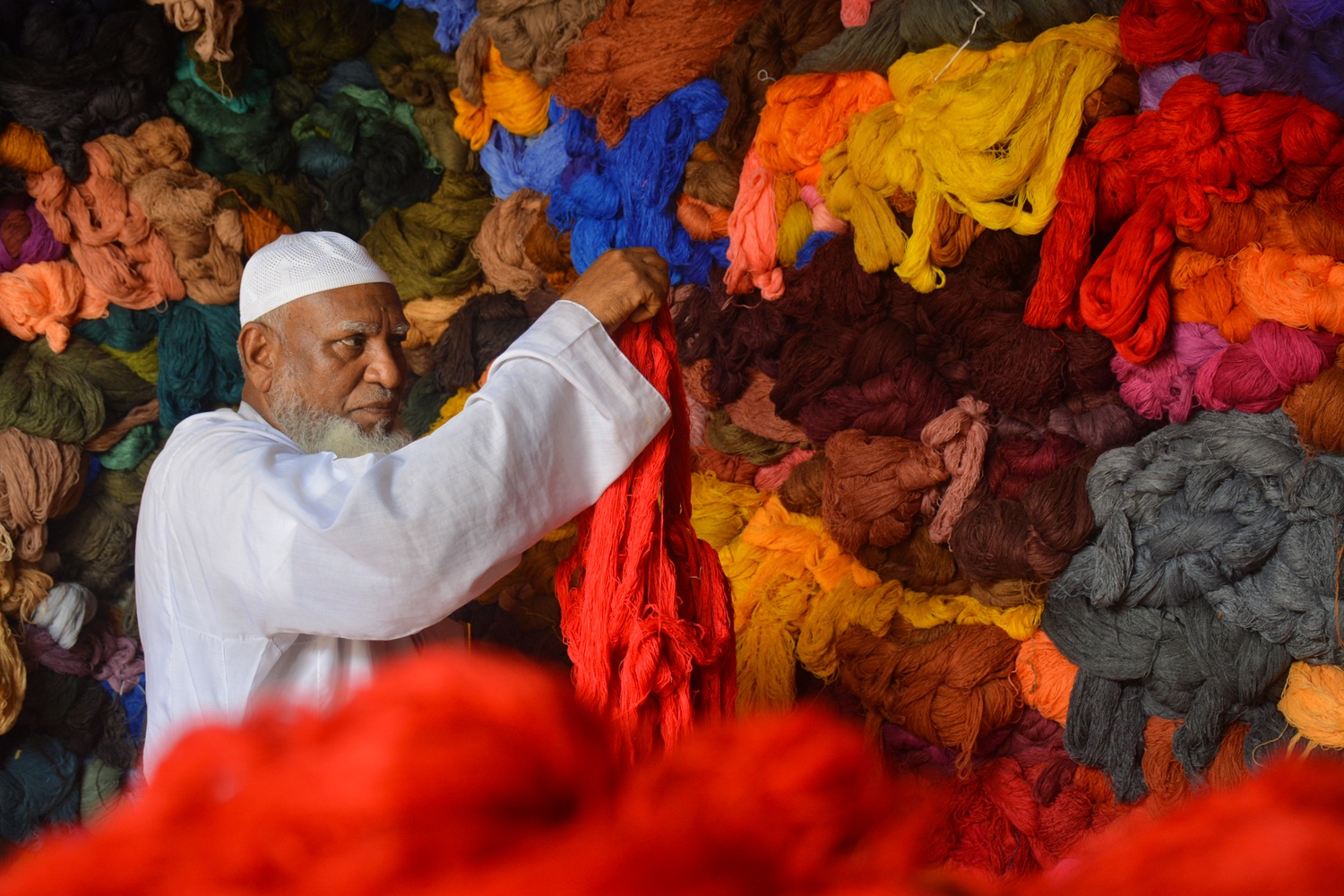
Their hands remember what machines cannot replicate: The patience of a craft learned in childhood, the rhythm of a loom passed from parent to child, the quiet dignity of creating something by hand.
In Mohanpur, the battle to keep the handloom alive is not just about economics; it is about identity. And as long as the looms keep moving, a piece of rural Bangladesh’s soul survives.