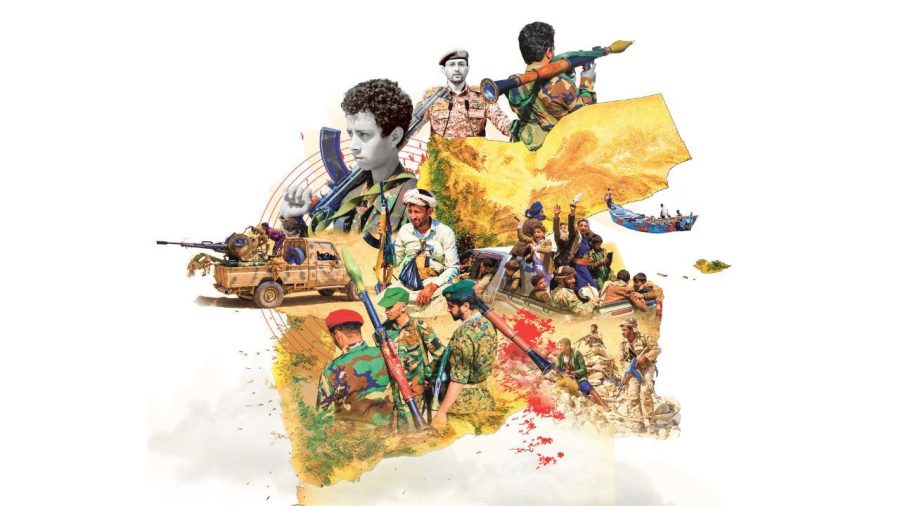

For more than a decade, Yemen’s Houthis have survived repeated military campaigns by some of the region’s most powerful militaries.
Now, as the Iran-backed group advances toward the strategic Bab el-Mandeb Strait and targets Saudi oil infrastructure and shipping, its growing strength is reshaping the wider conflict in the Middle East.
The Houthis’ rise dates back to 2015, when they seized much of northern and central Yemen, including the capital, Sanaa.
Saudi Arabia intervened that year to support Yemen’s internationally recognised government, launching years of airstrikes and imposing a naval blockade.
The campaign caused extensive destruction and civilian deaths but failed to dislodge the so-called rebels.
The Houthis benefited from Yemen’s mountainous terrain, where fighters and military infrastructure can be dispersed.
Their forces also expanded dramatically, from about 30,000 fighters in 2015 to an estimated 3,50,000 by 2024, according to UN experts cited by The Associated Press.

Iran has provided training, expertise and sophisticated weapons, although Tehran denies arming the Houthis in violation of a UN arms embargo.
Iranian-made or Iranian-derived missiles, drones and components have repeatedly been intercepted in shipments bound for Yemen.
The Houthis now possess ballistic and cruise missiles, drones and anti-ship weapons capable of threatening targets across the Gulf and Israel, as well as vessels in the Red Sea.




A 2022 ceasefire largely halted the fighting inside Yemen.
But after the Gaza war began in 2023, the Houthis started attacking Red Sea shipping, saying they were enforcing a blockade against Israel.
The United States and Britain responded with airstrikes from January 2024.
In 2025, the Trump administration intensified the campaign, dropping about 2,000 munitions on more than 1,000 targets.
The strikes cost the United States more than $750 million in munitions, while the Houthis destroyed seven US MQ-9 Reaper drones.
The campaign eventually led the Houthis to agree to stop attacking American ships, but they continued striking Israel.
Israeli retaliation later killed the Houthi prime minister and other senior officials and hit a key port.
When the Iran-US war began, the Houthis initially stayed largely on the sidelines.
By July, however, they resumed attacks on Saudi Arabia and declared a blockade on Saudi shipping.
Their renewed offensive has exposed the limits of air power.
Anti-Houthi forces remain fragmented, with Saudi-backed government forces and UAE-backed southern separatists divided among themselves.
With Saudi Arabia reluctant to launch another ground war and Washington focused on Iran, the Houthis face limited pressure to negotiate.
Their demand that Saudi Arabia lift its blockade remains a major obstacle, while continuing US-Iran tensions make a broader diplomatic settlement increasingly difficult.