
The government has made a credible start in delivering its electoral commitments on primary education, but sustaining momentum through to full implementation remains the real challenge, a study by the Citizen’s Platform for SDGs, Bangladesh revealed on Saturday.
The findings were presented at a dialogue titled “Is the Government Delivering? Spotlight on Primary Education,” organised by the Citizen’s Platform for SDGs at a hotel in Gulshan, Dhaka.
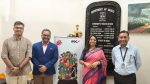
Towfiqul Islam Khan, additional director (Research) at the Centre for Policy Dialogue (CPD), presented the keynote paper, whilst Dr Debapriya Bhattacharya, convener of the Citizen’s Platform for SDGs, Bangladesh, chaired the session, and State Minister for Primary and Mass Education Bobby Hajjaj attended as the chief guest.
Using a five-stage evaluation framework ranging from “Reform Proposed” to “Action Implementation”, the study tracked 24 election manifesto pledges relevant to primary education – three focused specifically on primary and pre-primary education, and 21 classified as cross-cutting issues affecting both primary and higher levels.

The study revealed that none of the pledges have yet reached the final “Action Implementation” stage.
Of the three primary-specific commitments, one is currently at “Reform Initiated”, another at “Legal & Policy Framework”, and the third at “Operationalisation”.

Among the 21 cross-cutting pledges, eight have progressed to “Operationalisation”, including the mid-day meal scheme, free school uniform distribution, teachers’ retirement benefits, the “One Child, One Tree” campaign, and multimedia classrooms.
Researchers noted that quick-win, symbolic initiatives have advanced most rapidly, whereas several structural reforms – such as establishing an Education Reform Commission, providing health protection for female students, and launching a dedicated educational television channel – remain stalled at the proposal stage.
Regarding financing, the study highlighted that the education budget for FY2026-27 stands at 1.8 per cent of GDP, still 0.4 to 0.5 percentage points below the trajectory required to reach the Citizen’s Platform’s proposed target of 5 per cent of GDP by 2031.
Budget utilisation has also lagged, with actual education expenditure reaching only around 1.3 per cent of GDP in FY25, whilst overall fund utilisation dropped to approximately 76 per cent between FY23 and FY25.
The study identified the delayed rollout of the fifth Primary Education Development Programme (PEDP5), to which 16 of the tracked pledges are linked, as a critical bottleneck, warning that further delay risks compressing its 2026-2031 implementation window and hindering progress on foundational literacy, teaching quality, and school infrastructure.
To address these challenges, the study recommended providing immediate clarification on the causes behind the delay to PEDP5, scrutinising whether increased budget utilisation reflects genuine investment in educational quality rather than rising administrative and salary costs, ring-fencing education allocations amid tight fiscal constraints, publishing citizen-friendly quarterly budget reports, and resolving long-standing procurement and project-implementation bottlenecks.