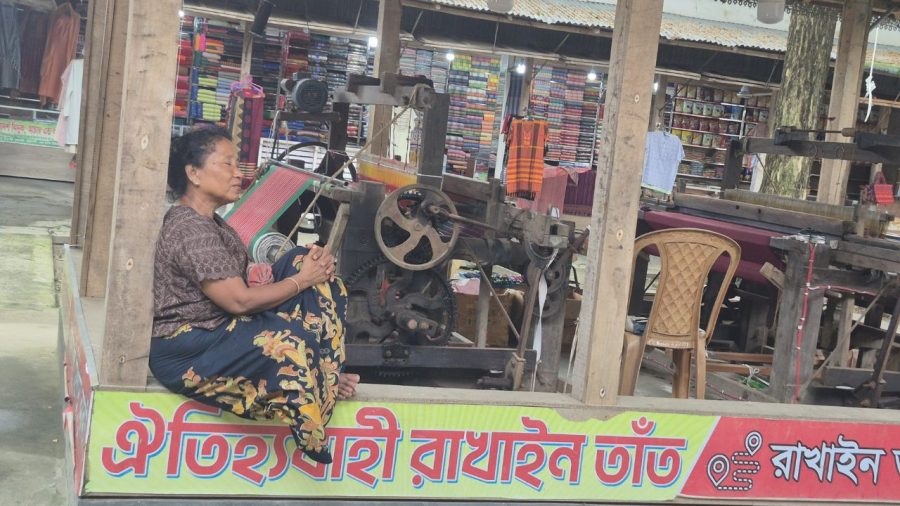

For generation after generation, the weaving craft has been an inseparable part of the life and culture of the Rakhine community. At one time, almost every Rakhine woman had to learn weaving from childhood to meet her family’s clothing needs. The skill of making clothes was not merely a means of livelihood then; through it, the Rakhine people’s designs, colours, clothing styles and cultural identity spread from one generation to the next.
But that life has changed with time. According to the Rakhine community, due to the effects of climate change, land occupation, loss of land and migration elsewhere, the number of families in the Rakhine village of Misripara in Patuakhali’s Kalapara upazila has steadily declined. They claim that although more than 300 Rakhine families once lived in this village, only 21 families remain at present.

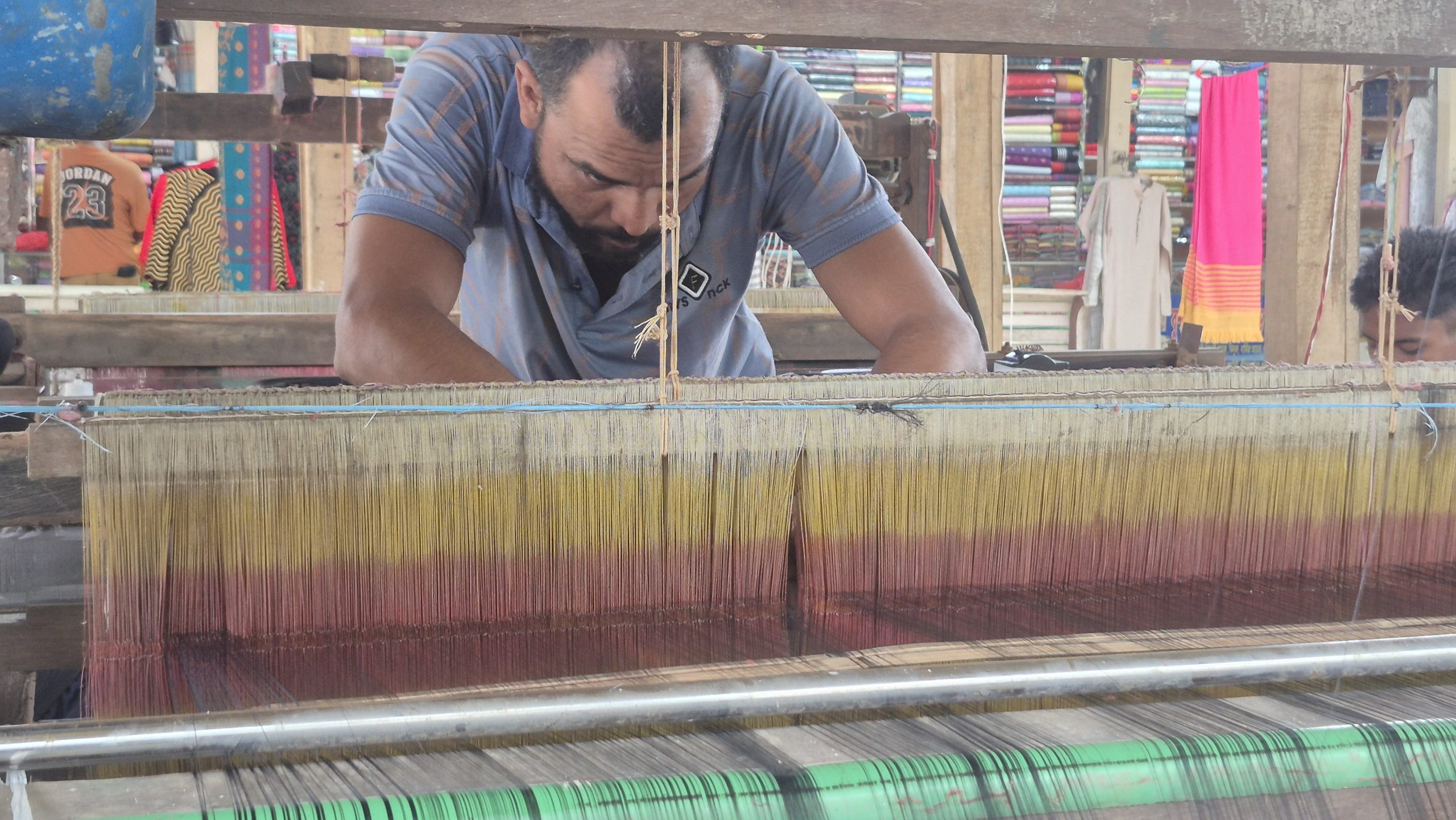




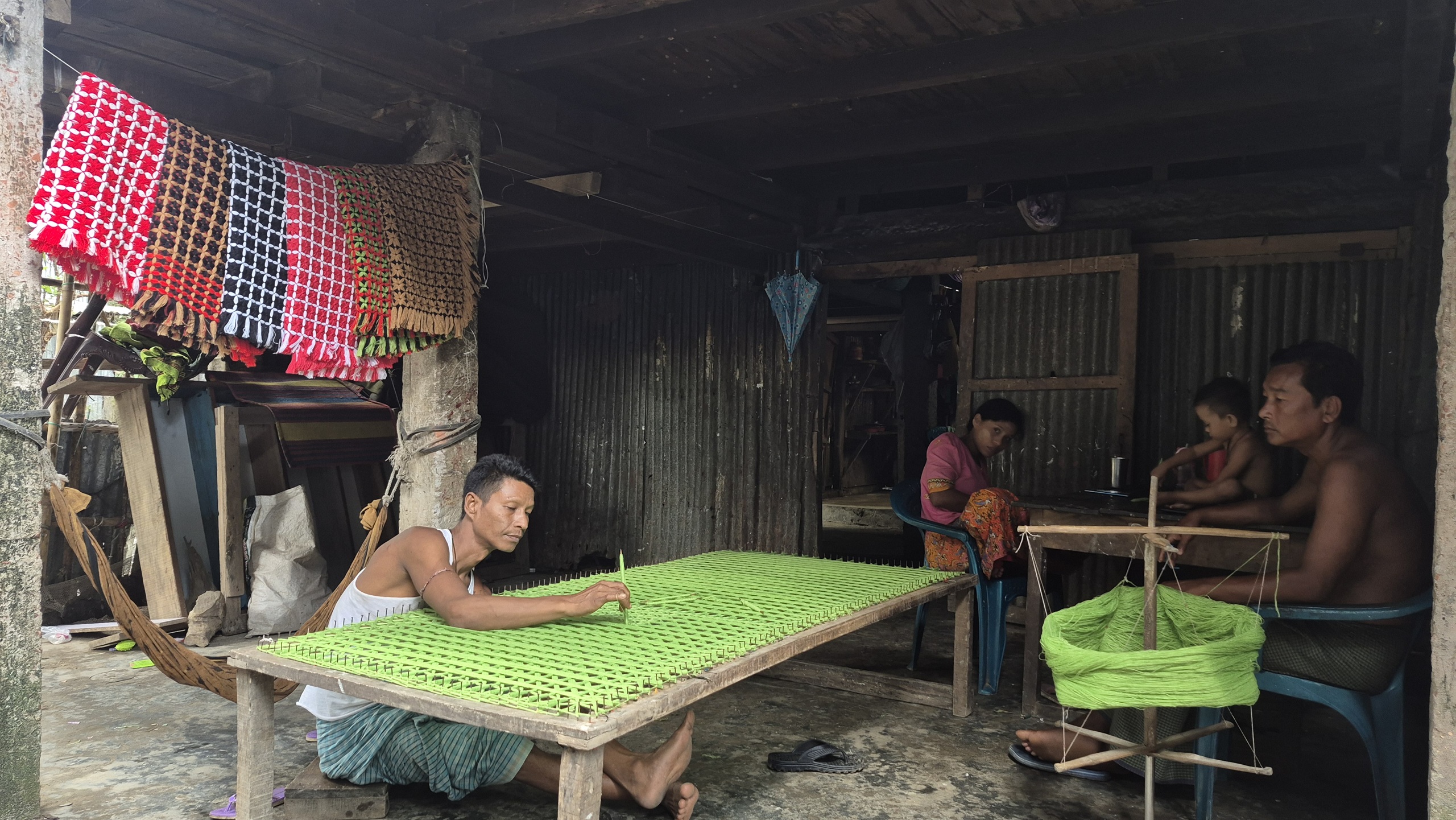
Even amid the declining population and uncertain livelihoods, many of the remaining families still hold on to weaving. On looms set up in their courtyards or in a part of their homes, they make shawls, chadars and various types of clothing. For them, this work is at once a livelihood and an effort to preserve a heritage inherited from their ancestors.
However, Rakhine artisans say they are not earning enough from making woven products. According to them, the price of yarn is currently around Tk450 to Tk500 per kilogramme. Making a shawl or a large garment requires a significant amount of yarn and takes two to three days of hand weaving. But they do not get a fair price for their products compared to the production cost and labour. As a result, saving from this profession is far off – even running daily life has become difficult.
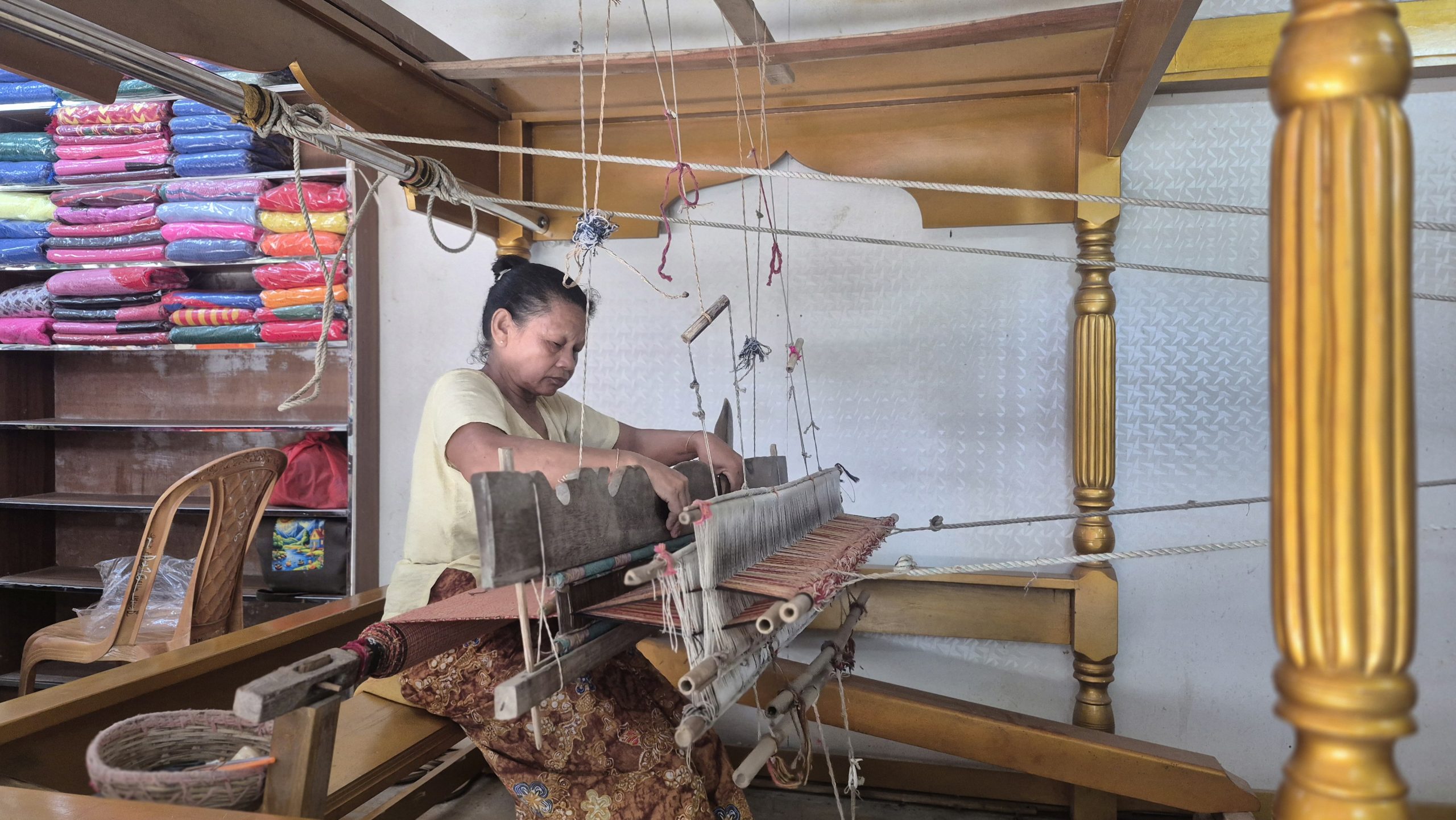
Many from the local Bengali community have now learnt weaving from the Rakhine and joined this profession. Although this creates the potential for expanding the production and market of woven goods, the question also arises of how the Rakhine artisans’ own designs, knowledge and cultural rights will be preserved. If proper support, fair prices and the participation of the new generation are not ensured, there is a fear that along with the population, the Rakhine’s weaving-centred heritage will also be lost.