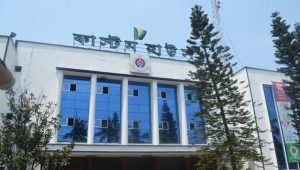
Six years after its last public hearing on LPG pricing, the Bangladesh Energy Regulatory Commission (BERC) has raised charges for importers, marketing companies, distributors and retailers. However, market discipline remains elusive, with consumers still paying Tk500 or more above the government-fixed price for a cylinder.
Consumers and organisations advocating consumer rights have questioned the purpose of holding public hearings if sales at the fixed prices cannot be ensured. They have also asked why BERC announces prices at all if it cannot hold companies and businesses accountable.
BERC has remained silent since announcing the revised prices. The government, which issued several stern warnings over the past two months, has also gone quiet. Drives conducted by the Directorate of National Consumer Rights Protection and district administrations against LPG retailers in various areas over the past month have also stopped.
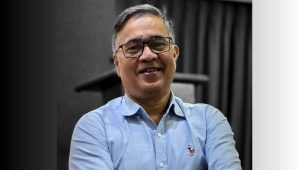
BERC Chairman Jalal Ahmed told TIMES that the commission had received information about three operators charging higher prices. However, these operators do not import LPG themselves; they buy it from companies operating in the domestic market and sell it to consumers. The operators have been called in, he said.
The BERC-fixed price for a 12kg LPG cylinder was Tk1,837, but cylinders were selling for Tk2,200–2,500 since the last week of September. Following the public hearing, BERC raised the price by Tk223 to Tk2,060.
However, consumers are still paying Tk2,200–2,500 per cylinder.
Riyadul Karim, a media professional living in Mohammadpur, took a dig at the situation in a Facebook post, writing: “For the past month and a half, 12kg cylinders have been selling in the market for Tk2,200 to Tk2,300. BERC has now fixed the new price at Tk2,060. But journalists have reported that LPG prices have increased.”

Another media professional, Hafiz Mollah, who lives in Moghbazar, jokingly commented on the post: “So the price has actually gone down.”
Abdus Salek Howlader, owner of Fatema Enterprise in Basila, Mohammadpur, said he was selling Bashundhara and Beximco cylinders for Tk2,500 each, Uni cylinders for Tk2,300 and iGas cylinders for Tk2,200.
He said the cylinders had been selling for around Tk200 less before the latest price revision.
Asked why he was charging more than the fixed price of Tk2,060, he said: “We do not get them at the government rate. We have to buy them at a higher price. To sell at the government rate, we would have to buy them for Tk1,900 to Tk1,950. But our purchase cost is Tk2,200 to Tk2,400.”
He also said supplies were insufficient to meet demand. “They cannot supply gas. Beximco does not come, and neither does Bashundhara,” he said.



BERC does not hold public hearings when setting LPG prices unless required to do so by law. Meanwhile, the LP Gas Traders Cooperative Society Limited announced nationwide strikes for 15 and 16 October, demanding seven measures, including higher commissions for dealers.
At a meeting between business representatives, senior government officials and BERC at the Secretariat on 14 October, it was decided that a public hearing would be held on 29 October to consider the businesses’ demands.
At the hearing, importers, distributors and dealers argued in favour of higher charges. The Consumers Association of Bangladesh (CAB), which advocates consumer rights, meanwhile, raised concerns over cylinders being sold above the fixed prices.
Without taking action against anyone for charging more than the prescribed rates, BERC announced revised prices on 2 November. Under the new rates, storage and bottling charges for importers and marketing companies were set at Tk80.88, while distributors’ and retailers’ charges were increased by Tk35 and Tk25 respectively.
A further Tk82.12 was added to reflect higher international prices and increased import costs amid the depreciation of the taka against the US dollar.
However, despite repeatedly revising prices in the past, BERC has failed to ensure that LPG sellers charge the prescribed rates. The same has happened again, even after the latest increase in charges.
SM Nazer Hossain, vice-president of CAB, told TIMES: “BERC has taken no action on this issue. It has become merely an authority for increasing prices. It is as keen to raise prices as it is reluctant to ensure that products are sold at the prescribed rates.”
Criticising the absence of any mechanism to hold companies, distributors or sellers’ associations accountable during public hearings, he said, “Whenever businesses come forward with applications to increase prices, BERC readily agrees to raise them. Therefore, its role cannot in any way be described as pro-people or consumer-friendly.”
Md Nasir Uddin, general secretary of the LP Gas Traders Cooperative Society Limited, which had threatened a strike demanding higher charges for distributors and retailers, was asked why prices remained above the prescribed rates even after the businesses’ demands had been met.

He told TIMES that he had also approached BERC over the issue. According to him, the commission had said that not all companies selling LPG in the market imported it themselves. Some bought gas from other importers and sold it in cylinders, contributing to market distortions.
He said stopping dealers from purchasing cylinders alone would not solve the problem. “Anyone who has cylinders will naturally want to refill them with gas and sell them to keep the cylinders in circulation.”
BERC Chairman Jalal Ahmed made a similar argument when asked about the issue.
However, when reminded that there was no legal scope for charging more than the announced price, he was asked whether the commission would take action against those doing so.
“There is no legal scope for this. We have the authority to hold them accountable. We are trying to do that,” he said.
Saying that three operators had been called in, he added, “The member in charge of gas will speak to them.”
However, the BERC chairman could not identify the three operators.
He said, “We collected the companies’ sales figures last September. They are now developing software through which companies will submit their sales figures every day.”