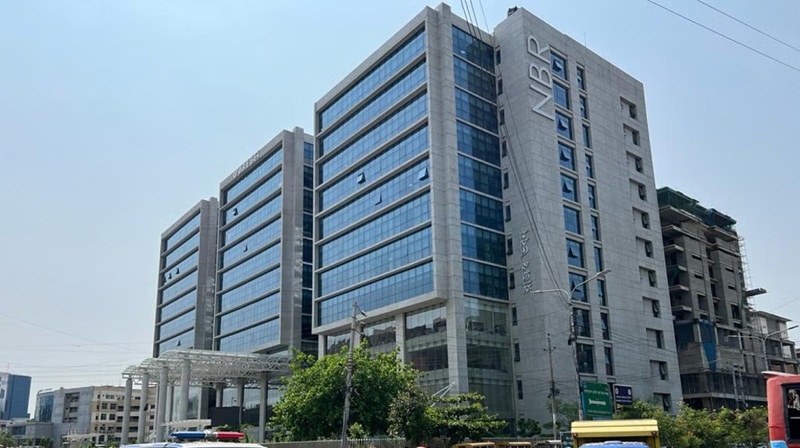



After missing its revenue targets in July and August, the National Board of Revenue (NBR) stepped up sector-based collection drives, monitoring and field-level supervision in an effort to improve revenue mobilisation. But collections still fell Tk16,388 crore short of the September target, extending the shortfall into the third consecutive month of the 2026-27 financial year.
The tax authority collected Tk36,955 crore in September against a target of Tk53,343 crore, falling 30.7 per cent short of its goal.
The shortfall for the first quarter stood at Tk41,879 crore, with NBR collecting Tk92,517 crore against a target of Tk1,34,396 crore. It achieved around 69 per cent of its quarterly target.
In July and August, the revenue shortfall was Tk25,491 crore. Collections during the two months totalled Tk55,562 crore against a target of Tk81,053 crore. Despite the shortfall, revenue collection recorded year-on-year growth of 1.23 per cent.
To improve collections, NBR instructed field offices to conduct monthly sector-based operations and check whether members of business associations had business identification numbers (BINs).

It also ordered customs, VAT and income tax officials to coordinate monthly drives targeting one major sector. The pharmaceutical industry was targeted in September, with another sector planned for October.
Customs houses, land customs stations and specialised offices were told to maximise their capacity. Officials were also instructed to inspect major customs stations, coordinate intelligence operations between central and local offices, and join task-force meetings online.
Former NBR Chairman Muhammad Abdul Mazid attributed the revenue shortfall to slower economic activity, targets that were too ambitious and did not reflect the authority’s collection capacity, and administrative stagnation.




All three major revenue streams – VAT, income tax and travel tax, and customs duties on imports and exports – missed their targets in the first quarter. The VAT shortfall alone accounted for nearly 48 per cent of the total deficit.
NBR collected Tk29,348 crore in VAT against a target of Tk49,405 crore, leaving a shortfall of Tk20,057 crore. Collection was 41 per cent below the target.
Income tax and travel tax collections stood at Tk33,040 crore against a target of Tk42,726 crore, leaving a deficit of Tk9,686 crore.
Customs duties on imports and exports generated Tk30,129 crore against a target of Tk42,265 crore, resulting in a shortfall of Tk12,136 crore.
The VAT shortfall followed a budget proposal to shift returns from monthly to quarterly filing. NBR later restored monthly filing over concerns about its impact on revenue collection.
Former NBR Member (VAT Policy) Md Abdur Rouf said quarterly filing had hurt collections, as businesses fell behind in submitting returns and paying taxes. Sluggish business activity also contributed to the decline, he said.
Customs revenue depends on import volumes, the quantity and value of traded goods, and overall business activity. Income tax collection performed relatively better but could not offset the shortfalls in other streams.

FBCCI Administrator Md Fazlul Hoque said business conditions remained weak and recovery would take time. He said the government needed higher revenue to meet rising expenditure but should focus on identifying tax evaders and bringing people outside the tax net into the system.
NBR has set a revenue target of Tk6.04 lakh crore for the current financial year, against collections of Tk4,10,390 crore in the previous year. It needs to collect nearly Tk1,94,000 crore more than last year’s total.
CPD Distinguished Fellow Mustafizur Rahman said pressuring taxpayers alone would not be enough. Business, trade, imports, exports and development activities needed to gain momentum, while NBR should strengthen its technological capacity, pursue institutional reforms and train its staff.
Knowledge Hub Institute Trust Chairman Khandaker Golam Moazzem said the economy had the capacity to generate more revenue, but the necessary measures had not been taken. Bangladesh’s tax-to-GDP ratio remained among the world’s lowest, while tax exemptions, evasion, the informal economy and gaps in automation constrained collection.
He called for rationalising the tax structure and expanding the formal economy to improve revenue mobilisation.