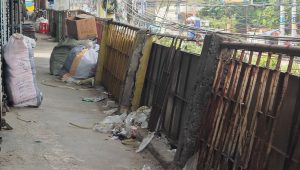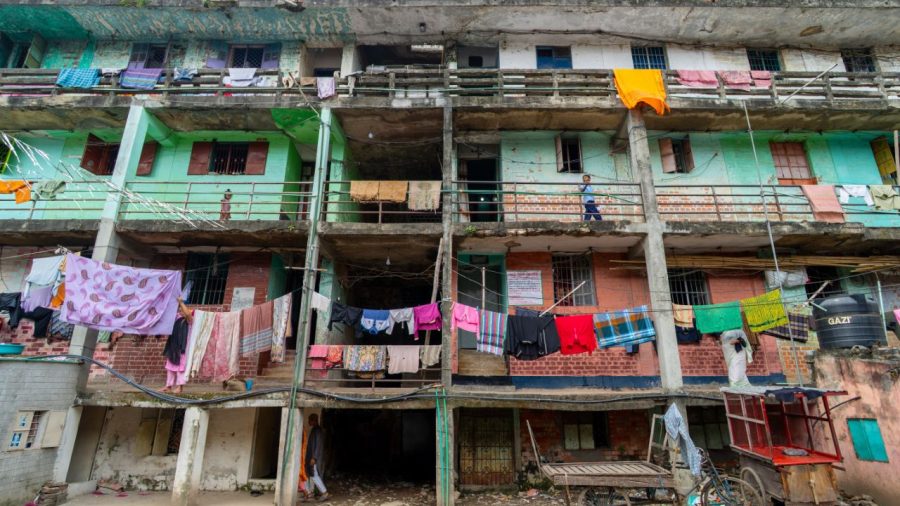

Buildings No 2 and 3 at the Bihari Camp in Mirpur, Dhaka, have remained dilapidated and vulnerable for years.
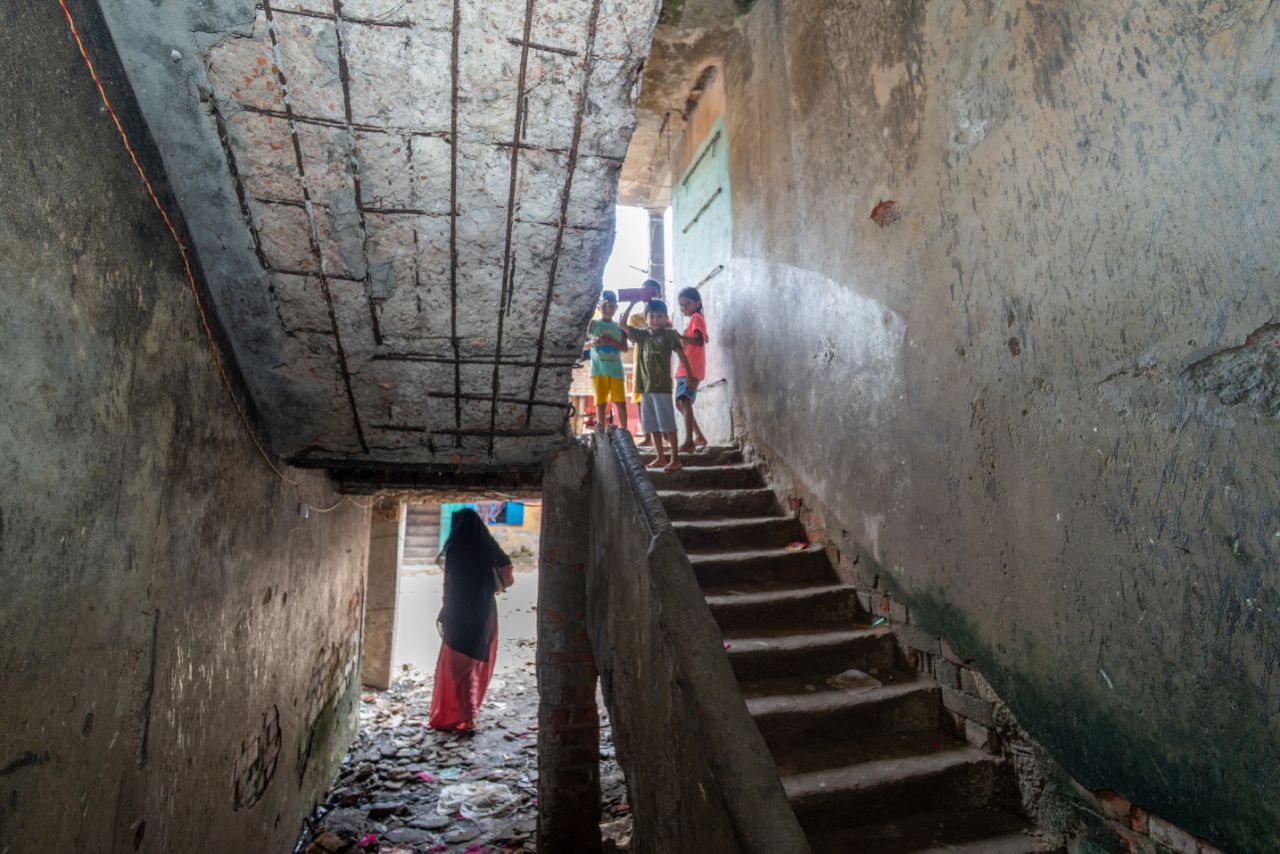
Numerous families are living amid cracked walls, damp floors, and unstable structures.
Residents fear that a major accident could occur at any time unless the buildings are repaired or they are relocated.
In the overcrowded buildings, six to 10 people often have to live in a single room.
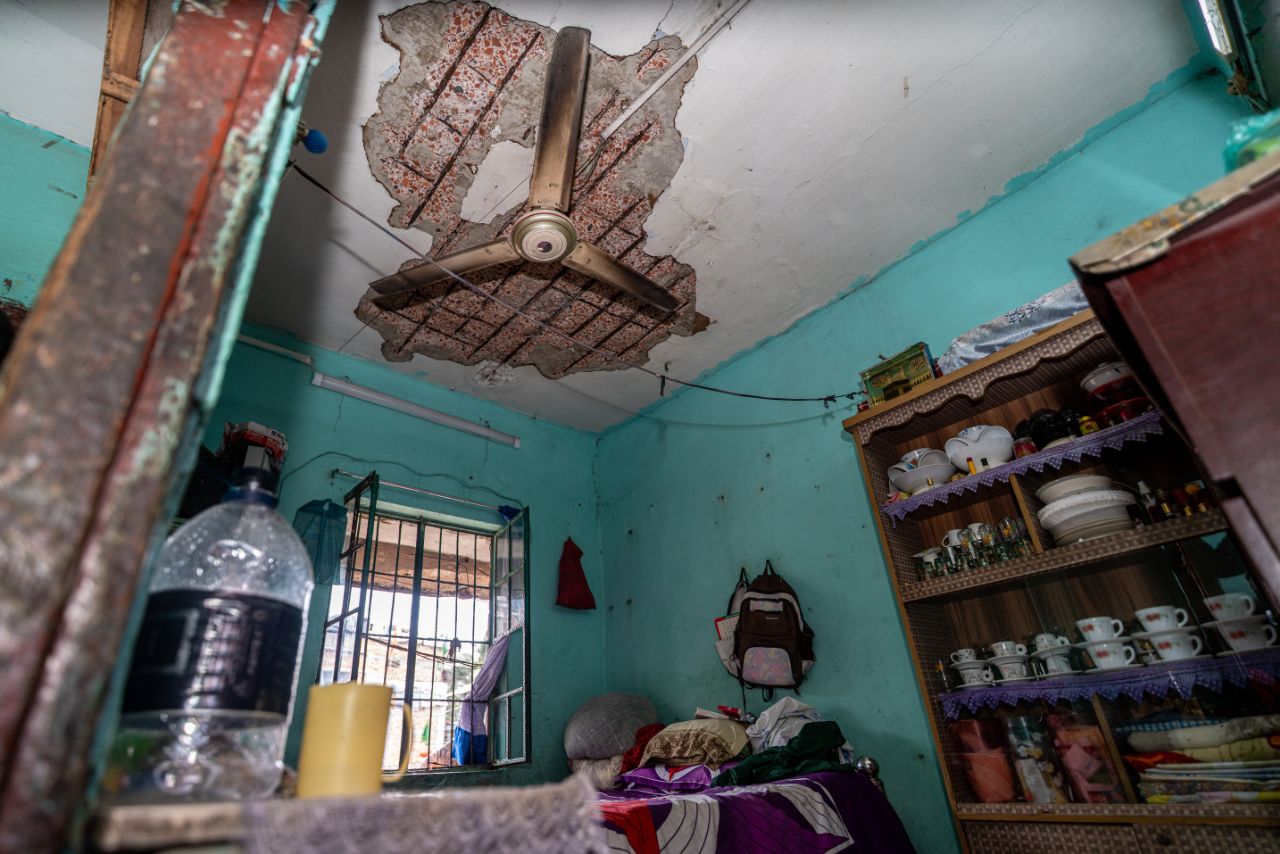
Cooking, sleeping, and children’s studies all take place in the same cramped space.

As a result, the housing crisis is also contributing to health risks, safety concerns, and mental stress.
Overcrowding has severely affected privacy, women’s safety, and children’s education.
Damp rooms, inadequate water supply, damaged drains, and poor sanitation are adding to residents’ suffering.



During rainfall, accumulated sewage and waste create further public health risks.
For the families who live here, every day is a negotiation with their surroundings.
Children study in rooms where the walls weep moisture.
Women navigate spaces where privacy is a luxury.
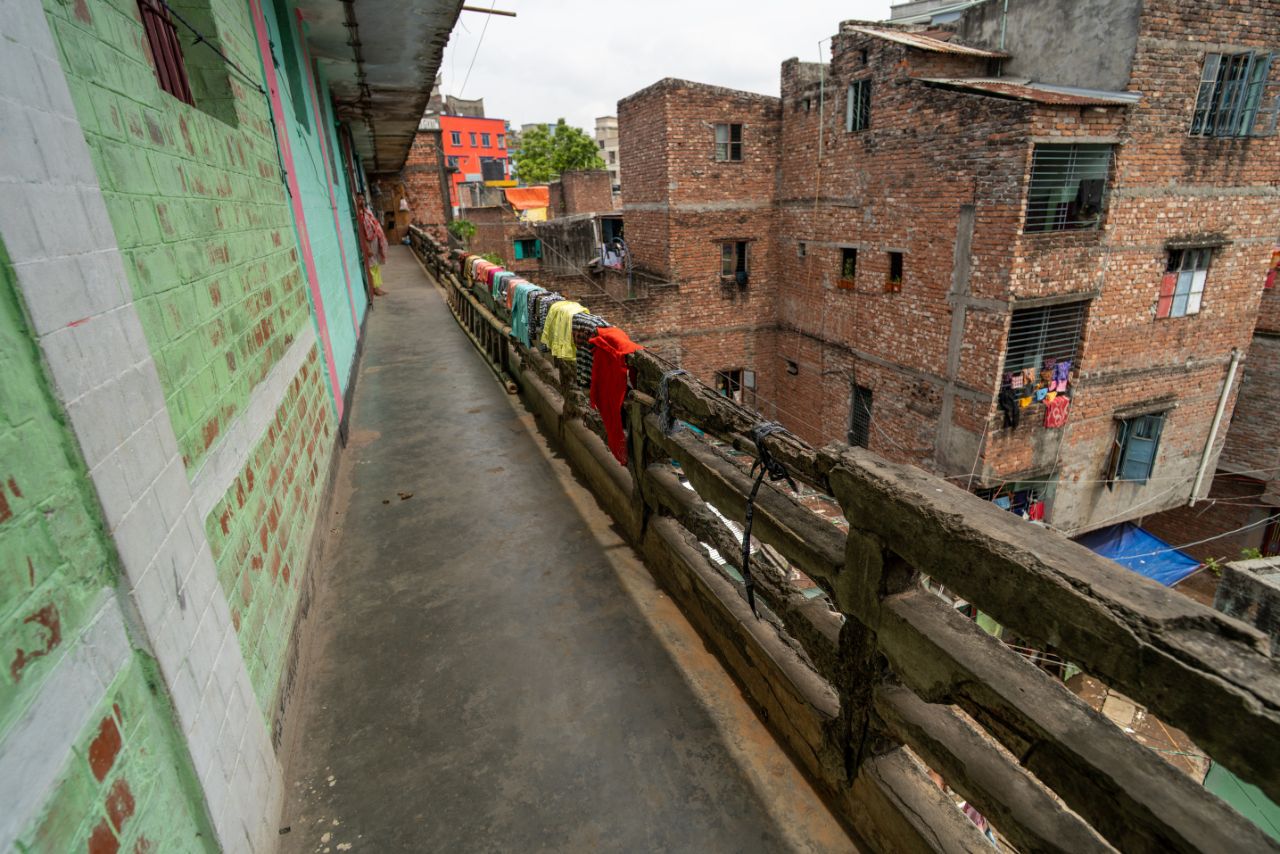
The elderly contend with staircases that tremble underfoot and floors that have softened with years of neglect.
Residents are demanding an urgent engineering assessment of the two buildings.
If they are found to be unsafe, authorities should take immediate steps for repair, relocation to safer areas, or long-term rehabilitation.
Behind the cracked walls are the lives of countless people, including children, women, and elderly residents.
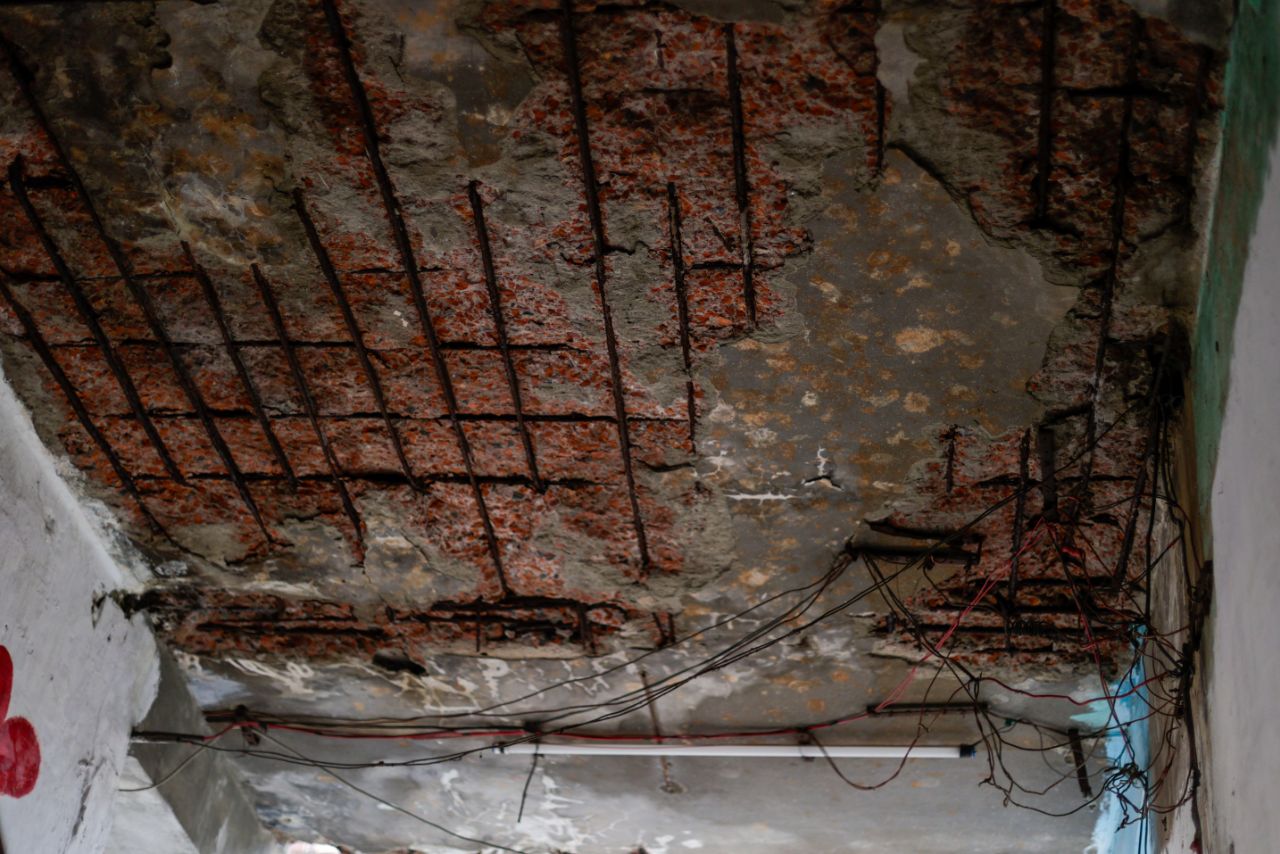
The Bihari Camp has long been a symbol of neglect, a community that has waited decades for basic rights and dignified living conditions.
Buildings No 2 and 3 are now a stark reminder of that wait.
For the families who call them home, the question is no longer whether the structures will fail, but when.
And unless the authorities act, they will continue to live in the shadow of a disaster waiting to happen.