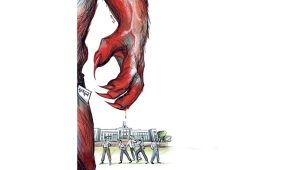
Factional disputes are widening across Awami League even as most of its leaders remain either in hiding or in prison following the mass uprising that ousted the party from power, and its activities remain banned in Bangladesh.
The rifts, spanning the central leadership to grassroots units, have become increasingly visible among fugitive leaders. Party insiders say disputes exist in almost all of AL’s 83 organisational district units.
To contain the divisions, a core committee headed by AL President Sheikh Hasina, who is staying in Delhi, has been formed, while a separate platform, the Awami League Research Team (ART) is collecting organisational information to support its work.
Several central leaders told TIMES that meetings joined virtually by Hasina have seen leaders from different units trade allegations against one another. Claims that a presidium member, several former ministers and a number of central leaders are fuelling the disputes are now increasingly surfacing in the open.
The divisions have intensified since Hasina announced that she would return to the country in December, creating unease among grassroots leaders and activists.
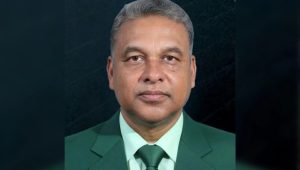
AL Presidium member Abdur Rahman, who recently returned to Kolkata from London, sought to play down the tensions.
“Awami League is an old and large organisation. Its workers and supporters are spread from cities to villages. There may be some disputes in such a large organisation. But everything will be resolved as required by the circumstances. Everything will be settled before December,” he told TIMES.

Leadership disputes are playing out openly in Dhaka, Gazipur, Narayanganj, Barishal, Feni, Tangail and Noakhali, while organisational tensions of varying intensity persist in almost every district and upazila, according to party sources.
Sheikh Hasina has instructed leaders in a series of online meetings to settle their differences and work together. But despite pledges of unity in her virtual presence, the situation on the ground remains sharply divided.
Party sources said the disputes are being driven mainly by competition over authority, party positions and nominations for future parliamentary elections.
AL Joint General Secretary AFM Bahauddin Nasim, however, sought to play down the scale of the divisions, saying Hasina’s message was final and the party’s strength lay in its grassroots.
Nasim said disputes had been resolved in many places and efforts were continuing from districts and upazilas down to villages. He also said a number of organisational committees had been reconstituted.




An AL central organising secretary disagreed.
Speaking on condition of anonymity, he said disputes exist in every district and among senior central leaders as well.
Even during one of the party’s most difficult periods, with many leaders in prison and almost everyone else in hiding, the conflicts have not diminished, he said.
The organising secretary said Sheikh Hasina is joining constituency-based as well as district- and upazila-level online meetings and has issued a firm message to leaders to abandon factional groupings and unite.
Joint general secretaries and organising secretaries are also working to settle disputes at district and upazila levels, although accusations and counter-accusations have deepened divisions in some areas.
Sujit Roy Nandi, the organising secretary in charge of Rangpur division, said Hasina had issued strict instructions at grassroots meetings to settle internal disputes and reorganise the party.
“Core committees have been formed to identify the causes of disputes in the areas where they exist and resolve them. Their responsibilities have been divided,” he said.
ART and core committee
An AL joint general secretary said the research team is centrally collecting and reviewing information on organisational activities across the country.
The core committee, chaired by Hasina, is working to identify and resolve problems.
Its members are working in each district under the supervision of the district president and general secretary, while ART is establishing online links among leaders and activists and facilitating communication for meetings with Hasina.
The core committee is also compiling reports identifying who remains active, who is inactive, who is in prison, who is on bail and how many cases – and what types of cases – have been filed against individual leaders.
ART collects and reviews these reports, which also provide constituency-level assessments of the party’s organisational situation.
Alongside active district AL leaders, the core committees include representatives from Jubo League, Chhatra League, Swechchhasebak League, Mahila Awami League and other affiliated organisations.
Former upazila chairmen, municipal mayors and union parishad chairmen are also included, while former central Chhatra League leaders are involved in many districts.
The Dhaka district core committee has 245 members, 35 of whom have been given special responsibility for preparing union-level organisational reports.
They are holding virtual meetings to identify problems and work towards resolving them.
Similar core committees have been formed across all organisational units, although their membership varies.