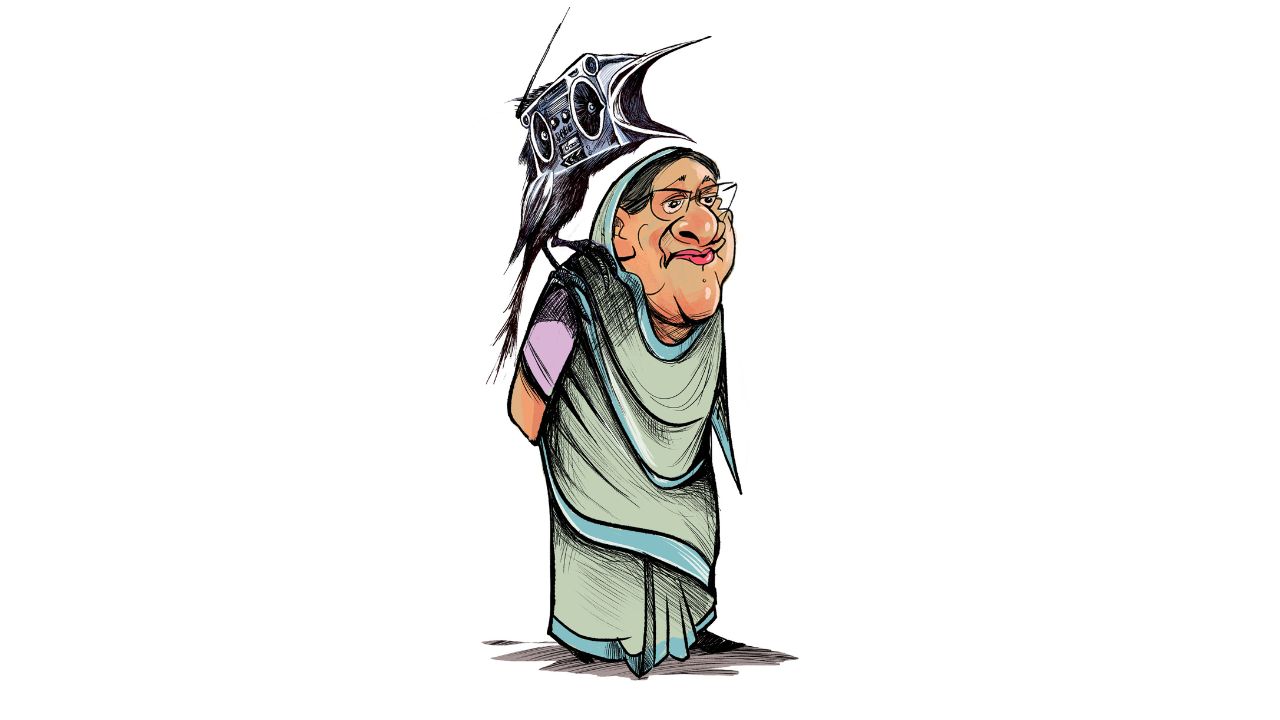



Struggling against deep public hostility over its brutal crackdown on the July Mass Uprising, the banned Awami League has launched an aggressive bid to rewrite its narrative, weaponising the deaths of police personnel in a desperate effort to soften its image and counter widespread condemnation.
The issue dominated the party’s messaging at a Foreign Correspondents’ Club of South Asia (FCC) event in New Delhi on Wednesday, where senior Awami League leaders repeatedly referred to the deaths and injuries suffered by police during the protests.
Awami League President and deposed Prime Minister Sheikh Hasina joined the event virtually and answered questions from journalists, while her son Sajeeb Wazed Joy also spoke alongside other party leaders.
Political analysts say the party’s latest focus on police killings is an attempt to regain public sympathy after facing criticism for using excessive force to suppress the July movement.
According to them, the Awami League believes raising the issue of attacks on law enforcement agencies could help it reconnect with sections of the public and the police force.
During the event, Joy linked demands for an apology over deaths during the July uprising with the issue of police killings.

A journalist asked Sheikh Hasina whether the Awami League would apologise for the killings during the July movement, Joy replied, “If that indemnity is withdrawn and steps are taken to bring those responsible for police killings to justice, the Awami League can consider the issue of apologising.”
Joy added that the party was also prepared to face the murder cases filed against its leaders and activists.
Sheikh Hasina claimed that 3,100 police personnel were killed or injured by protesters. She alleged that the interim government had passed an indemnity law protecting those responsible for police killings.




While addressing questions about her possible return to Bangladesh, Sheikh Hasina again avoided setting a specific date.
Asked when she planned to return, she said she wanted to come back during December, Bangladesh’s month of victory, adding that journalists would know when she eventually returned.
She also did not provide a clear response when asked what action she would take if the current government blocked her return.
“I do not know what the government will do,” she said.
During the discussion, journalists were reminded of her return to Bangladesh in 1981 and 2007 despite government restrictions at those times.
Another journalist asked whether she was communicating with the current government over her return or whether any behind-the-scenes efforts were underway.
No direct answer came from Sheikh Hasina. Instead, she repeatedly referred to India as Bangladesh’s “true friend”, saying India had sheltered pro-independence forces during the country’s liberation war in 1971 and political supporters of independence in 1975, and continues to provide support.
The FCC had earlier announced the “Sheikh Hasina Homecoming” event as a meet-the-press programme, saying it would be the first time the ousted prime minister would directly participate in a journalists’ event.
Later, the organisation clarified that Sheikh Hasina would not attend in person or through a video link but would join the programme through a live audio connection.
The announcement triggered strong reactions from the Bangladesh government.
Prime Minister’s Information and Broadcasting Adviser Zahed ur Rahman said media outlets were prohibited from broadcasting Sheikh Hasina’s statements.
Foreign Adviser Humayun Kobir also urged Indian High Commissioner Dinesh Trivedi not to allow Sheikh Hasina to engage in politics from Delhi.
Meanwhile, Chief Prosecutor of the International Crimes Tribunal Aminul Islam gave a legal explanation regarding the broadcast of Sheikh Hasina’s remarks.
He said there was no restriction on airing her statements unless they contained remarks deemed contemptuous of the court or incitement against the state.