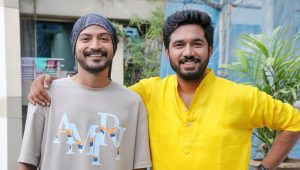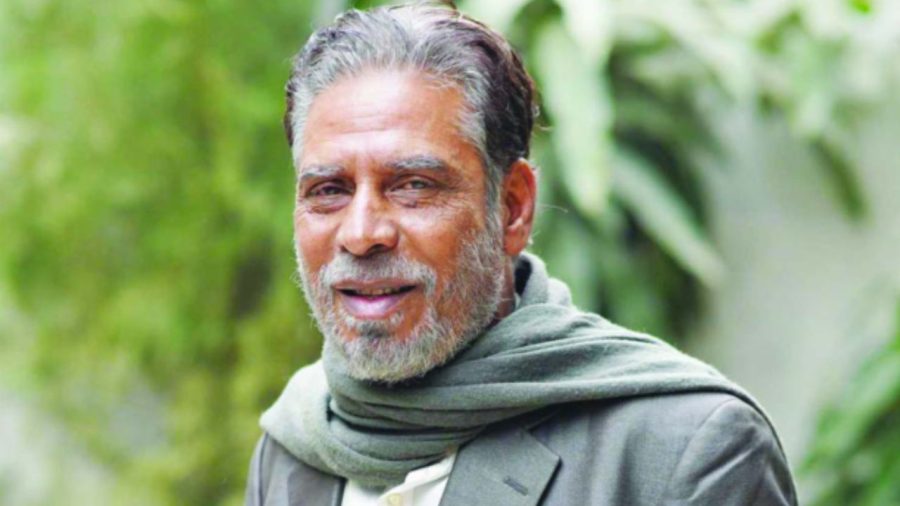

For decades, Rifat Chowdhury was a familiar face on Bangladesh’s television screens and in its literary circles. He acted in more than 500 television dramas, wrote poetry, edited a little magazine and built a career spanning both art and literature.
Now, seriously ill and largely alone, the veteran actor and poet is facing a very different battle. One involving hospital care, financial hardship and a painful sense of abandonment.
Rifat was admitted to Dhaka Medical College Hospital (DMCH) after his health deteriorated. But treatment did not come easily. He spent two days on the hospital floor because no bed was initially available. He was eventually moved to a cabin on Monday night, 21 September, and confirmed the development on Tuesday.
“I was moved to a cabin last night. I am now on bed rest. After all the tests are completed, the doctors will review my medical file and start treatment,” he said to media.
The development followed a media report on Monday, which drew wider attention to his condition and financial difficulties.
Rifat is now in Cabin 103 on the 10th floor of Medicine Unit 3 in DMCH’s new building. Physician and poet Amitabh Aranya, who has supported him since his admission, said most tests had been completed, with two more scheduled for Wednesday before the main treatment begins.

Rifat has been suffering from weakness, excessive fatigue, shortness of breath, chest pain and insomnia. He also has serious problems affecting his legs and waist and cannot walk properly.
Separated from his family for years, he went to hospital alone and has largely faced the crisis by himself, with Amitabh beside him.
Financial hardship has added to the ordeal. Rifat does not have a bank or bKash account of his own.



Rifat has said he does not want government financial assistance, instead appealing to financially capable individuals, businesspeople and cultural figures to support his treatment.
“If the government lends a hand for aid, I will not accept it,” he said.
He thanked those who have helped, including the Deputy Commissioner of Ramna Police Station, who visited him and provided financial assistance. “To me, it is really amazing that people from law enforcement are coming forward to help me,” he said.
But Rifat’s frustration runs deeper. “While I am alive, people will not look out for me, but it has become the nature of people to care more about someone when they are gone,” he said.
That statement carries weight given his contribution to the arts. Born in Kishoreganj in 1960, Rifat began writing in the 1980s and joined the little magazine movement, editing Chhat Kagojer Molat. His first poetry book, Alingoner Naam, appeared in 1984.
Reports say he has published 29 books, including Megher Protibha, Uthonto Brikkhyer Potro, Bodhir B-Dwip, Samudre Nuner Putul, Suprabhat, Surjya, Onno Mon Onno Jibon Onno Swapner Kotha, Age Poroni and Ami Ekjon Bhougolic.
His acting career began with Nurul Alam Atique’s Bijon Manush. Mostofa Sarwar Farooki’s Sixty Nine became his breakthrough, with his portrayal of ‘Jatiyo Kaka’ making him widely recognisable.
He later appeared in Bachelor and Meherjaan, and acted in more than 500 dramas, including House Full, Aim in Life, Patigonit, Four Twenty, Bonmanush, Bicycle, 420, Carrom and Murir Tin.
Now, the man who spent decades creating work for audiences is fighting for care without his family beside him.
Actor Chanchal Chowdhury has urged Rifat’s acquaintances, fans, colleagues and television and film organisations to come forward. “If we all stand by him, he is not alone,” he wrote, while also calling for proper treatment.
Actors Equity Bangladesh has stepped in too. A delegation visited Rifat on Tuesday, 22 September, to enquire about his condition and provide immediate financial assistance, promising further support if needed.
The gestures offer relief, but leave a larger question: how does an artist who gave decades to Bangladesh’s television and literary culture reach a point where illness, financial uncertainty and even a hospital bed become struggles faced largely alone?
Rifat still hopes to return to acting and poetry.
Perhaps his story is ultimately about what happens when the roles end, the cameras stop rolling and the applause fades.
Rifat Chowdhury spent much of his life in the spotlight. When an artist gives a lifetime to the culture that made him known, who makes sure he is not forgotten while he is still here?