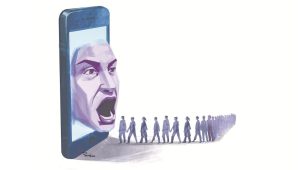
Anyone who has lived in or closely experienced life in the United States will soon notice that traffic discipline there is not simply a matter of strict policing; rather, it reflects a deeply rooted civic culture. Drivers stop at red lights even when roads are empty, pedestrians cross only at designated points, and vehicles instinctively slow down near schools and residential areas. These behaviours are not enforced every moment by law enforcement; they are learned habits, nurtured from early childhood and reinforced consistently by society.
In the US, traffic education begins at a very young age. Schools introduce children to basic road safety concepts through visual materials, storytelling, role-play, and practical demonstrations. Children are taught why traffic rules exist- not merely to avoid penalties, but to protect human life. School buses stopping traffic, strict school-zone enforcement, and pedestrian-first policies send strong signals about societal priorities. Over time, these lessons become second nature. By adulthood, citizens obey traffic rules instinctively, driven by conscience and responsibility rather than fear of punishment.
Government policy and enforcement play an equally important role. Obtaining a driving license in the US requires formal education, written and practical examinations, and a demonstrated understanding of traffic laws during road test. Licensing is treated as a serious civic responsibility, not a routine entitlement. Violations are recorded transparently, penalties are predictable, and favouritism is rare. Even parking zones are designated where you can park without payment and with payment through metered system. This certainty of enforcement builds public trust and reinforces compliance. Infrastructure planning further supports safe behaviour, with clearly marked lanes, pedestrian walkways, bicycle tracks, traffic-calming measures, and well-designed intersections that narrow down human error.
Bangladesh, unfortunately, presents a starkly different picture. Road accidents are increasing at an alarming rate, claiming thousands of lives every year and leaving countless families devastated. A major cause of this crisis is the lack of proper training and education for both drivers and pedestrians. Many people use roads daily without understanding basic traffic signs, lane discipline, pedestrian rights, or safe road-crossing practices. Reckless driving, poor driver training, overcrowded roads including occupying sidewalks by illegal hawkers and illegal parking of commercial and private vehicles, and unplanned mixing of motorised and non-motorised vehicles compound the danger.

Even more troubling is the culture of impunity surrounding road fatalities. In numerous cases, so-called ‘killer drivers’ manage to evade punishment through influence, corruption, or prolonged legal delays. When justice is delayed, diluted, or denied, it sends an alarming message that human life is negotiable and laws are flexible. Without quick, strict, and exemplary punishment for fatal road crimes, deterrence remains weak and public confidence erodes.
The US experience offers valuable lessons. First, traffic discipline must be treated as an educational and civic issue, not merely a law-and-order problem. Bangladesh must begin shaping behaviour early. Traffic rules, pedestrian safety, and civic responsibility should be made compulsory components of the national curriculum from primary school onwards, taught as essential life skills. Parents must also be actively involved, as children learn far more from observation than instruction. Many occasions parents ignore road safety rules showing their urgency thus impacting children not to follow rules.



Government initiatives are central to any meaningful transformation. A comprehensive National Traffic and Civic Education Policy is urgently needed, supported by reform of driver training and licensing systems to ensure transparency, merit, and accountability. Infrastructure development must prioritise safety, including clearly demarcated lanes for non-motorised vehicles such as rickshaws and bicycles, which currently share hazardous space with high-speed motorised traffic. Separate lanes are not a luxury; they are a necessity for saving lives.
At the same time, the private sector can play a critical supporting role through Corporate Social Responsibility (CSR) initiatives. Multinational and large corporate houses operating in Bangladesh possess both the resources and expertise to contribute to road safety. A notable example is Linde Bangladesh, a leading multinational company, which organises structured training programmes for both commercial and non-commercial vehicle drivers, including lorry, bus, and truck drivers. These programmes enhance professional driving skills, promote awareness of traffic laws, and instill a sense of responsibility among drivers. If other corporate houses follow this model- offering regular training, safety workshops, and awareness campaigns for drivers and pedestrians- the collective impact could be transformative.
Media, civil society organisations, educational institutions, religious leaders, and community groups must also be mobilised to build a nationwide movement for road safety and civic responsibility. Accountability within law enforcement agencies must be strengthened, with zero tolerance for corruption and consistent application of the law.
Finally, education must strike a balance between academic rigour and moral, ethical, and human values. Knowledge without values can produce skilled individuals, but not responsible citizens. Moral, ethical, and value-based education- presented inclusively and practically- can nurture respect for life, discipline, empathy, and accountability. These qualities naturally translate into law-abiding behaviour, both on and off the road.
The lesson from the United States is crystal clear: a disciplined and safe society is built when education, enforcement, infrastructure, moral values, and social responsibility work in harmony. If Bangladesh commits to this holistic and inclusive approach, its roads can become safer- and its citizens more conscious, responsible, and humane.
The author is a freelancer writing from New York, USA