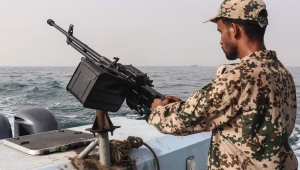
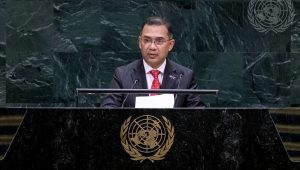
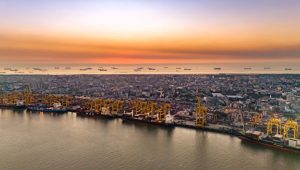
Despite Bangladesh’s geographical distance from the Middle East battlefield and the absence of direct military engagement, the shockwaves of the unfolding conflict are already beginning to impact the country’s economic and strategic environment. Especially, Iran’s use of the Strait of Hormuz like a lasso to control much of global shipping has effectively turned a distant war into a real economic confrontation for a country dependent on global energy flows. In that sense, the country is not outside the war and, indeed, we need to maintain our economic lifeline accordingly.
The emerging situation demands that Bangladesh treat this period as a national economic emergency where the objective is to protect stability, safeguard essential supply chains, and maintain public comfort. Achieving these goals will require a comprehensive austerity drive across every segment of the government apparatus and public life.
On a serious note, a country whose development growth pattern has long depended on export sectors, remittances, and energy imports cannot afford institutional mismanagement at a time of war. Under the fresh leadership of Premier Tarique Rahman, ministries are under comparatively new leadership, and senior bureaucratic positions are also undergoing transition. This also creates a temporary gap in experience precisely at a time when rapid crisis management is required. In such circumstances, since this is not the time to pursue highly ambitious projects, at least for the next six months while monitoring developments in the war, the government must adopt a focused and disciplined response framework built around five urgent strategic cells of governance, combining highly experienced figures headed by the minister of the respective line ministry. Every single cell will be directly responsible to the Prime Minister for final approval before execution.
The first cell is financial management. Bangladesh’s immediate economic problem is not simply low growth, but weakened confidence in the institutions that are meant to manage volatility, regulate the financial system, and anchor expectations. The early moves of the new government suggest that it understands the depth of the challenge. On February 25, entrepreneur and financial governance specialist Mostaqur Rahman was appointed governor of the central bank as part of a broader restructuring of key state institutions. This decision signals that restoring institutional credibility will be central to economic recovery.

International financial institutions have already outlined the structural conditions for Bangladesh’s economic stabilisation. The International Monetary Fund’s latest assessment in January 2026 projected that Bangladesh’s growth could recover to 4.7 percent in fiscal year 2026 and fiscal year 2027. Still, it also stressed that this improvement depends on stronger tax mobilisation, expenditure rationalisation, and urgent action on financial sector vulnerabilities.
Bangladesh’s scheduled graduation from the United Nations’ least developed country category to developing country status on November 24, 2026 makes economic credibility even more urgent. The country will soon have to compete with less certainty of preferential trade treatment and with greater pressure to sustain jobs, exports, and investor confidence. In this context, the government must carefully calculate financial strength, debt obligations, real deposit levels, inflation control strategies, revenue generation, and opportunities for people to expand income generating activities. The second cell is market control. Essential commodities have already shown signs of price escalation as global uncertainty spreads through energy markets and shipping routes. Middlemen and speculative traders often exploit such volatility to extract excessive profits, leaving consumers exposed to sudden inflation shocks. This risk becomes particularly sensitive during this month of Ramadan, amid rising food demand, when public sentiment is closely tied to market stability.



Prime Minister Tarique Rahman has acknowledged this challenge directly. “Improving the law-and-order situation and strictly controlling corruption to restore peace and security in people’s minds are the government’s top priorities.” His statement reflects the recognition that economic governance is not only about policy instruments but also about restoring public trust.
The third cell is ensuring domestic security. Economic volatility often produces social anxiety and political opportunism. When prices rise and uncertainty spreads, rumours, crime, and political agitation can quickly undermine public confidence. For this reason, maintaining law and order must remain a coordinated national effort involving both civil administration and security institutions.
The fourth cell is pragmatic foreign policy regarding the Middle East war situation. Bangladesh’s diplomatic posture must remain balanced, realistic, and carefully calibrated, while the country continues to stand for humanitarian values, national interests cannot be compromised by emotional positioning in a highly polarised geopolitical environment. Most importantly, thousands of Bangladeshi workers are employed in Middle Eastern countries, and their livelihoods depend on regional stability. Therefore, Bangladesh must continue to explore and strengthen its diplomatic engagement in the region in support of peace.
The fifth cell is energy reserve management. Bangladesh’s dependence on imported fuel makes it particularly vulnerable to disruptions in the Strait of Hormuz. If the current conflict escalates further, energy supply chains may experience severe disruptions. The government must therefore urgently search for alternative supply sources while strengthening national reserves. At the same time, a detailed technical survey of every power generation facility in the country is necessary to determine actual production capacity, fuel requirements, and operational readiness.
All of these challenges are unfolding against the uncertain backdrop of a rapidly evolving conflict. The war initiated by United States and Israeli air strikes on Iran has escalated into a broader regional confrontation. US President Donald Trump claims his country has a ‘virtually unlimited supply’ of key weapons. Iran’s defence ministry says it has ‘the capacity to resist the enemy’ for longer than the US had planned.
The tempo of operations has been high from the start. Both sides are reportedly using weapons faster than they can be produced. The Tel Aviv based Institute for National Security Studies estimates that the United States and Israel have already carried out more than 2000 strikes involving multiple munitions. Probably, a US led ground force mobilisation on Iranian soil is imminent. Such an escalation suggests that the conflict may not end quickly.
For Bangladesh, the lesson is clear. Distance from the battlefield does not guarantee immunity from its consequences. In an interconnected global economy, energy routes, shipping corridors, and financial markets can transform distant wars into domestic economic crises. By focusing on five clear priorities financial management, market control, domestic security, pragmatic foreign policy, and strong energy reserves, the BNP government can navigate the uncertainty ahead and protect the stability of the nation.
The writer is a poet, litterateur, and political analyst