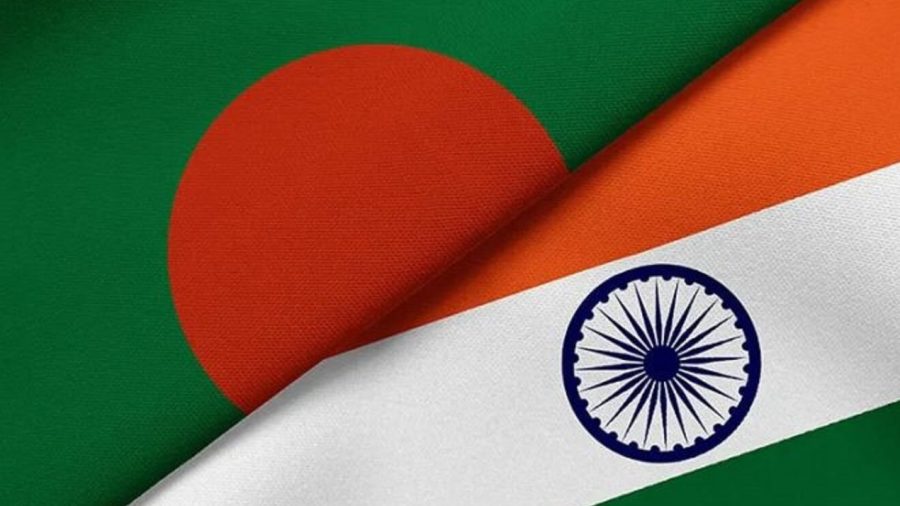



Geography, shared rivers, a long border, trade, connectivity, energy and regional security make Bangladesh and India indispensable neighbours. But geography does not confer political entitlement, and proximity does not create hierarchy. Following Bangladesh’s political transformation, a serious crisis of trust has emerged in Dhaka–Delhi relations. It is no longer confined to diplomatic circles; it has become a matter of public debate and frustration among many Bangladeshis.
The resentment cannot be attributed to a single issue. Border killings, unresolved water disputes, the prolonged failure to conclude the Teesta agreement, concerns over upstream projects, trade imbalances, questions over transit and connectivity, and allegations of Indian involvement in Bangladesh’s domestic politics have accumulated into deep public distrust. India’s decision to allow Sheikh Hasina to remain in India has added another sensitive dimension.
One of the most difficult issues is Sheikh Hasina’s continued presence in India since the 2024 political upheaval. Bangladesh subsequently sought her extradition after she was convicted in absentia by the International Crimes Tribunal and sentenced to death. India has its own laws, judicial procedures and obligations under the bilateral extradition framework, all of which must be respected. But Bangladesh cannot simply brush aside the request.
Bangladesh’s demand should be addressed through due process and law, not dismissed as political vengeance. India, equally, has a legitimate interest in ensuring that any decision follows its legal framework and is transparent.
The presence of Bangladeshi political figures in India accused of serious offences has also become a major issue. Political asylum seekers and people facing criminal allegations should not automatically be treated as the same category. Each case should be assessed independently on evidence, applicable law and extradition requirements. The principle, however, should be clear: political affiliation should not become a passport to evade justice. If Bangladesh submits extradition requests, they should be examined promptly and according to law rather than political convenience. The same respect for legal process that India expects for its citizens should apply to Bangladesh.

Any future visit by Prime Minister Tarique Rahman to India will carry considerable significance. The proposed visit has not yet been finalised, and the BRICS-related visit did not take place in September. When such a bilateral visit occurs, it should provide an opportunity for direct, candid and results-oriented discussions on the issues that have weakened public confidence. The message from Dhaka should therefore be clear: Bangladesh wants friendship, but not submission; cooperation, but not supervision; partnership, not patronage.
The perception of Indian hegemonic behaviour did not emerge overnight. For years, a section of Bangladeshi society has believed that New Delhi sought influence over Bangladesh’s domestic political calculations. The close relationship between Delhi and a particular government reinforced that perception. The upheaval of 2024 strengthened demands that Bangladesh’s political destiny be determined by Bangladeshis themselves. Bangladesh does not need an anti-India foreign policy. It needs a pro-Bangladesh foreign policy. That distinction is fundamental.



Border killings remain one of the most persistent sources of public anger. Both countries have legitimate security concerns, including smuggling, illegal crossings and organised crime. But security concerns cannot justify the unnecessary killing of civilians. Every border death should be properly investigated, responsibility established where wrongdoing occurred, and effective mechanisms created to prevent recurrence. A border between friends should not continue to produce bloodshed.
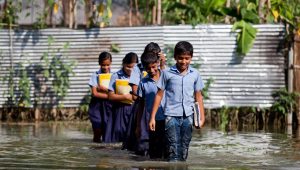
Bangladesh and India share 54 transboundary rivers. As the lower-riparian country, Bangladesh’s agriculture, fisheries, environment, navigation and the livelihoods of millions depend on predictable river flows. The Ganges water-sharing arrangement, the unresolved Teesta issue and concerns over other shared rivers remain major sources of frustration. Teesta has become more than a technical water dispute. For many Bangladeshis, it is a symbol of whether India recognises Bangladesh as an equal partner. Bangladesh is not asking for charity. It is demanding its legitimate share. Upstream geographical advantage cannot become a licence to disregard the legitimate interests of a downstream neighbour.
Concerns over Tipaimukh and other upstream projects have existed for years. Large dams, diversions and projects that alter transboundary river flows can have serious downstream consequences. Bangladesh therefore has every reason to demand prior information-sharing, joint assessment, environmental evaluation and meaningful consultation on major projects affecting shared water systems. The principle should be simple: upstream geography cannot become downstream vulnerability.
Bangladesh’s geographical position is one of its greatest strategic assets. India can benefit enormously from Bangladesh’s roads, railways, waterways and ports for connectivity with its northeastern states and beyond. Bangladesh, in turn, can gain revenue, investment, infrastructure development and integration into regional logistics networks. But connectivity must be based on reciprocity, commercial fairness and mutual benefit. If India uses Bangladeshi roads, railways, waterways and ports, Bangladesh should receive appropriate revenue, infrastructure investment, logistics benefits and long-term economic returns. Bangladesh’s territory is not a free corridor. It is a sovereign economic asset.
Bangladesh’s future cannot be confined to a land-based economic vision. The Bay of Bengal offers major opportunities in ports, maritime trade, fisheries, energy, the blue economy and regional connectivity. The development of Chattogram and Mongla ports and projects such as Matarbari can strengthen Bangladesh’s position as a maritime and commercial hub. Bangladesh should therefore build its own maritime capacity and maintain balanced relationships with India, China, Japan, the United States, the European Union, the Middle East, ASEAN and other partners. This is not anti-India. It is normal strategic behaviour for a sovereign nation.
A country that diversifies its partnerships is protecting strategic autonomy, not declaring hostility toward a neighbour. Bangladesh has no interest in turning India into an enemy. But neither can Bangladesh accept India as its political guardian. The relationship must move beyond the mentality of a powerful neighbour dealing with a subordinate one. There should be trade, connectivity, security cooperation, cultural exchange and strategic engagement. But their foundation must be equality, mutual respect, reciprocity, sovereignty and shared interest.
Bangladesh does not seek confrontation with India. But friendship cannot require obedience. India may be the larger and more powerful country, and it may be Bangladesh’s immediate neighbour. None of these facts makes India Bangladesh’s guardian.
Neighbourhood is geography. Friendship is a choice. Partnership is mutual. Sovereignty is non-negotiable. Bangladesh wants friendship but not domination, cooperation but not interference, partnership but on equal terms. Bangladesh is no one’s little brother. That should be the starting point of the new Dhaka–Delhi relationship.
The views expressed in this article are solely those of the author
The writer is a columnist and political analyst