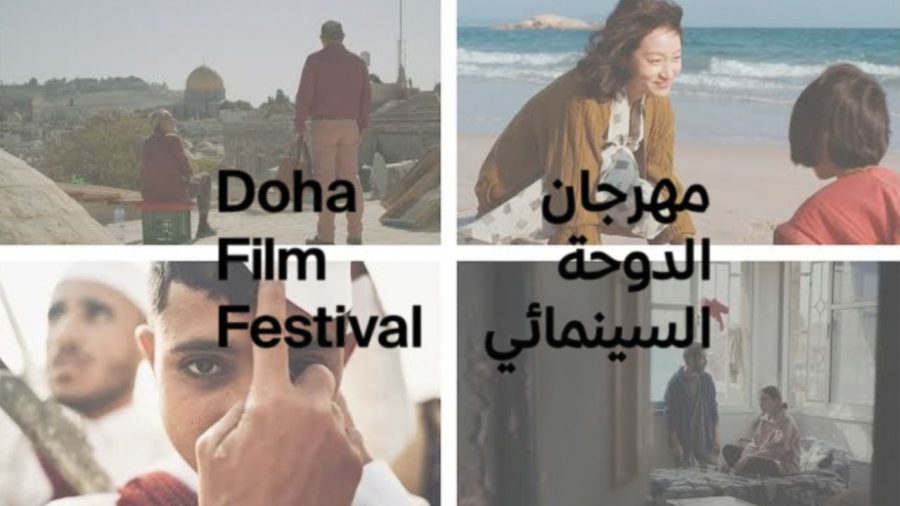



Women filmmakers will take a prominent place at this year’s Doha Film Festival, with seven of the 15 films in its international feature competition directed by women. The selection brings together stories from the Middle East and beyond, with Palestinian cinema featuring strongly alongside films from Africa, Asia, Europe and the Americas.
According to Variety, the second edition of the revamped festival will run from 19 to 27 November in Qatar’s capital, with most entries set for Middle East premieres. Yemeni-Scottish filmmaker Sara Ishaq’s drama The Station, which explores the impact of Yemen’s civil war, will open the event.
The women-directed selection includes Moroccan filmmaker Tala Hadid’s Bardi, which follows farmers and workers in central Morocco as they become warriors and princes through Tbourida, a centuries-old equestrian tradition. The film recently premiered at the New York Film Festival. Other entries directed by women include Rabab Khamis’ documentary Sama, Asmahan Bkerat’s Concrete Land, Zou Jing’s A Girl Unknown, Manuela Martelli’s The Meltdown and Alessandra Sanguinetti’s The Illusion of an Everlasting Summer.
Palestinian stories also form a major part of the competition, with four films in the lineup. Hosam Abu Dan’s debut feature Thirteen in Gaza, shot entirely in the Gaza Strip, won an award in Toronto. Khamis’ Sama follows a 10-year-old girl in Gaza who collects plastic and cardboard to sell as fuel. The documentary will have its world premiere in Doha.

Muayad Alayan’s absurdist drama Conversations with the Sea, which premiered in Venice, and Mohanad Yaqubi’s Revolutionaries Never Die complete the Palestinian selection. The four films offer different perspectives on Palestinian lives, experiences and filmmaking.
The competition also features two films from sub-Saharan Africa. Cameroonian filmmaker Auguste Bernard Kouemo Yanghu’s House of the Wind won both the Lion of the Future award for a debut film and the Special Orizzonti Jury Prize at Venice. Angolan filmmaker Hugo Salvaterra’s My Semba blends documentary and fiction to portray an underground music scene through the lives of three orphaned siblings in Luanda.



Asia contributes three titles. Sompot Chidgasornpongse’s 9 Temples to Heaven follows a family visiting nine temples in a single day in the hope of keeping their grandmother alive. The film is Thailand’s submission for the international feature film category at the 99th Academy Awards. The other Asian entries are Zou Jing’s A Girl Unknown and Rafael Manuel’s Filipiñana.
The remaining films are The Meltdown, directed by Martelli, and The Illusion of an Everlasting Summer, directed by Sanguinetti, alongside Tin Castle by Alexander Murphy. The 15-film selection spans a range of styles and subjects, from family and identity to war, displacement and cultural traditions.
Eleven of the competing films received support from the Doha Film Institute. Its chief executive, Fatma Hassan Alremaihi, said the festival aims to give a platform to filmmakers who challenge conventions and bring unheard stories to the screen.
“Cinema has the power to carry voices across borders and create connections where distance and difference might otherwise divide us,” Alremaihi said. “Doha Film Festival was created to give those voices a home, particularly filmmakers who challenge conventions to bring unheard stories to the screen and demonstrate the possibilities of independent cinema.”
The festival has grown out of the institute’s Ajyal Film Festival, which focused on youth and family-friendly cinema. The revamped event now aims to reach a broader international audience.
The competition will award $75,000 for best narrative film, $50,000 for best documentary, $45,000 for artistic achievement and $15,000 for the gender-neutral performance award. Key partners include Katara, Media City Qatar’s Film Committee and Visit Qatar.