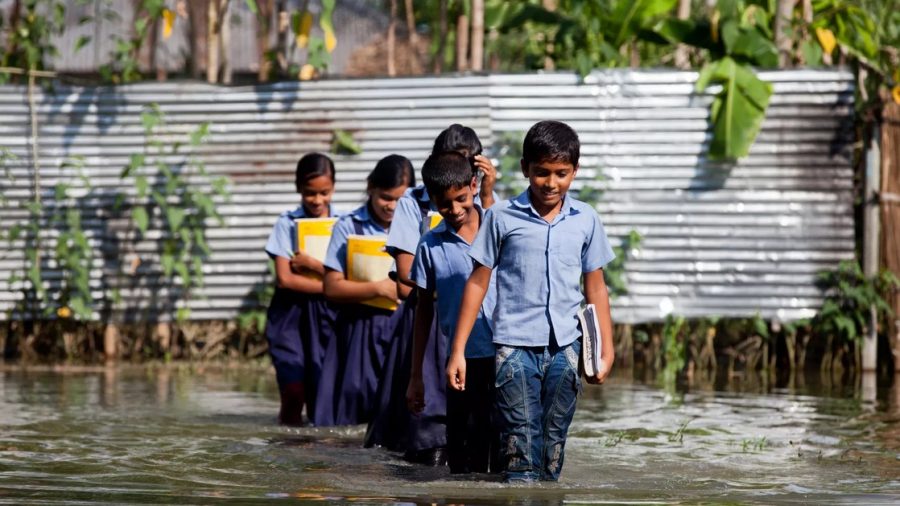



Climate change knows no border, region, season, continent, or age. It affects everyone, especially in the least developed countries, including Bangladesh. It creates severe risks for millions of children in Bangladesh, threatening their health, education, and safety. Climate emergencies like heat waves, floods, and cyclones disrupt schooling for roughly 33 to 35 million children. Dangerous heat stress affects roughly 22 million young children, exposing them to extra heat days each year. Floods also contaminate water supplies, spreading water-borne diseases like cholera and diarrhoea. Disasters and poverty drive up dropout rates, pushing young boys toward child labour and girls toward child marriage.
National policies (such as updated climate frameworks) increasingly aim to integrate child-focused funding, healthcare, and safe water access into disaster planning; different studies have highlighted these issues.
According to the UNICEF report “Learning Interrupted: Global Snapshot of Climate-Related School Disruptions in 2024,” heatwaves, cyclones, floods, and other extreme weather events led to multiple rounds of school closures worldwide.
In Bangladesh, nationwide heatwaves in April and May 2024 left children at risk of dehydration and heatstroke, forcing schools to close for up to two weeks. Several districts faced school disruption due to Cyclone Remal, followed by intense flooding in June. Up to 18.4 million people were impacted by the floods, including seven million children. Children in Sylhet lost up to eight weeks of school days cumulatively, and areas in Khulna, Chattogram and Rangpur districts each suffered six weeks of climate-induced school closures over 12 months.
Rana Flowers, UNICEF Representative to Bangladesh, said, “The increasing frequency and intensity of extreme weather events, exacerbated by the climate crisis, is having a knock-on effect on children’s education in Bangladesh and depriving children of their right to learn. Extreme temperatures and other climate hazards not only damage schools, but also affect students’ concentration, memory, and mental and physical health. Prolonged school closures increase the chance of children, especially adolescent girls, dropping out of school and being married off by families to cope with economic stress.”

The report notes that schools and education systems are largely ill-equipped to protect students from these impacts, and climate-centred finance investments in education remain strikingly low.
The United Nations Framework Convention on Climate Change (UNFCCC) addresses children and climate change by recognising their unique vulnerabilities, distinct rights, and vital role as agents of change in global climate policy. Globally, around one billion children live in extremely high-risk countries facing severe climate shocks. The UNFCCC encourages nations to mainstream children’s distinct vulnerabilities and rights into updated Nationally Determined Contributions (NDCs) and National Adaptation Plans (NAPs). These issues should be brought to the tables of discussion at the Conference of the Parties (COP) 31 of the UNFCCC in Türkiye, to be held in November 2026.



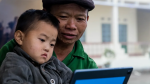
UNICEF is accelerating financing to improve climate resilience in the education sector, including investing in proven and promising solutions to build climate-smart learning facilities that are safe and inclusive for all children.
Rana Flowers further said, “Children in Bangladesh are at the forefront of two interconnected crises: climate change and deepening learning poverty, threatening both their survival and future. As children continue to speak up and call for urgent action on the devastating impacts of the climate crisis, decision-makers must heed their calls and place their needs at the centre of climate policies and financing plans.”
The analysis shows that Bangladesh’s current exposure could become more widespread under further global warming.
Under a 1.5°C warming scenario, 23 million Bangladeshi children are projected to experience at least one additional month of heat stress each year, while 25 million could experience at least five total months of heat stress.
The World Health Organization (WHO) highlights that children in Bangladesh face severe, intensifying health risks from climate change, including extreme heatwaves, surging waterborne diseases, and year-round dengue.
Temperatures regularly exceed 40°C, leading to heat stress, dehydration, and a sharp rise in pediatric hospital admissions for heat-related illnesses. Severe flooding and cyclones damage sanitation and drinking-water infrastructure, causing surges in diarrhoeal illnesses that heavily impact children under five. Dengue has shifted from a seasonal urban issue to a year-round national threat affecting young populations. Ambient air pollution worsens respiratory infections and chronic lung conditions in children.
The WHO climate change and health in Bangladesh program prioritises building climate-resilient health systems, strengthening early warning systems, and tracking local weather-linked health data.
Joint initiatives by WHO and UNICEF focus on integrating maternal and child health protections into national climate adaptation and disaster risk reduction plans. So all the stakeholders should come forward and make sure that no child is left behind, as the Sustainable Development Goals (SDGs) targeted.
The views expressed in this article are solely those of the author
The writer is a journalist, columnist, and researcher