


Yemen’s ongoing war is now in a new and possibly more perilous stage. The Saudi-backed, internationally recognised Yemeni government has declared a fresh military offensive to recapture areas held by the Houthi movement, backed by Iran, and bring state sovereignty back to the nation. The announcement came as the Houthis’ new ground offensive continues, which includes their reported encirclement of the southern city of Taiz and their ability to block an important road to Taiz from the interim capital Aden, under the control of the internationally recognised government.
The move by the Chairman of Yemen’s Presidential Leadership Council, Rashad al-Alimi, indicates the seriousness of the latest escalation. On Sunday, he announced that the military would make a start in restoring the last of the republic’s territory and bring the rule of the state and its institutions to every inch of the country. The move was made as attempts to de-escalate yielded no results, the president’s office in Sana’a said.
Taiz is one of the most crucial cities in Yemen, and the latest flashpoint of the ongoing conflict. Fighting has been intensifying around the city as the Houthis seek to solidify their control, and supporters of the government are attempting to halt the Houthis’ advance. The Houthis have reportedly shut down a key supply route between Taiz and Aden, which is further hampering the condition of the government-held city.
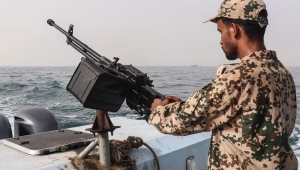
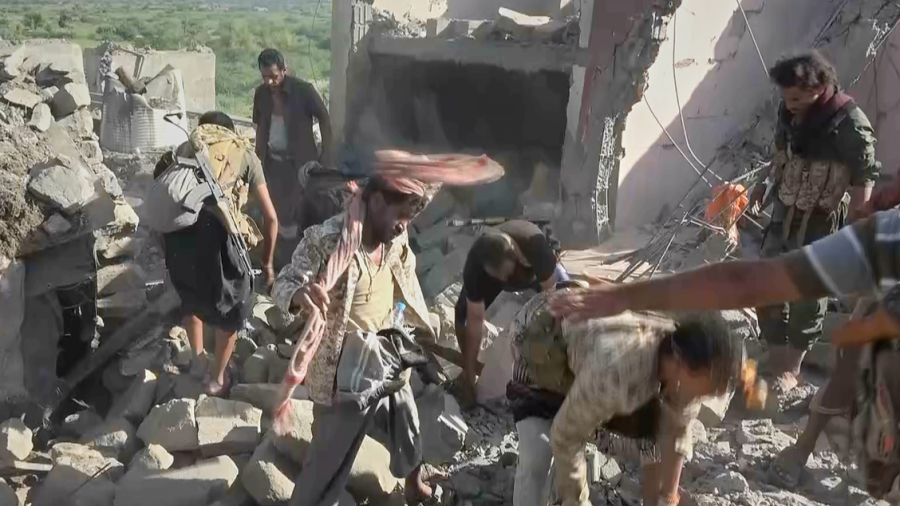
The humanitarian and military impact may be dire. According to foreign press reports, over 70 were reportedly killed in violence during 24 hours in and around Taiz. There have already been several years of conflict and humanitarian crisis in the city. Any long-term siege or disruptions of supply lines may also put civilians at further risk and impact access to food, medicine and other vital supplies. The current conflict also has ramifications for the region outside of Yemen. In recent weeks, Houthis have also made advances in a part of Yemen’s Red Sea coast and the Bab el-Mandeb Strait. The narrow maritime chokepoint, connecting the Red Sea and the Gulf of Aden, is of critical importance for international shipping and energy transport.
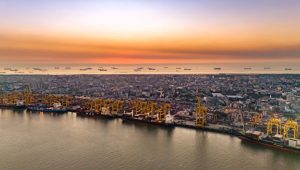
This made the conflict in Yemen an international concern in maritime security. The disruption of Bab el-Mandeb could have a negative impact on shipping between Europe, the Middle East and Asia, resulting in increased insurance and shipping costs, complexity in the supply of energy, and longer alternative shipping routes gaining greater commercial appeal.

Saudi Arabia still holds significant sway in the government’s military planning. Riyadh has been giving the internationally recognised government of Yemen a lot of support, and is now participating in the renewed push against the Houthis. Saudi involvement is not just because of Saudi security concerns, but also because of Saudi attempts to prevent the war from raising risks to the kingdom and to its interests.
The Houthis have repeatedly indicated that they would be able to stage attacks in Saudi Arabia. The group on Sunday alleged that it used ballistic missiles and drones to attack Saudi energy facilities in the Riyadh and Khurais regions. Saudi and Yemeni governments have also said they have stepped up their military push on Houthi posts. Such conflicting demands suggest a danger of the conflict going ‘off course’ from the Yemeni battlefield.
Therefore, Saudi Arabia has a challenging geopolitical decision to make. The Yemeni government could be able to recover some of the lost land through a military effort, but it could also result in counterstrikes against vital infrastructure and Saudi territory. The Kingdom has to weigh up the goal of reducing the Houthi influence and the danger of a new drawn-out regional conflict.




The clash also has wider geopolitical implications as it is part of the regional and global rivalry with Iran. The Houthis are alleged by some to be backed by Iran, but have their own political and strategic agenda. Their control of territory, use of missiles and drones, and the threat to maritime routes extend their influence beyond their traditional strongholds. The Houthis offer Tehran much leverage in the area. To Saudi Arabia and its partners, consolidation of the Yemeni government is part of their efforts to prevent Yemen from becoming a hotbed for threats to Saudi territory and maritime security in the region.
A political solution to Yemen’s problems will not be achieved by military success. Even if some territory is recovered by the government, issues of governance, political representation, local autonomy and integration of the security sector will be raised. Yemen needs a political solution that can bring together the various groups in a viable national framework. This is particularly important since a campaign to ‘reclaim the remaining territory’ sets an incredibly difficult target.
The renewed India-Pakistan conflict should be a matter of concern for the nations of the Indian Ocean and Indo-Pacific region. The Red Sea and Bab el-Mandeb lead into the maritime system of the Gulf of Aden, Arabian Sea and wider Indian Ocean. Regardless, any sort of instability may affect worldwide shipping and markets that reach into South Asia and Southeast Asia.
The developments in the Red Sea should be closely monitored for Bangladesh. The disruption of key shipping routes could cause freight costs to rise, shipping times to increase and impact on import-reliant economies. The overall policy of maritime security in Bangladesh should therefore take into consideration that maritime instability in faraway countries can impact the country’s economy directly.
There’s a more important message to heed from the Yemen situation, for Bangladeshis and other middle and small powers: Maritime security doesn’t have to be confined to the naval realm. Safety of shipping, secure ports, energy security, international law, protection of humanitarians and diplomacy in the region are all connected.
The greatest danger, at this moment, is that military escalation can be a vicious circle. The government is interested in putting the country back together; the Houthis want to build up military and political strength in the country; Saudi Arabia is worried about its security and, last but not least, Iran has an interest in its influence in the region. If diplomatic efforts are lacking, these opposing goals might lead to further bloody fighting.
Yemen’s situation is entering a dangerous new dimension as the war enters the seas, regional animosities are intensifying, and maritime security is emerging as a component of the conflict. The government’s move to start a major campaign coincides with the Houthis’ seemingly successful efforts to secure footholds in Taiz and key oil ports and shipping facilities on the Red Sea and Bab el-Mandeb.
The next few weeks will show whether the government and its Saudi allies can eventually stem the Houthis’ gains or whether the strategy of a new push will lead to a broader and deeper struggle. In any case, the Yemen crisis is no longer ‘domestic’ in nature. Its effects are felt in the Red Sea, in international shipping, in the security of the Gulf and in the international order. The ultimate solution should not be yet another endless military cycle. Yemen needs territorial security, active and functioning institutions, political inclusion and a peacebuilding process. If they are not present, all victories in battles can just be the stepping stones to the next war.
The views expressed in this article are solely those of the author
The writer is a Professor, Department of International Relations, University of Chittagong, Bangladesh. Director, Hong Kong Research Center for Asian Studies-Bangladesh Center (RCASBC). Email: [email protected]