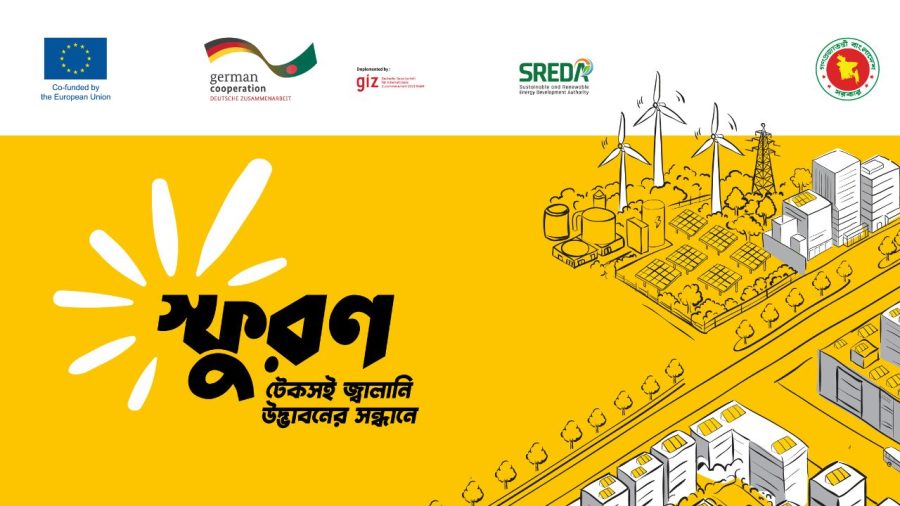



Bangladesh has launched a nationwide sustainable-energy idea contest seeking practical proposals from university students and energy-sector professionals to help advance the country’s renewable-energy and efficiency goals.
The competition, titled Sfuron: Sustainable Energy Idea Contest 2026, opened for submissions on 8 October and will accept entries until 25 October, organisers said in a statement.
The contest is tied to the National Renewable Energy Development Strategy Paper 2026–2030, which targets 10,450 MW of renewable-energy capacity by 2030 and a 15 per cent reduction in energy use across households, industry and the commercial sector from a 2026 baseline.
The Power Division of the Ministry of Power, Energy and Mineral Resources is organising the initiative with the Sustainable and Renewable Energy Development Authority (SREDA). GIZ Bangladesh is implementing it on behalf of German Development Cooperation and the European Union.

Entries are being sought in two tracks: renewable energy and energy efficiency.
The renewable-energy category will consider ideas on rooftop solar, grid modernisation, storage, greater local production of solar panels and inverters, wind power, agrivoltaics and floating solar.


The energy-efficiency track will cover proposals on campus and community interventions, clean cooking, digital monitoring tools, efficient retrofits, behaviour change and policy measures to reduce energy use.
Students from any public or private university and any discipline must enter in teams of two, while professionals working in the power and energy sector may apply individually.
Applicants must submit a written concept note and a pitch video of up to three minutes through the contest website. Participants will be verified at the application stage, and unverified or fraudulent entries may be disqualified.
Shortlisted participants will present their proposals before a jury of experts.
Winners in each group will receive trophies, certificates and prizes, as well as the opportunity to present their ideas to development partners, investors and financing institutions.
The organisers said the aim is to identify workable ideas and connect them with institutions and capital that could help turn them into projects as Bangladesh works towards its 2030 energy targets.