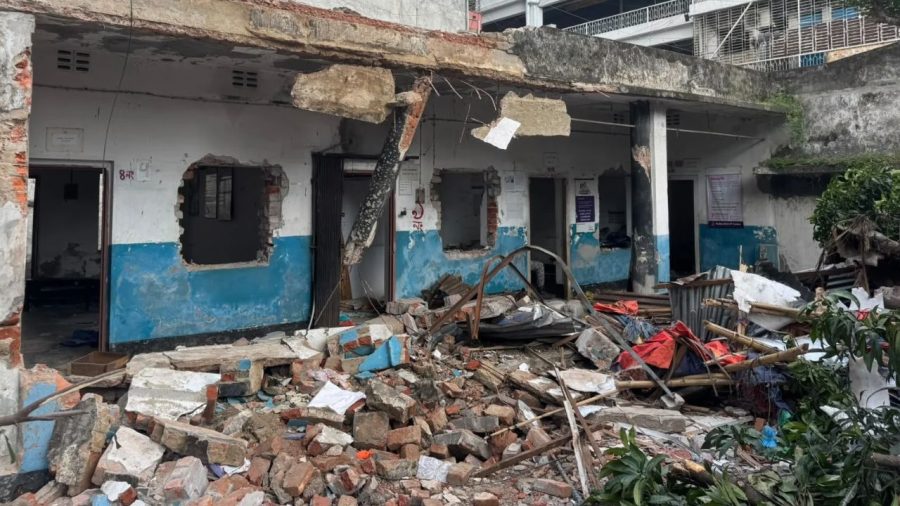



Just after midnight on 25 September, more than 200 masked men entered the Radda MCH-FP Centre in Mirpur-1. They tied up the security guards, took vaccines, ultrasound machines, medicines and computers, and then brought in an excavator to tear the buildings down. By morning, a clinic that had cared for the mothers and children of Mirpur for half a century was rubble, with another organisation’s signboard hanging over its gate.
Mirpur, in the northwest of Dhaka, was for decades one of the city’s poorest areas, a dense patchwork of slums where families who had lost everything after the 1971 war and the 1973 famine settled. Today, it is changing fast. The metro rail now runs through it, apartment towers and shopping markets are rising, and land once on the edge of the city now sits along some of its busiest roads. But the slums have not disappeared. Mirpur is now a place where the poor and the newly prosperous live side by side, and where land has become very valuable.
For most people, the attack was a news story. For me, it was personal.
In 1994, the Swedish ambassador called my father, Kazi Fazlur Rahman, to a meeting. My father had recently retired from the Planning Commission and the Economic Relations Division, where he had approved donor projects for years. The ambassador told him Sweden was ending its funding for Radda Barnen, the maternal and child health programme it had run in Mirpur since 1974. The Bangladesh government had been asked to take it over as far back as 1983 and had concluded it could not. Unless someone stepped in, Radda would close, as so many donor projects in Bangladesh did when the foreign money left.
My father stepped in. He assembled a team, registered Radda as a Bangladeshi trust and set out to prove that a clinic for poor mothers could stand on its own feet. The new team worked in a new way. They wrote clear operating rules, cut waste, sold off the fleet of cars and worked to become financially sustainable. With 70 per cent of the staff being women, they added a childcare centre, a provident fund and formal maternity leave, things the donors had never thought to provide.
It worked. A sustainability fund that began at Tk3 crore grew to Tk12 crore. By 2005, Radda needed no foreign aid. By 2008, it covered its costs entirely from its own income: affordable vaccinations, lab tests, ultrasounds and training for health workers from BRAC and other leading NGOs. Mothers who could pay did. Those who could not were treated anyway. Radda became something rare: a Bangladeshi institution serving the poorest women that was financially sustainable without depending on anyone’s charity.

And it was always a partner to the state. Radda delivers the government’s immunisation programme, and it operates on government land, leased to it for a symbolic rent precisely because it serves the public.
I want to acknowledge what has gone right since the attack. Within days, police arrested about a dozen people and recovered two truckloads of looted goods. The home minister publicly acknowledged police negligence, withdrew the officer-in-charge of Shah Ali Police Station and stated that no one’s political affiliation would protect them. That is exactly what a government committed to the rule of law should say. I thank him for it.
Now comes the harder part: following through.
This is not the first time. As Mirpur’s land values rose, so did the pressure on Radda’s site. Years ago, local land grabbers seized part of Radda’s Mirpur-1 site, with police turning a blind eye, and a ten-storey market now stands on it. My father’s board stopped expanding Radda partly because it feared that any new building would draw the attention of land grabbers again. A country cannot build anything lasting if its best institutions are afraid to grow. That has to end with this case.



The men arrested so far are the ones who carried the hammers. Rule of law means reaching the people who planned this, organised it and stood to gain from it, whoever they are. If anyone has a claim to the land, the place to make it is a courtroom, not a midnight raid with an excavator. Police officers who watched while a health centre was looted must face real consequences, not just a transfer.
The true cost of that night goes beyond the more than Tk1 crore in damages. The centre’s immunisation records and the tablet that held them were taken. Those records told the staff which child was due for which vaccine and allowed them to call parents with reminders. Records of pregnant women were lost too. Some children will now miss doses. Some expectant mothers will miss check-ups.
And yet, five days after the attack, Radda’s staff reopened in two cleared rooms: one for vaccinations and one for maternal health. In a single day, 71 people came for care, many of them mothers with their children. They returned to a half-demolished building because they had nowhere else to go.
In 1994, my father put Radda back on its feet when the donors left and the government could not. Today, the government can do what he did. Radda does not need a handout. It needs to be made whole so it can stand on its own again.
The state should compensate Radda in full and quickly, paying for the damage now and recovering the cost from those responsible through the courts rather than leaving a clinic for poor mothers to wait years for justice. It should secure the land by confirming Radda’s long-term lease on its government land in writing so that no one can claim it through force again.
The government should replace the stolen vaccines and work with the national immunisation programme to reconstruct the lost records so that no child falls through the cracks. Everyone responsible, including those who planned and financed the attack, should be prosecuted regardless of affiliation. Attacks on health facilities should also be treated as priority crimes, with clear instructions that police at the scene must intervene.
I also write as an investor. Over my career, I have invested more than $600 million in companies and institutions across Asia, the Pacific and Africa, and I want to bring more capital to Bangladesh. But I know how investors think because I sit in their meetings. They do not expect any country to be perfect. They expect it to be predictable.
Right now, that confidence is fragile. Fresh foreign equity investment into Bangladesh fell by more than 70 per cent in the first quarter of this year. When a health centre that has partnered with the state for 50 years can be bulldozed overnight while police stand by, every investor in the world asks the same question: what would happen to my factory, my bank, my clinic?
That is why this case is a test for Bangladesh’s investment institutions too, not only for the police. The Bangladesh Investment Development Authority and its partner agencies should treat Radda as a signal to the market, not a local crime story.
Property protection should become part of the investment pitch, backed by evidence. Authorities should publish how cases like this are resolved and how long they take. A fast-track channel should be created for investors and social enterprises facing illegal seizure of land or premises, backed by the Home Ministry, so that the response is measured in hours, not after the damage is done.
Bangladesh should also accelerate digital land records and clear titling, especially for land leased by the government, because land grabbers exploit ambiguity in leasing contracts. Health, education and social enterprises should be brought into investor outreach and aftercare. Impact investors are among the few still looking seriously at Bangladesh, and institutions like Radda are exactly what they want to back because it sits at the centre of a robust healthcare sector for the country.
If Bangladesh resolves the Radda case quickly, fairly and visibly, it sends a message more persuasive than any investment roadshow: here, the law works, and those who serve the poor are protected.
Bangladesh’s development story has always been a story about women: the garment workers who built our exports, the borrowers who proved the poor are creditworthy, the health workers who went door to door. Radda is part of that story. This is the moment for Bangladesh to show the world, and its own people, that it puts women and children first and that it stands behind the institutions that serve them.
My father rescued Radda once. I am asking our government to do it again.
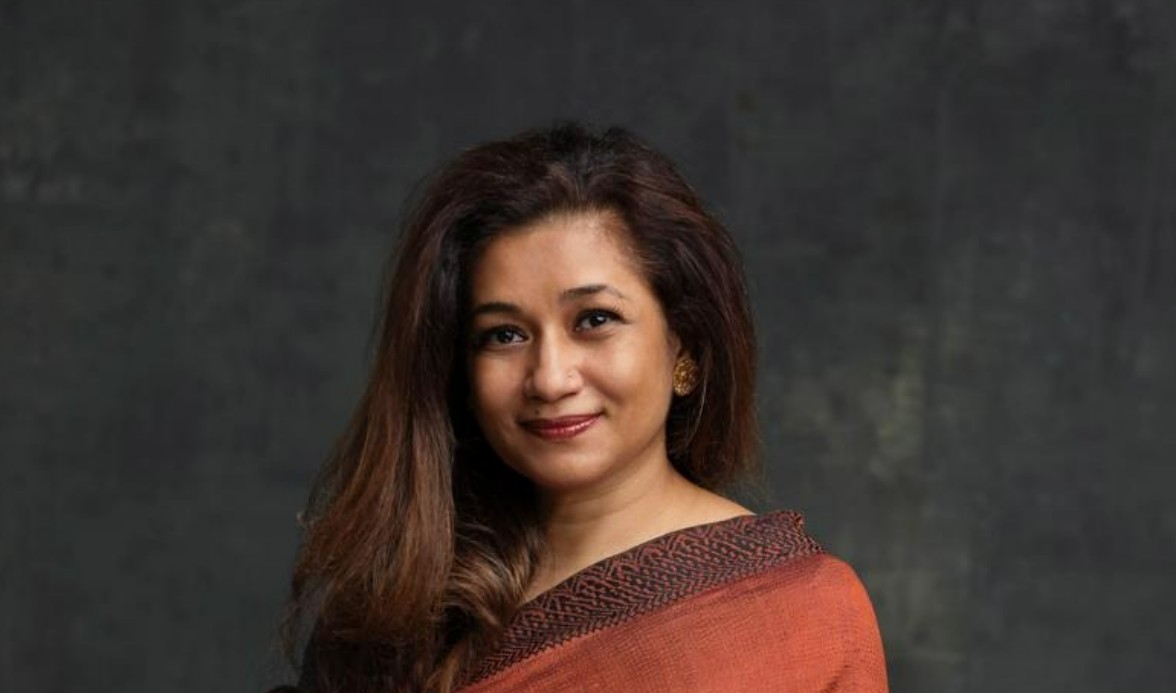
The writer is founder and CEO of Impact Investment Exchange (IIX) and author of The Defiant Optimist: Daring to Fight Global Inequality, Reinvent Finance, and Invest in Women.
Views expressed are solely those of the author