


Some evenings I open my phone to answer a single question and resurface two hours later, no closer to an answer. In that time I have met a dozen confident strangers. One calls a policy a triumph; the next calls it a betrayal, and each has certain followers. What unsettles me is not the disagreement but how often one person contradicts himself within a single week, reshaping his convictions to suit his audience.
When opinions are shared this quickly, there is little room left to hold any of them. I have begun to ask whether we are the best-informed generation in history or simply the most lost. I now believe the answer matters for more than our peace of mind. It matters for how nations behave.
The fear we inherited
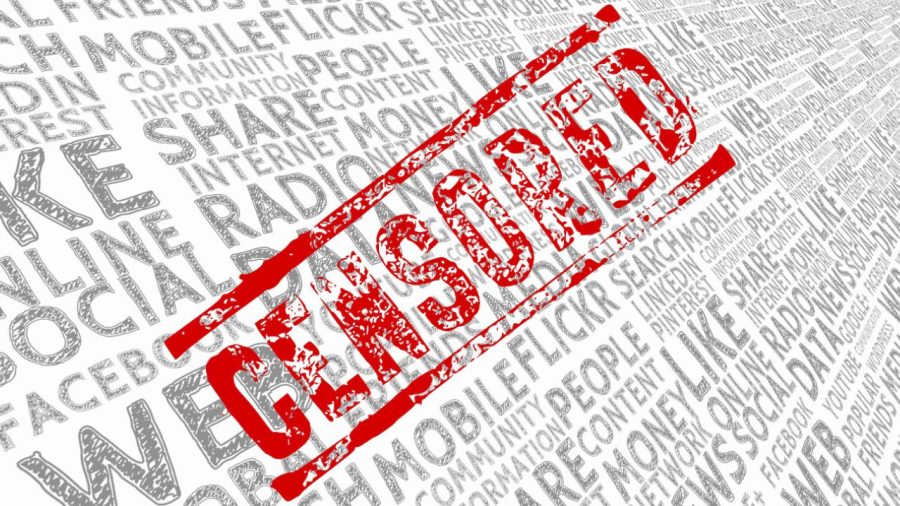
In George Orwell’s 1984, power works by subtraction. The Ministry of Truth rewrites old newspapers, the memory hole swallows inconvenient facts, and Newspeak shrinks language until dissent has no words left. The Party assumes that people are dangerous when they know things. For most of the twentieth century, that was our nightmare: ignorance imposed from above.
Aldous Huxley disagreed. In a 1949 letter to Orwell, he suggested that control would arrive through pleasure and distraction rather than force. Neil Postman later sharpened the contrast: Orwell feared those who would ban books, while Huxley feared a world with no reason to ban them. Alvin Toffler gave the second fear a vocabulary in Future Shock in 1970, and in 1971 Herbert Simon observed that a wealth of information creates a poverty of attention.
Half a century later, it is clear who was closer to the truth about our daily lives.

When arguments were allowed to be long
Consider what public thought looked like on the eve of that shift. In 1971, Noam Chomsky and Michel Foucault debated human nature on Dutch television. Chomsky held that people possess an innate creative capacity from which our sense of justice grows. Foucault distrusted the very category, arguing that “human nature” is shaped by the power relations of its era, and that justice can serve power rather than restrain it.
They spoke for over an hour, each in his own language, with no countdown clock and no verdict handed to the audience. They did not converge, and it hardly mattered. An audience with little to read read closely, and that patience made such an encounter possible.

We should be honest about what has replaced it. Today no one needs to hide the truth from us. It sits beside a million contradictions of it, beside a confident denial, beside an advertisement. Nothing is deleted, yet nothing is retained. Debates built for the clip travel, while ninety-minute ones do not, and hesitation, the honest sound of a mind at work, is cut in the edit. We have mistaken access for understanding, as though owning a library were the same as having read it.
Information as a weapon
This is not merely a cultural complaint. It is a strategic problem, because both of these futures are now instruments of statecraft, often wielded by the same governments.
The first model is familiar. States that fear their citizens’ knowledge cut the wires, from China’s firewall to shutdowns across South Asia, including Bangladesh’s nationwide blackout during the unrest of July 2024. Scarcity remains a tool wherever regimes feel threatened.
The second model is newer and, in many ways, more effective. A 2016 RAND study described Russian propaganda as a “firehose of falsehood,” a strategy that seeks not to persuade audiences of one story but to flood the channel with volume and contradiction until they stop trying to discern what is true. The aim is exhaustion, not belief. Hannah Arendt recognized the logic decades earlier: the ideal subject of a totalizing system is the person for whom the distinction between fact and fiction has dissolved.
Chomsky and Edward Herman’s Manufacturing Consent assumed a bottleneck of owners and editors filtering what reached the public. That bottleneck has burst, and the contest has changed. Joseph Nye argued that in an age of information plenty, the scarce resource is credibility, and the actor who makes everything look equally doubtful often gains the most.
Policymakers should take this seriously. Diplomacy, treaty verification, and crisis communication all depend on a shared baseline of fact. Where that baseline erodes, deterrence weakens and miscalculation becomes likelier. A world that cannot agree on what happened cannot agree on what to do about it.
What we owe the argument
The answer is not nostalgia. The old gatekeepers excluded far more voices than they heard, and even the 1971 debate featured two famous European men in a narrow world of ideas. The internet has rightly broken that world open.
But openness without attention is only noise, and we should treat attention as a civic responsibility. Individuals can choose a few things and stay with them, reading the long argument instead of the summary and seeking the opponent who will disagree for an hour. Universities can teach depth as deliberately as they teach breadth. Platforms should be pressed to reward substance over speed. Governments, in turn, should invest in media literacy and credible public information as they do in any other element of security.
Orwell warned of a world in which we would not be allowed to know. The harder warning is the other one: a world in which we may know everything and cannot bring ourselves to care. The 1971 debate offers a standard worth defending, which is two people, one table, and the patience to be unfinished together.
Author is a third year student at Department of International Relations, Jahangirnagar University. She can be reached at [email protected]