
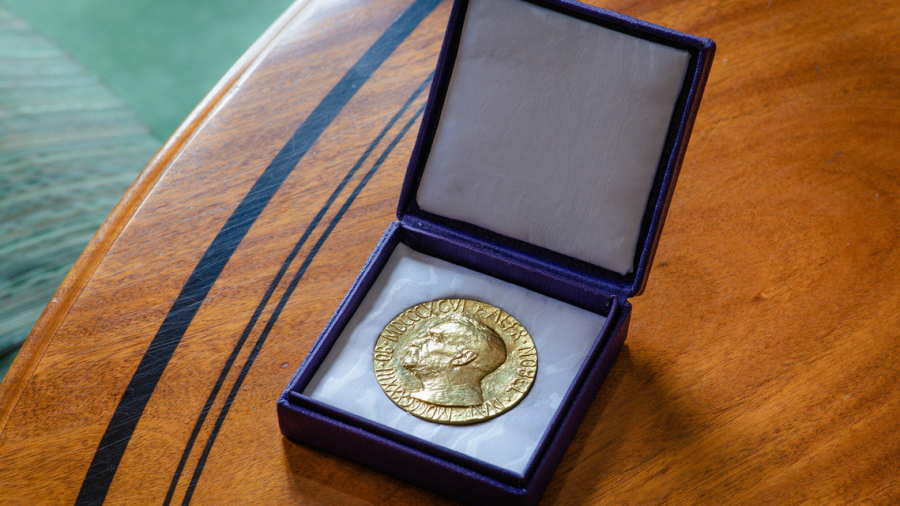



The 2026 Nobel Peace Prize, awarded to Navanethem “Navi” Pillay, an Indian Tamil, comes at a crucial moment in the history of international law and global peace. Pillay is recognised for her lifelong commitment to fostering peace, human rights and international justice, embodying the principle that no one – regardless of their position and power in the world – should be above the law. Her decision would help to restore the moral legitimacy of the Nobel Peace Prize, which has been marred by controversy over the last few years. The award, however, raises a simple question: why does the international community celebrate accountability, and why did some of the most powerful states oppose the institutions that were put in place to hold them accountable?
Pillay’s journey in the legal field is a reflection of her steadfast dedication to justice. As a product of apartheid, she was a trailblazer as a lawyer and as a judge at the International Criminal Tribunal for Rwanda, the International Criminal Court (ICC) and the High Commissioner for Human Rights of the United Nations. Her work helped shape international criminal law and the prosecution of war crimes, crimes against humanity and genocide. She received the Nobel Prize for her efforts to strengthen international legal institutions and the notion that serious international crimes should be prosecuted.
Notably, it is one of the most difficult periods in the history of international law, as the alleged perpetrators are strong militarily, economically and politically. Pillay’s own career exemplifies the importance of independent judicial bodies; they help to record human rights violations, seek accountability and uphold the rights of the victims even when conflicted with the interests of governments.
But the Nobel Prize is to be understood not as a personal honour but as a recognition of the importance of international law. It is a warning for peace not to be a matter of politics or war. The principles of accountability, legal equality and respect for human dignity are also vital to sustainable peace.

But the international community is split on this. When sovereignty and territorial integrity are being challenged, so are their interests, but when they are confronted with the limitation of their interests, or those of their allies, sovereignty and territorial integrity are not called into question. This is threatening the integrity of the rule-based international system. The political, military and institutional strength of a potent state to escape accountability can be realised, as can diplomatic isolation, economic sanctions and even legal sanctions for non-compliance with international norms by the state.
One example is when the U.S. imposed sanctions against the ICC on 9 October 2026, at the same time Pillay won the Nobel Peace Prize. Washington has condemned the Court for its probes into the activities of American or Israeli interests. Still, the ICC, which is supposed to carry out prosecutions of international crimes when the legal requirements are satisfied, has been attacked by the Court. The Court defined sanctions as ‘the attack on judicial powers’. It’s a disturbing paradox that an international justice advocate is recognised by the international community while at the same time a great power is pressuring the body responsible for punishing serious crimes. Not all of the ICC’s decisions can be criticised. Judicial independence, limits, and due process must be observed in courts. But legitimate criticism should not be used as a rationale to devalue independent institutions or be a way of shutting out politically powerful people from being challenged.




In modern wars, this gap between commitments at the international level and action on the political level is also reflected. It is a difficult task to make agreements in favour of peace, which is reflected in the war between Iran and the region, the ongoing conflict in the Middle East and the war between Russia and Ukraine. The statistics reflect the impact on people of a world where civilian security levels have yet to be matched by adequate diplomatic efforts and legal frameworks. Beyond Middle Eastern borders, effects of armed conflict are not limited and can impact regional stability, energy security, and humanitarian access as well as international trade.
The Nobel Peace Prize cannot alone bring these conflicts to a halt. Political cooperation, viable enforcement and diplomatic follow-up are also lacking elements required to allow international law to play its part. On the other hand, awards for ‘courage’ can set a moral standard and inspire others to take action, but are not a substitute for ceasefires, access to humanitarian assistance, negotiations or political determination to stop more deaths.
The Nobel Prize is a chance to rethink global responsibility. First, international law needs to be applied uniformly, regardless of the accused, whether it is a major power, a non-state actor or entity, or a regional actor. The benchmark held is not geopolitical considerations; it must be evidence and legal standards. Secondly, states have a responsibility to safeguard the independence of international judicial bodies. They can question certain judgments, but they can use legitimate means to question such judgments; activities that interfere with a proper investigation could be against the system of international justice in general. Thirdly, build up the capacity of the UN and regional preventive diplomacy, mediation and civilian protection. Post-Holocaust is not the time to start international responsibility. It should involve humanitarian assistance, conflict prevention and the resolution of political and economic factors based on conflict and violence. Finally, the more powerful states must be only part of the world’s protection, not the whole.
Multilateral diplomacy, support for international institutions and ongoing work to foster peaceful dispute settlement can have a part to play, developed by the countries, regional organisations and civil society. Undoubtedly, Bangladesh has an interest in multilateralism and international peacekeeping in this context, and the credibility of international law is extremely essential.
Pillay’s recognition is good, as peace and justice walk hand in hand. It could reinforce the ‘moral’ character of the Nobel Prize by focusing on international law and responsibility in the international dialogue. A lasting legacy from the award, though, will hinge on the success of governments in implementing the message. There is no lack of declarations that call for peace in the world. Lacks’ consistency was lacking when it came to important interests. Rules-based order will be open to mistrust, confrontation and impunity if selective application of international law occurs.
It is not a matter of the Nobel Peace Prize bringing peace in the world. Whether its decision to recognise Pillay will spur governments to follow the same course of practice as they are celebrating in others is the real question. The awards will not bring peace, and international law would not be based on principles that are followed only when they’re in the interest of the powerful. The last word of justice on the international scale is that justice is done for everybody and not only for those who can bear it.
The views expressed in this article are solely those of the author
The writer is the Professor, Department of International Relations, University of Chittagong, Bangladesh. Director, Hong Kong Research Center for Asian Studies-Bangladesh Center (RCASBC). Email: [email protected]