


Bangladesh-based independent news portal The Climate Watch will deploy an eight-member team to cover the upcoming UN climate summit, COP31, in Antalya, Türkiye, from 9 to 20 November.
The team includes five full-time journalists and three regional contributors from Bangladesh, Nepal, Pakistan and Sri Lanka.
Their coverage will focus on climate finance, adaptation, loss and damage, energy transition, biodiversity, climate migration and climate justice. The reports will highlight South Asia’s climate challenges, priorities and demands in global negotiations, reads a press release.
Founded in 2024 by Bangladeshi environmental journalist Shamsuddin Illius, The Climate Watch is registered with the Press Information Department of the Government of Bangladesh.
The outlet has been expanding cross-border reporting on regional environmental issues, including glacier retreat, extreme flooding, coastal erosion, salinity intrusion and displacement.
Md Ibrahim Khalilullah, executive editor of The Climate Watch, said the organisation aims to strengthen regional journalists’ participation in international climate discussions.

“We are striving to become a voice for South Asia in global climate negotiations. Our countries are among the most vulnerable to climate change and it is essential that we tell our own stories rather than rely solely on others to tell them for us,” Khalilullah said.
“That is why we are prioritising international negotiations alongside grassroots reporting and cross-border investigations. We want to connect the realities faced by communities with decisions made at global negotiating tables,” he added.
The portal has been working with the Shakti Foundation, Young Power in Social Action (YPSA) and Change Initiative to strengthen its COP31 coverage. According to the organisation, its regional network connects approximately 100 climate and environmental journalists across South Asia to support joint investigations, reporting partnerships and professional exchanges.
The Climate Watch investigates deforestation, industrial development, environmental governance and the management of public and international development funds.

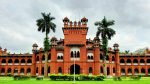

One major investigation examined deforestation and biodiversity loss linked to the National Special Economic Zone in Mirsarai, Chattogram, documenting the effects of industrial expansion on coastal forests, mangroves, wildlife habitats and dependent communities.
In December 2025, the outlet’s findings were reportedly cited in public-interest litigation concerning environmental damage associated with the economic zone.
The portal has also reported on tree-cover loss, groundwater depletion, climate finance and infrastructure development.
It participated in Dark Side of the Boom, a cross-border investigation coordinated by Internews’ Earth Journalism Network into the environmental and social costs of Asia’s expanding digital infrastructure.
The project brought together 14 newsrooms across 11 countries to examine electricity consumption, groundwater extraction and environmental pressures linked to data centres and digital technologies.
Illius investigated electricity demand, water use and environmental oversight in Bangladesh’s emerging data-centre industry.
In 2026, the investigation won a Covering Climate Now Journalism Award in the Large Projects & Collaborations category and a Society of Publishers in Asia (SOPA) Award for Excellence in Reporting on the Environment in the Regional/Local category.
It also received a special citation associated with the 2026 Osborn Elliott Prize for journalistic innovation. The awards recognised the Earth Journalism Network-led collaboration, which included The Climate Watch.
The outlet’s reporting has been cited by international media organisations, including The Guardian, The Diplomat, Mongabay and The New Humanitarian, as well as researchers at the National University of Singapore and Columbia University’s Climate School.
The Climate Watch runs a biodiversity initiative called Birds in Climate Crisis, which aims to produce 100 short documentaries on bird species, their habitats and environmental threats.
So far, 25 bilingual episodes have been completed. They feature birds such as the Silver-billed Munia, Rufous Woodpecker, Plain Prinia, Indian Pond Heron and Green Bee-eater. The portal also reports on threatened wildlife, wetlands, forest restoration and light pollution.
Its climate justice reporting explores how environmental degradation affects women, young people, Indigenous communities, farmers, coastal populations and people displaced by climate change. The portal also highlights young people’s views on environmental policy.
The Climate Watch has covered COP28 in Dubai, COP29 in Baku, COP30 in Belém and the SB64 negotiations in Bonn in June 2026, focusing on climate finance, adaptation, loss and damage, and developing countries’ positions. It has also planned specialised coverage of COP17 of the Convention on Biological Diversity in Yerevan, Armenia.
The portal conducts climate journalism training and runs an annual pre-COP reporting fellowship with the Center for Participatory Research and Development (CPRD), supporting journalists covering climate negotiations, finance, biodiversity, energy transition and environmental justice.
The Climate Watch was launched in Dhaka on 3 November, 2024. It is funded through advertising revenue, project-based support and institutional collaborations. Its planned COP31 deployment will further expand its regional reporting. The coverage aims to connect international climate decisions with the lived experiences of vulnerable communities across South Asia.