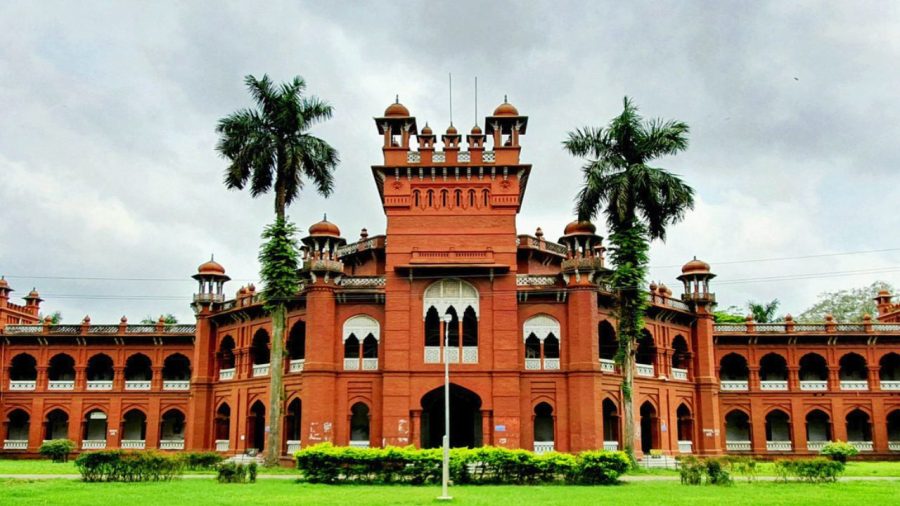



Food at Dhaka University’s residential hall dining facilities and canteens is so unappetising that students have developed an alternative system to secure better meals, sacrificing study time to manage it.
Known as the mess system, it requires students to collect money, buy groceries and supervise cooking from as early as 4am while attending classes and sitting for examinations.
As at other universities, many residential students at Dhaka University, the country’s oldest and largest university by student population, are thin and underweight. Poor-quality food and inadequate nutrition have caused years of physical and mental suffering, with no apparent solution.
Political changes, mass uprisings and elected Dhaka University Central Students’ Union (Ducsu) committees have failed to improve canteen food.
Not every hall has a dining facility, forcing students to buy food from canteens where higher prices do not guarantee better meals. Salimullah Muslim Hall has neither a dining facility nor a canteen, relying entirely on the mess system.
Three students manage each mess for 15-day terms, handling purchases and overseeing operations.
Imamul Aekhwan, a mass communication and journalism student currently managing the Salimullah Muslim Hall mess, told TIMES, “Preparing the daily meal list, collecting money, keeping it in my custody and then buying groceries – all of this involves a great deal of hardship.”

He visits Karwan Bazar with fellow managers and workers after the Fajr call to prayer. By the time they return, hand over the groceries to the cook and settle the accounts, it is around 9am.
One manager oversees lunch from noon to 2pm, while another supervises dinner from 7pm to 9pm or from 8pm to 10pm.
“It is a huge hassle. We constantly worry about whether the accounts have gone wrong or whether the rice is a little too coarse. We did not come here to study just to deal with all this. Sometimes I have an examination, but my performance suffers because of these responsibilities,” Imamul said.
Students nevertheless endure these responsibilities to secure better food and management.
Yasinur Rahman Poran of Mohsin Hall said, “Stale food is quite common in the halls. Serving rice or dal from the previous day happens frequently. Roti and paratha are reasonably edible, but fish dishes are generally not cooked well. Although a few items in one or two halls are good, food quality is almost the same across most halls. Canteens in some halls have been closed because of unhygienic water.”




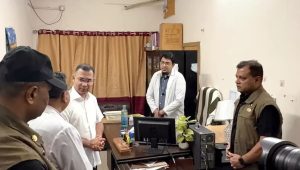
A recent inspection by several Jatiyatabadi Chhatra Dal leaders at Masterda Surya Sen Hall uncovered disturbing conditions.
Mashnun Snigdho, a member of the inspection team, said, “We found food being cooked in burnt and dirty oil, unauthorised ingredients being used, parathas being fried with stale dough, meat being refrigerated with blood still in it, food left uncovered, and rotten vegetables and old mashed dishes being stored. The sight completely destroyed our appetite. We could hardly believe this was the food we had to eat.”
Dihan of Muktijoddha Ziaur Rahman Hall said, “Students’ attitudes are also partly responsible. The new canteen at Mujib Hall sells reasonably hygienic food at higher prices, but students do not eat there. Yet they are willing to pay higher prices to eat outside. It is essentially a psychological issue.”
A hall union member said, “Even when food prices rise, quality does not improve. Initially, when we monitor strictly, the food improves for a few days. Then the operators lower the quality again to increase their profits. We have come to accept that things will continue this way.”
He also alleged that a “Chandpur syndicate” controlled hall canteens, with operators connected to Chandpur working together. Outsiders, he claimed, could neither enter nor survive in the business.
Before the 2025 Ducsu election, the Islami Chhatra Shibir-backed United Students’ Alliance pledged in its 36-point manifesto to introduce affordable, nutritious menus prepared with the assistance of nutritionists and test canteen and cafeteria food every three months. The elected representatives have failed to deliver on those pledges.
Omar Faruk of Sir AF Rahman Hall said, “There has been no improvement in food quality. The canteen dal contains excessive water, the meat has too much tasting salt, and the tehari is overloaded with spices. Overall, there has been no improvement in nutritional quality.”
At Zia Hall, rice with broiler chicken, juvenile hilsa, rohu or pangas costs Tk50, while a meal with Sonali chicken costs Tk70. Rice with poa fish costs Tk60 and egg khichuri Tk40. Red amaranth, water spinach and mixed leafy vegetables cost Tk10, while mashed potatoes cost Tk5. Watery dal, with barely any lentils, is served free of charge.
Prices are similar at other hall canteens, while meals under the mess system cost roughly the same.
Mir Imam, a Salimullah Muslim Hall mess manager, said, “Although prices are similar, food quality is better in the mess. We do not use tasting salt or cheap spices here. Our vegetables are also fresh.”
Studies have documented the health consequences of poor-quality hall food.
A report citing chemical tests conducted by the Institute of Food Science and Technology under the Bangladesh Council of Scientific and Industrial Research (BCSIR) found substantial deficiencies in energy and protein.
While a male student under 19 requires at least 2,820 kilocalories daily, a Zia Hall student receives at most 1,449 kilocalories from lunch and dinner combined, leaving a deficit of at least 1,371 kilocalories and a protein shortfall of 36 grams per cent.
Researchers said breakfast could not compensate for the shortfall.
Female students in halls such as Rokeya Hall face daily deficits of 1,373 kilocalories and 20 grams per cent of protein.
Many students skip breakfast. Those who eat dinner around 8pm or 9pm often need another snack before bed, as most canteens run out of food after 9pm. Such snacks offer little nutritional value.
Dhaka University Pro-Vice-Chancellor Mohammed Almujaddade Alfasane told TIMES, “A committee comprising hall provosts and nutritionists has been formed to improve food quality. It has already held one meeting to ensure that nutritional standards can be improved through direct monitoring at every hall.”
He said the administration had also met representatives of the state-run Trading Corporation of Bangladesh (TCB) to discuss supplying food ingredients at affordable prices.
However, previous university authorities have made similar assurances about poor-quality food in the past.