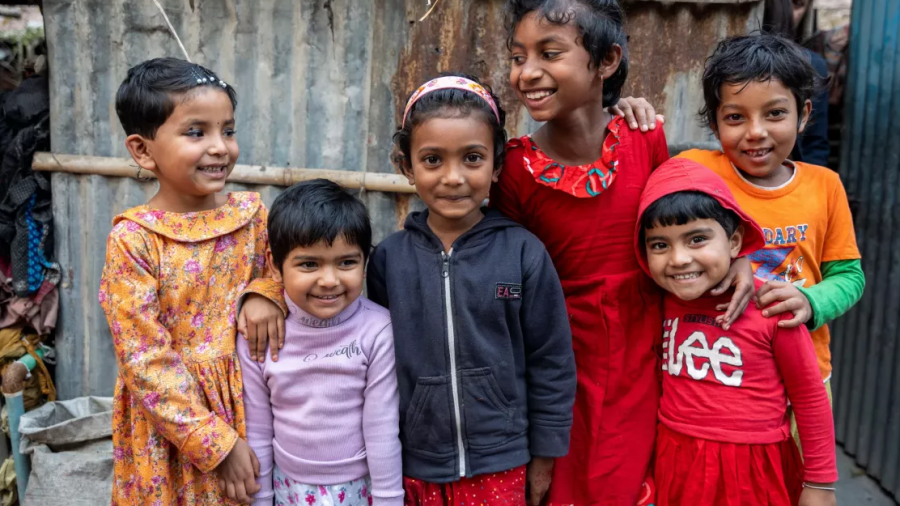



October 11 is celebrated as the International Day of the Girl, a global moment to celebrate girls everywhere, amplifying their voices, actions and leadership. On this day, we come together to recognise and advocate for the full spectrum of girls’ rights. This year’s theme was “End child marriage and invest in girls’ rights!” Stakeholders called for urgent action to end child marriage and invest in girls’ rights.
Most young girls have little say in the timing of marriage or choice of spouse. After marriage, they get very limited power within their new households. Child marriage and childbearing, prevalent in Bangladesh, contribute to maternal and child health problems. Every girl deserves a childhood, the freedom to learn, to grow, to make her own choices and to define her own future. Yet millions of girls are still denied that freedom. Each year, more than 12 million girls – roughly one every three seconds – are married before reaching adulthood.
Child marriage remains one of the most widespread violations of girls’ rights, denying millions of girls the chance to stay in school, protect their health, live free from violence and fulfil their potential. It can have severe and lasting consequences for girls’ physical and mental health, increasing risks of social isolation, depression and emotional distress at a time when self-harm remains one of the leading causes of death among adolescent girls aged 15-19 globally.
Keeping girls in school, expanding access to health, protection and social services; working with families and communities to challenge harmful norms; investing in girls’ rights and supporting their leadership are the solutions. Now we must go further – and faster. It is in our power to ensure that every girl can realise her rights and fulfil her potential.
When girls are safe, educated and empowered, they don’t just transform their own lives; they help build healthier families, stronger communities and more peaceful, prosperous societies. So let us stand with girls. Raise your voice for girls’ rights.

Champion the solutions that help girls stay in school, stay safe and shape their own futures, especially in crisis and humanitarian settings. Challenge the harmful norms that continue to drive child marriage in Bangladesh and around the world. Advocate for laws, policies and investments that prevent child marriage and uphold girls’ rights. Amplify girls’ voices and leadership, ensuring girls are part of the decisions that affect their lives and futures. Together we can end child marriage and ensure every girl has the freedom to choose her own future and the opportunity to thrive, UN Women, UNICEF and other organisations urged.
Women are the key to food security. Today’s girls are tomorrow’s women. Women must recognize their contributions in food production. The national food policy says that food is a basic human need and plays a crucial role in the agro-based economy, where a large proportion of the income of the population is allocated to food. The first and foremost responsibility is to ensure an uninterrupted supply of food to all people at all times.
According to Article 15 (a) of the Constitution of Bangladesh, a fundamental responsibility of the state to provide its citizens with food. By preventing malnutrition among girls, we can get healthy girls to ensure safe motherhood, planned families with one child or two children, and an increased rate of school enrollment. These are the preconditions for building a healthy and wealthy nation with the opportunity to practice all types of human rights of girls/women, for their taking part in decision-making and being educated and empowered.



Where the population is living in poverty, multiple micronutrient deficiencies coexist. A woman’s status impacts the nutritional status of her child. Micronutrient deficiencies are responsible for economic costs at individual, community and national levels.
An integrated approach is required to prevent malnutrition. To achieve sustainable improvement of the nutritional status of girl children, women’s status should be improved. Women’s health must also be improved for their own sake so that they are able to lead a productive, healthy life and play a vital role everywhere.
Concerted efforts are necessary to protect the health of a girl child through recognising the fact that the potential of the child is related directly to the educational and social status of the mother.
Women’s educational achievement and social status are the main determinants of children’s nutrition. When family planning and reproductive health services (SRHR) respond to the needs of educating women, fertility declines further in response to changing perceptions of ideal family size.
Vienna Declaration and Programme of Action mentioned that national and international mechanisms and initiatives should be strengthened for the defence and protection of children, in particular the girl child, abandoned children, street children, children with disabilities, economically and socially exploited children, refugee and displaced children.
Beijing Declaration emphasised ensuring the human rights of the girl child as an inalienable, integral and indivisible part of all human rights and fundamental freedoms. So, let us keep in mind that among other rights, nutrition for the girl child is her constitutional human right too.
Under these logical and humanitarian grounds, this is a very important time for our government, donor agencies, NGOs, civil society and the scrupulous people of the country to work actively as well as to invest in nutrition for the girl child.
Studies of the United Nations show that in 2022, 148 million children had stunted growth and 45 million children under the age of five were affected by wasting. And the number is on the rise. It is projected that more than 600 million people worldwide will be facing hunger in 2030. It highlights the immense challenge of achieving the zero hunger target.
Cindy Hensley McCain, Executive Director of the World Food Programme (WFP), has warned that “There is no time to lose; we must take immediate action. More than 2.8 billion people globally cannot afford healthy diets.”
According to the Global Hunger Index 2023, Bangladesh stands in 81st position amongst 125 countries. It reflects that the level of hunger remains serious. Malnutrition, especially in children, is still a common problem in the country. Hunger is still one of the biggest problems in the world. All 17 Sustainable Development Goals (SDGs) of the United Nations are interlinked. So we must work together to fulfill the SDGs by 2030 so that no girl is left behind.
The views expressed in this article are solely those of the author
The writer is a journalist, columnist, and researcher