


A dozen eggs for Tk1.
A brand new saree for Tk5.
Rice and lentils for a mere pittance.
At a time when soaring living costs have placed everyday essentials far out of reach for struggling families, a very different kind of market has opened in the heart of the capital.
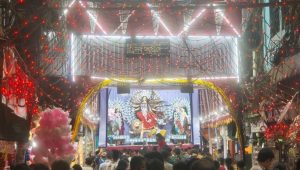
Amid the golden autumn sunshine and rustling kashful signalling the arrival of Durga Puja, a unique humanitarian initiative has unfolded at the century-old Ramna Kali Temple.
To bridge the divide between rich and poor during the Hindu community’s largest religious festival, the Bidyanondo Foundation has launched its special ‘Tk5 Puja Market’.

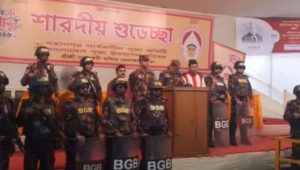
The initiative was inaugurated on Thursday by Dhaka South City Corporation (DSCC) Administrator Md Abdus Salam.
Beneath the autumn sky, the historic temple grounds transformed into a bustling marketplace as families queued up for tokens before browsing stalls stocked with groceries, clothing, school supplies, and household goods.
A market where Tk5 goes far
The token prices are virtually unimaginable in today’s retail climate.
At the special stalls, a kilogram of rice or salt costs just 50 poisha.



A kilogram of red lentils, a dozen eggs, a packet of biscuits, handwash, or toilet cleaner sells for Tk1.
Two kilograms of flour, two kilograms of refined flour (maida), a kilogram of sugar, and children’s clothes are available for Tk2 each.
Children’s shirts, trousers, and schoolbags are priced at Tk3, while a lungi costs Tk4.
For Tk5, shoppers can buy a saree or a panjabi.
“With market prices so high, it was hard to imagine cooking a special meal during Puja or buying new clothes for the children,” said one shopper holding her token.
“Here, I can buy rice, lentils, oil, eggs, and clothes at nominal prices. It allows us to celebrate with our heads held high.”
Dignity over charity
The Bidyanondo Foundation emphasised that the market is deliberately structured around symbolic charges rather than free hand-outs.
Organisers believe that paying even a nominal sum allows disadvantaged families to shop with dignity, avoiding the embarrassment associated with traditional relief distribution.
“Standing beside people in need is our core mission, and religious festivals offer a wonderful opportunity to spread compassion,” organisers said.
This year, the foundation plans to deliver Puja gift sets to over 1,000 families and distribute traditional sweets to 50,000 people. Crucially, the fair is open to low-income individuals from all religious backgrounds.
‘Religion belongs to individuals, state belongs to all’
Commending the initiative, DSCC Administrator Abdus Salam praised Bidyanondo’s long-standing service to vulnerable communities.
“Today, people can buy a dozen eggs for Tk1 and a saree for Tk5,” Salam said.
“This is not about making anyone feel inferior, it is about extending assistance through a dignified exchange. I am particularly pleased that alongside our Hindu brothers and sisters, underprivileged citizens from all communities are benefiting.”
Addressing broader economic challenges, Salam noted that Prime Minister Tarique Rahman’s administration requires time to rebuild the economy, create jobs, and navigate global headwinds, including ongoing instability in the Middle East.
Reaffirming the government’s commitment to communal harmony, Salam echoed the prime minister’s sentiment: “Religion belongs to individuals, but the state belongs to everyone.”