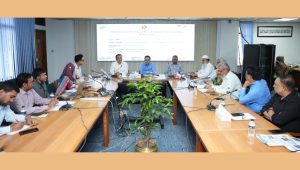

The Northeast Indian Ocean Regional Dialogue on Sustainable Blue Economy, Connectivity, and Resilience for Small Island Developing States (SIDS) formally began on Tuesday.
The two-day event brings together senior policymakers, experts, and development partners from Bangladesh, Sri Lanka, the Maldives, and India’s Andaman and Nicobar Islands.
Sasakawa Peace Foundation (Japan), Maheshkhali Integrated Development Authority (MIDA), and Peace and Policy Solutions (Bangladesh) jointly organised the event at Pan Pacific Sonargaon Hotel in Dhaka.

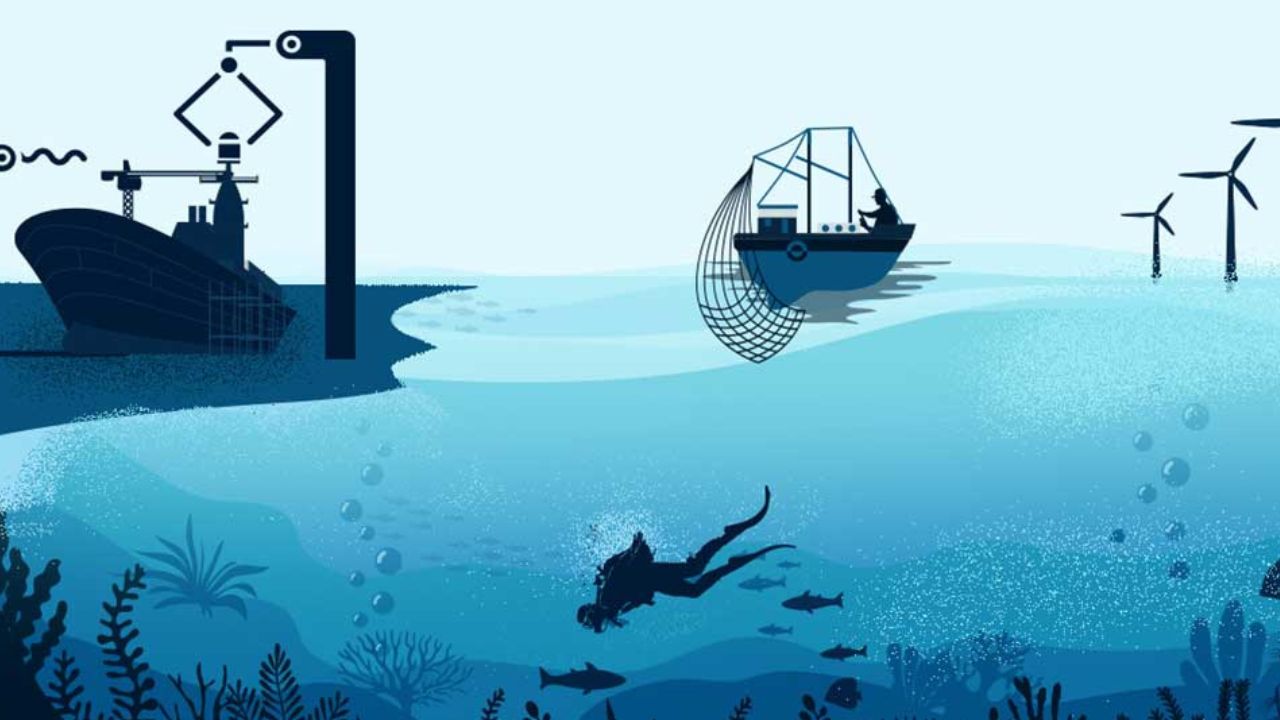
The event will host a series of high-level panels covering themes such as advancing sustainable blue economy strategies in the Bay of Bengal, enhancing regional connectivity through ports and shipping, financing partnerships, climate adaptation, disaster governance, science-policy interfaces, and inclusive livelihoods through fisheries and tourism.
It will conclude with working groups focused on regional cooperation roadmaps. A “Dhaka Statement”, a shared regional position reflecting discussions and recommendations, will also be prepared to feed into upcoming inter-regional and global dialogues.

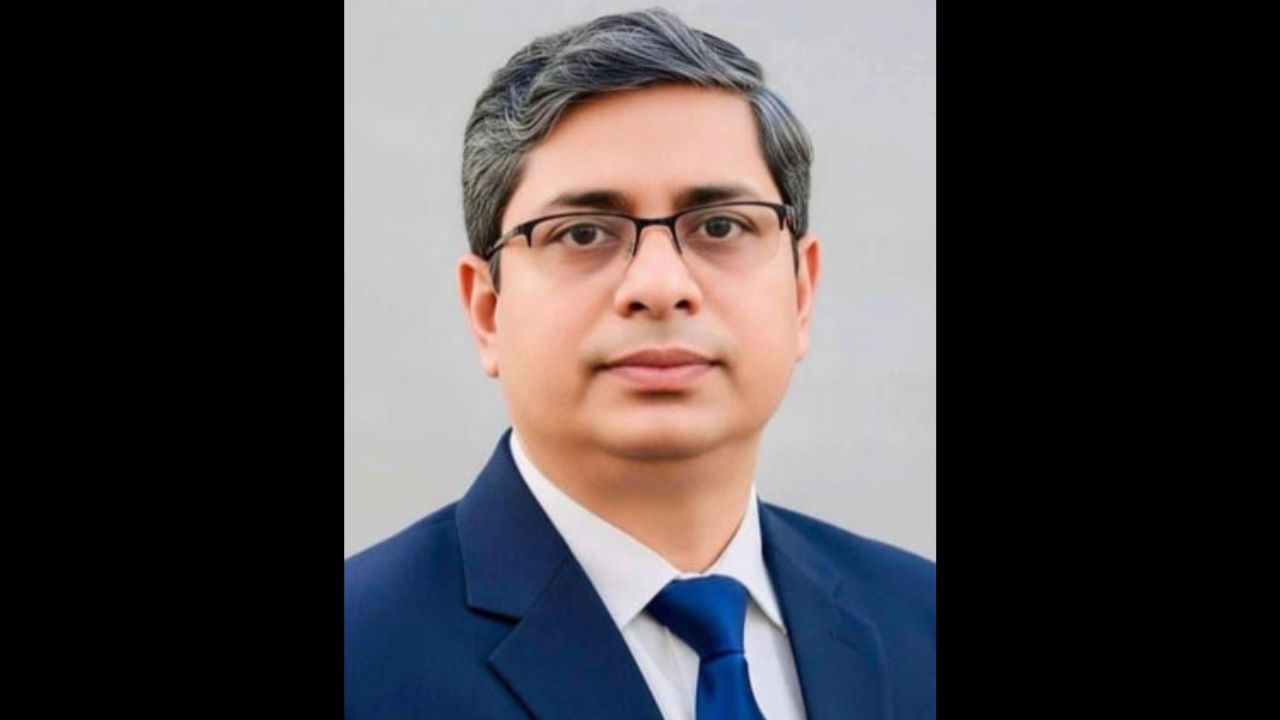

Professor Mitsutaku Makino, president of the Ocean Policy Research Institute (OPRI), Sasakawa Peace Foundation, Japan, said, “The Indian Ocean, often referred to as the ‘Great Middle Bay,’ connects over 33 nations and nearly three billion people. For Japan, this ocean is not only a critical maritime corridor facilitating about 78 percent of our energy imports, but also a shared space where our destinies intertwine.”
In his address as chief guest, Ashik Chowdhury, Executive Chairman of MIDA, said, “The Bay of Bengal is the largest bay in the world where resources, commerce, and connectivity converge. But for Bangladesh to harness its full maritime potential, we must elevate our actions and forge robust partnerships. Sustainable blue economy requires investment, technology, and the shared commitment of our partners across the region.”
He reiterated that MIDA, as Bangladesh government dedicated agency for coastal development and strategic infrastructure in Moheshkhali and beyond, will partner with the Sasakawa Peace Foundation to work on priorities related to fisheries and marine affairs set by 20 ministries, departments, and agencies of Bangladesh.
The collaboration will pave the way for assessments on adopting Japan’s Blue Economy practices in the Maheshkhali area, using Japan’s Umigyo model for marine-industry-based coastal community development. Plans include baseline studies on fisheries, marine tourism, infrastructure such as additional jetties, automated fish landings, cold-chain systems, and training and knowledge transfer in deep-sea fishing, seafood processing, mariculture, and sea safety.
The opening session was also addressed by Abdulla Siyaz, Minister of State for Economic Development and Trade, Maldives; Keynote Presenter Emadul Islam, Senior Research Fellow, Ocean Policy Research Institute, Sasakawa Peace Foundation (Japan); Commodore Tanzim Faruq, Member, MIDA; Mohammad Navid Shafiullah, Additional Secretary, Ministry of Environment, Forest, and Climate Change (Bangladesh); and Moogdho Mahzab, Advisor, Peace and Policy Solutions.