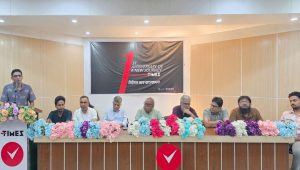
Journalists in Bangladesh cannot work with full independence as business obligations, employee security, and political‑administrative pressures influence news publication, Times Media Limited Managing Director AK Azad said on Saturday.
He also said, “In investigative reporting, powerful quarters exert pressure through owners, administration, or political channels. As a result, self‑censorship often becomes unavoidable.”
He was speaking at the thematic discussion session of the Bangladesh Journalism Conference 2026, where participants debated structures of self‑regulation, professional oversight, accountability, and grievance redressal in the country’s media.
The session, titled “Media Self‑Regulation in Bangladesh: Professional Oversight, Accountability and Grievance Redressal”, highlighted current media realities, ethical challenges, and the task of rebuilding public trust.

International media law expert Joan Barata said, “A balanced combination of state regulation and self‑regulation is the most effective approach worldwide. Regulatory bodies must be free from political influence and established through transparent processes.”
He further said, “Setting ethical standards is not the responsibility of the state, but of journalists themselves. At the same time, every media organisation must have an internal grievance redressal mechanism.”




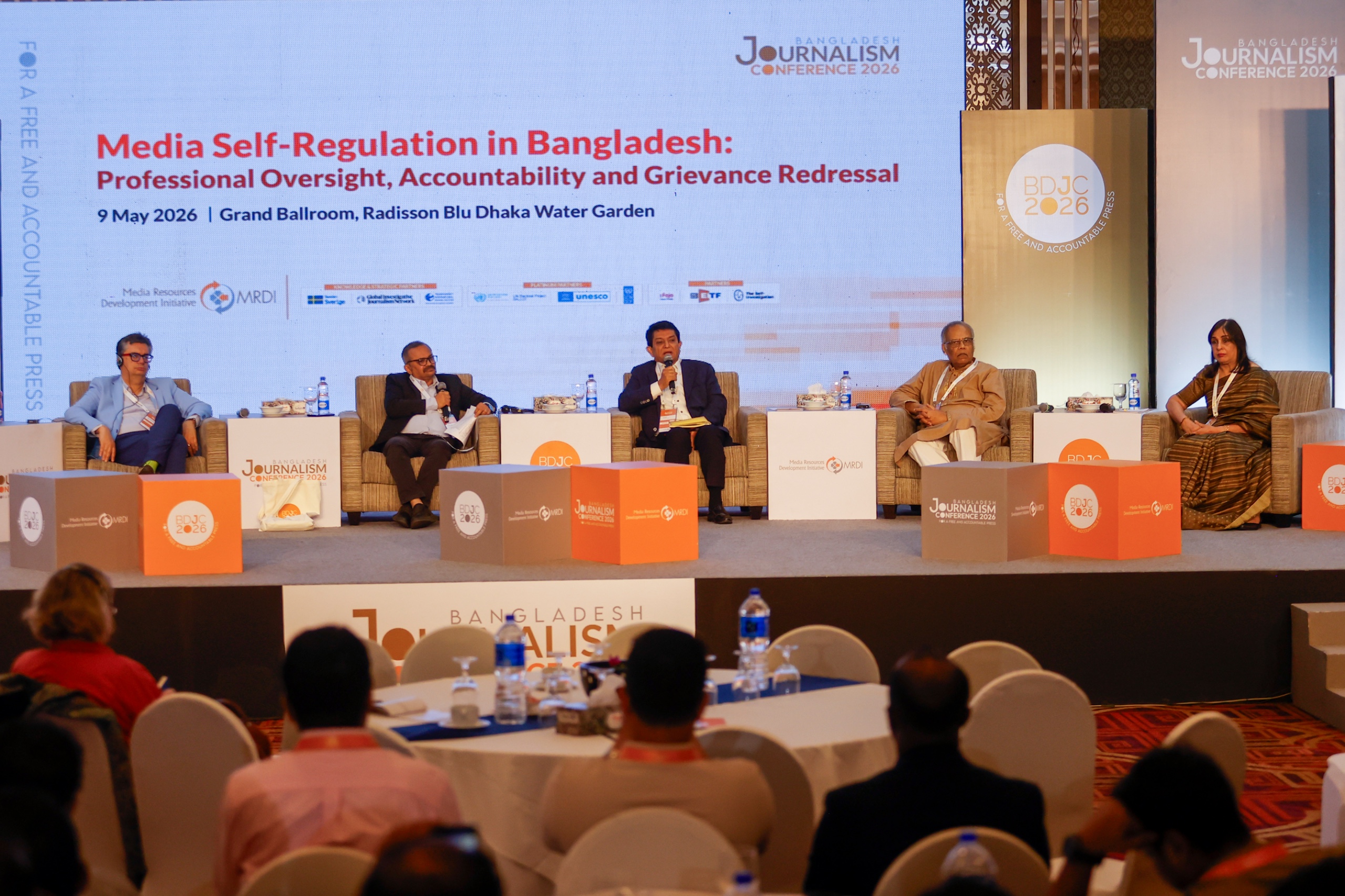
Kamal Ahmed, consulting editor of The Daily Star, said, “Structural reform is needed to resolve the conflict between media ownership and journalistic independence. Independent corporate structures, stock market listing, or media trust models could be explored.”
He added, “An independent Media Commission should be established to play an effective role in ethics and grievance redressal.”
Ayesha Kabir, team leader of Prothom Alo English, said, “In the digital age, the major challenge for journalism is balancing speed with accuracy. Delivering news quickly is important, but avoiding misinformation is equally critical.”
She also said, “Technology and AI can strengthen verification processes. At the same time, admitting mistakes when they occur enhances media credibility.”
“In Bangladesh’s reality, independent media regulation can sometimes create risks of censorship,” she further cautioned.
According to the speakers, there is no single solution for sustainable development in Bangladesh’s media sector. Ownership structures, professional ethics, regulatory systems, and self‑regulation together point to integrated reform as the way forward.
The session was moderated by former BBC journalist Shakil Anwar.