The second plenary session of the Bangladesh Journalism Conference 2026 explored the intricate relationship between political governance, democracy, and independent media in South Asia.
The session, titled “Politico-Governance Ecosystem and Free Media,” highlighted that media cannot function in isolation but rather reflects the broader political, legal, and democratic framework of a country.
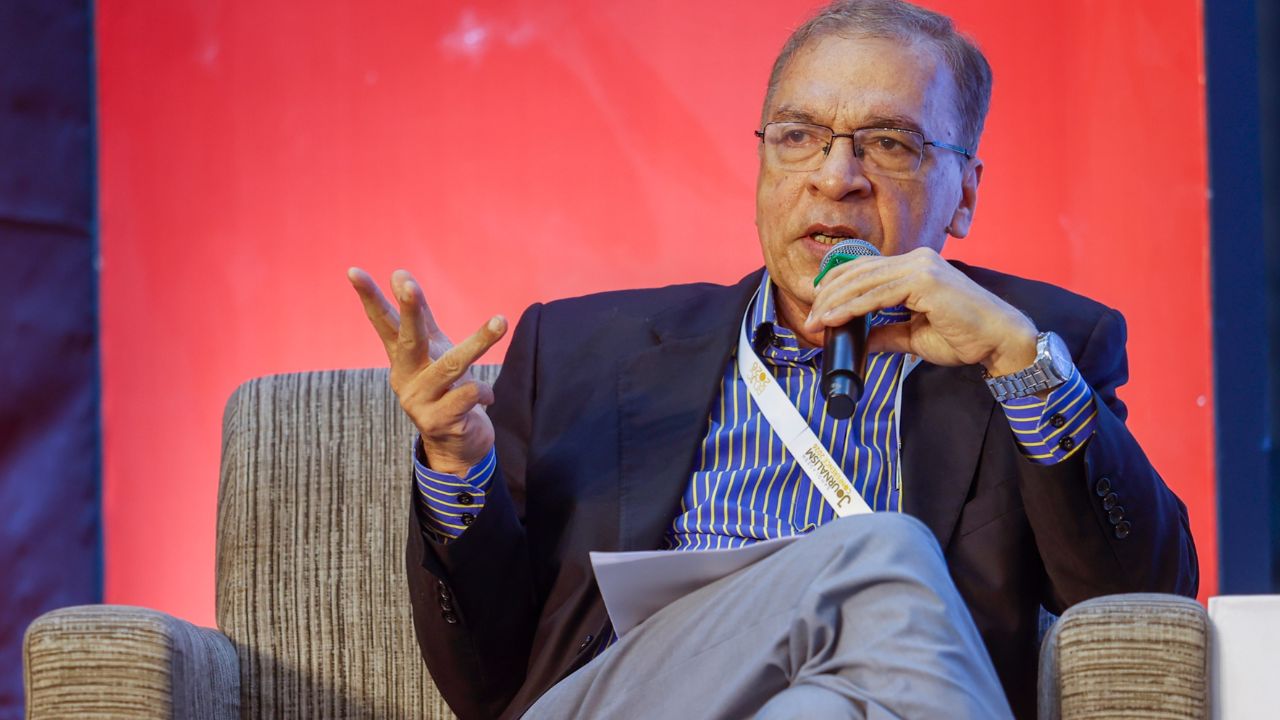
The session was moderated by Shakhawat Liton, executive editor of The Business Standard, while the keynote presentation was delivered by Iftekharuzzaman, executive director of Transparency International Bangladesh (TIB).
Panelists included Zaffar Abbas, editor of Pakistan’s Dawn newspaper; Kamal Ahmed, consulting editor of The Daily Star; former BBC journalist Shakil Anwar; and Shahed Mohammad Ali, editor of Dainik Samakal.

Iftekharuzzaman said that countries scoring high on press freedom, rule of law, and good governance often excel in controlling corruption and sustaining democratic practices. “Press freedom cannot be viewed in isolation,” he said. “It mirrors a nation’s political culture, freedom of expression, citizens’ rights, and democratic environment.”
He noted that Bangladesh’s political culture often follows a “winner-takes-all” approach, leading to monopolised political space and suppression of dissent. Excessive centralisation of power, lack of accountability, and administrative control further curtail media independence.




Zaffar Abbas, drew parallels with Pakistan, noting that most South Asian countries face similar crises in politics and media. He highlighted that marginalised communities and local issues are often ignored, while urban and politically charged events dominate coverage.
“Before comparing South Asia with Western democracies, we must address our internal challenges and limitations,” he said.
Kamal Ahmed cited a recent case in Khagrachhari, where a journalist faced five lawsuits in a single day, emphasising that media operations are affected by broader societal and state pressures. He also highlighted financial independence as key for media freedom and criticised the Press Council for becoming politically influenced over time.
Shakil Anwar stressed the need for responsible and professional journalism to maintain public trust. He noted that even established Western democracies face challenges, citing how “fake news” narratives were politicised during the Trump administration, undermining trust in mainstream media.
He emphasised that strong parliamentary democracy, multiparty political systems, and effective representative institutions are crucial for safeguarding press freedom.
Reflecting on his career, Anwar said Bangladesh’s journalism flourished between 1991 and 2006, during the country’s effective parliamentary democracy.
Shahed Mohammad Ali warned against journalists aligning too closely with political parties, leading to pro-BNP or pro-Awami League biases. He urged reporters to practice professional journalism, independent of partisan pressures, and emphasised verifying political statements against constitutional, legal, and institutional frameworks.
He also noted the decline of opposition voices in media and growing ideological divisions within newsrooms as challenges to impartial reporting.