

Ensuring safe food is crucial to preventing disease and easing pressure on hospitals, Chattogram Deputy Commissioner Mohammad Zahidul Islam Mian said on Saturday, calling for a greater focus on prevention rather than treatment.
He emphasised that food safety and hygiene must be ensured at every stage – from production and preparation to storage and serving – to reduce preventable health risks.
Speaking after an awareness rally and a special cleanliness drive at restaurants in Chattogram on Saturday, the DC announced that restaurants have been given until 24 September to address shortcomings in their kitchens, food preparation and serving practices, storage systems, and overall hygiene.
Pointing to the growing strain on healthcare, Zahidul said despite an increase in hospitals and healthcare facilities, pressure on the health system has not eased, with patients still struggling to find beds at many hospitals.
“We need to ask ourselves: Do we want to make hospital queues even longer, or do we want to keep people healthy before they fall ill?” he remarked.
He urged a comparison of hospital queues from a decade ago to today, noting that even with more hospitals, patients often struggle to get beds and the reasons behind this must be identified.
Greater emphasis should therefore be placed on preventing disease alongside providing treatment, with safe and nutritious food forming a key part of that approach. “If we do not consume healthy and nutritious food, we cannot build a healthy nation,” he added.

The DC stressed that food safety risks are not confined solely to hotels and restaurants.
He explained that the excessive use of fertilisers and pesticides in agriculture, the indiscriminate use of medicines and antibiotics in livestock and poultry, and poor hygiene during food preparation, storage, and serving can compromise food safety at various stages.
Consequently, everyone involved in the food chain – from producers to those preparing and serving food – must take responsibility for ensuring safety.

He also highlighted people’s growing reliance on food prepared outside the home, particularly among working families, alongside the increasing use of restaurants and online food delivery services.



Against this backdrop, ensuring food safety at restaurants has become an increasingly important public health issue.
Addressing regulatory efforts, Zahidul observed that years of enforcement drives and fines have failed to bring lasting changes in some establishments, with similar violations recurring after penalties are imposed.
The district administration will therefore focus on raising awareness and fostering accountability alongside enforcement. “Our responsibility is not merely to impose fines. Those running businesses must also take responsibility,” he said.
As part of the new initiatives, the district administration is planning to create a preliminary database containing the health information of restaurant workers.
Zahidul said those directly involved in preparing, cooking, and serving food should undergo regular health checks to minimise the risk of communicable diseases spreading through food establishments.
He stressed that restaurants must maintain the standards required for the categories under which they are registered, adding that consumers have the right to receive food and services consistent with an establishment’s declared standard.
Restaurants failing to meet the requirements could have their grades reviewed, with consumers to be informed of any downgrade.
The awareness rally began at Chattogram Circuit House and ended at the Stadium Market premises after passing through Kazir Dewri.
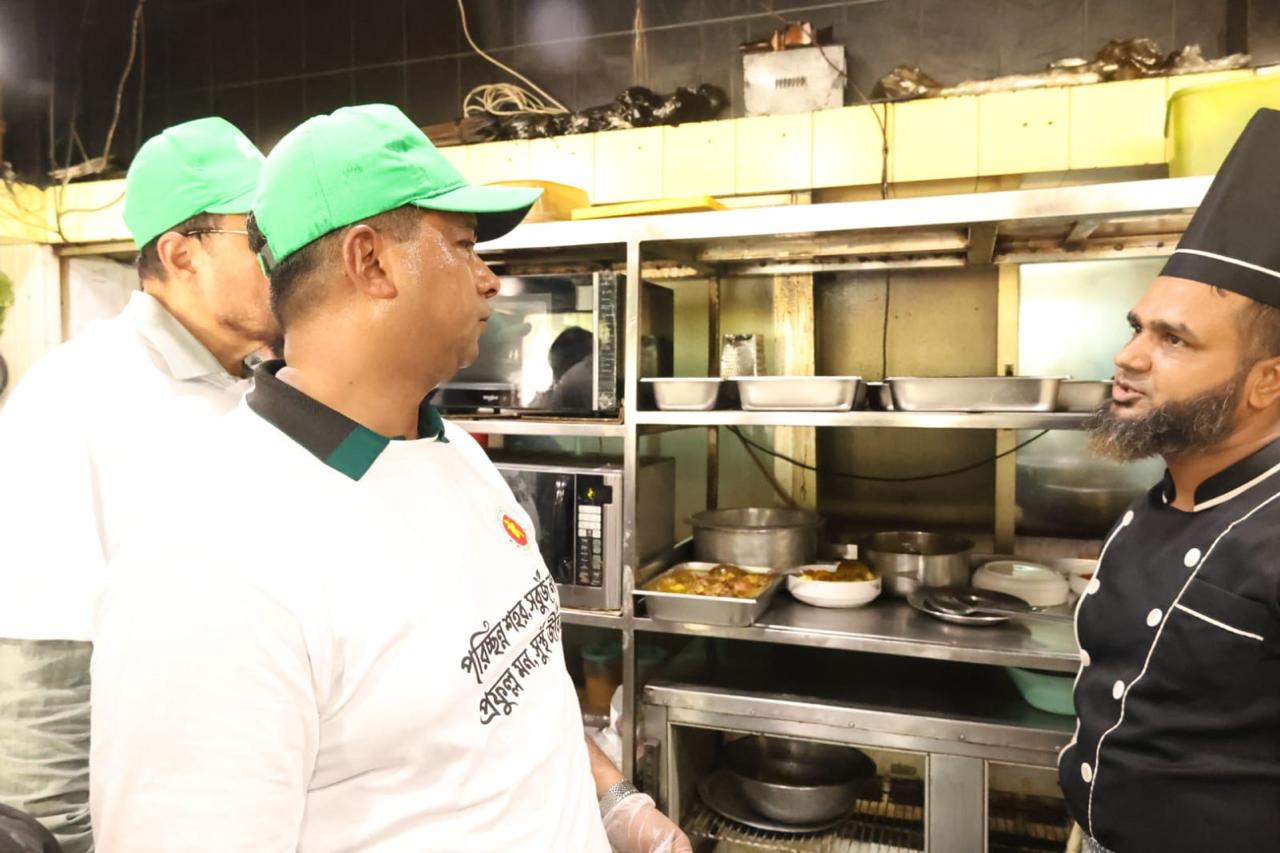
It was held as part of the “Porichchhonno Kori Nagar-Gram, Gori Nandonik Chattogram” campaign and the nationwide dengue prevention and cleanliness drive for 2026.
A cleanliness drive was later carried out at restaurants in the stadium area, while restaurant owners and workers elsewhere in the district conducted similar activities at their establishments.
The campaign also included measures to eliminate potential Aedes mosquito breeding grounds.
The DC said the district administration has been carrying out various initiatives since July to make Chattogram cleaner and healthier, with the latest drive focusing on restaurant hygiene and food safety.
Speaking at the programme, Chattogram-9 lawmaker Mohammad Abu Sufian called for regular health checks for restaurant workers involved in cooking and serving food, as well as maintaining their health certificates.
Representatives of restaurant owners also pledged their cooperation in ensuring safe food and hygienic conditions.
Zahidul mentioned that ensuring food safety is a shared responsibility involving producers, businesses, restaurant owners, workers, regulators, and consumers.
Noting Chattogram’s longstanding role as a commercial hub, he said the city could set an example for the rest of the country in food safety and public health.
“Our goal is prevention. Rather than merely arranging treatment after people fall ill, we want them to remain healthy in the first place,” he concluded.