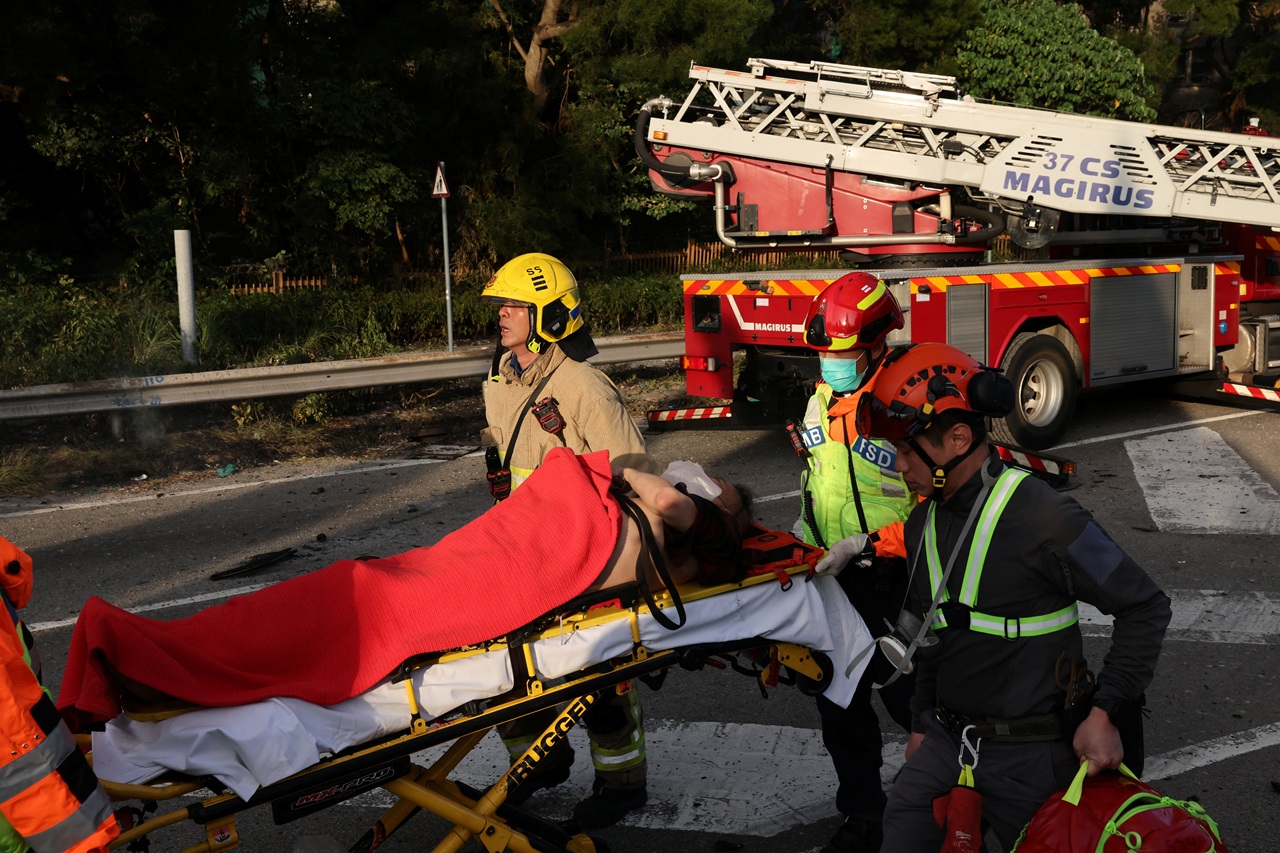
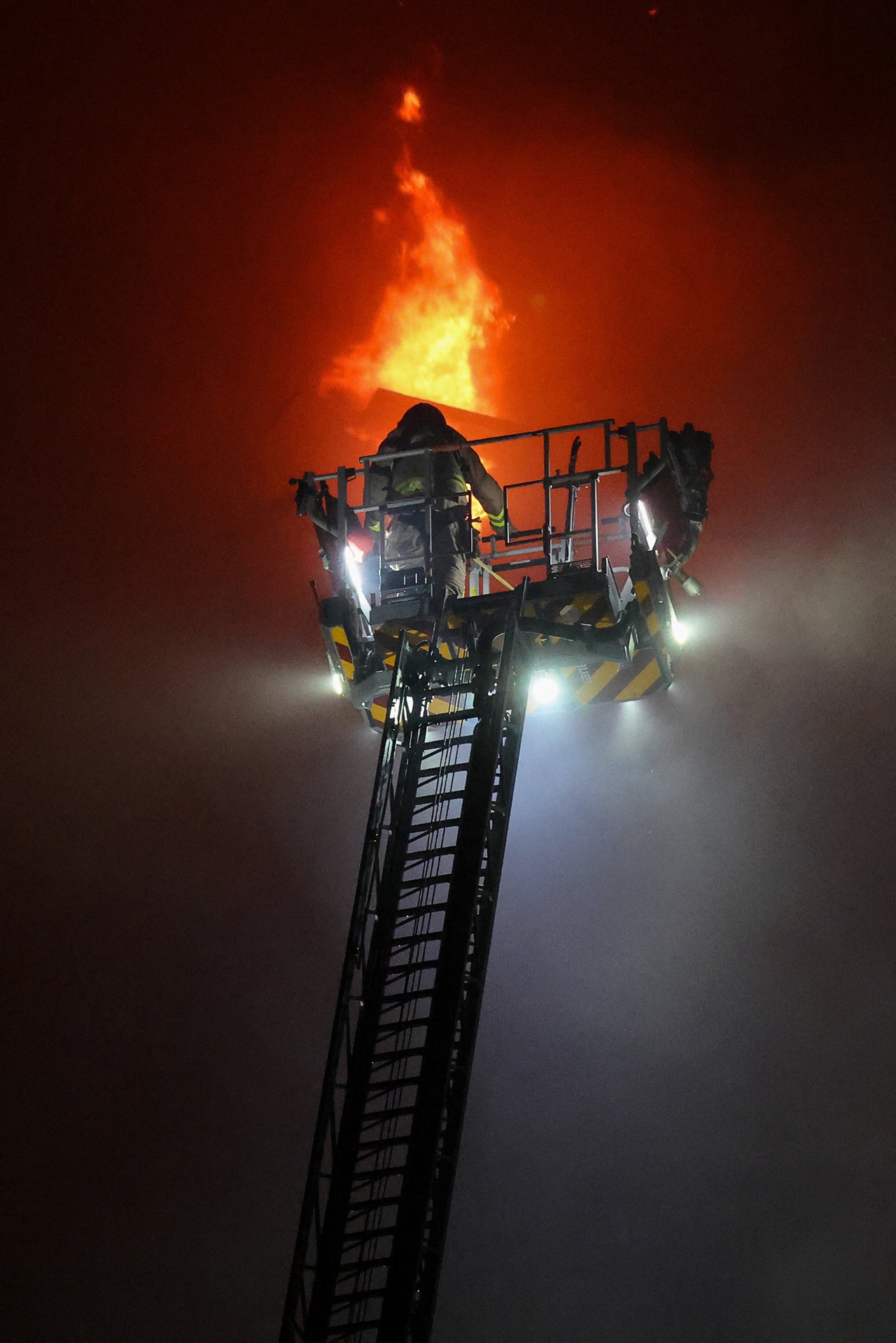
On the afternoon of November 26, 2025, an ordinary residential estate in Hong Kong’s Tai Po district became ground zero for a catastrophe. A massive fire erupted at the Wang Fuk Court, an 8-block complex housing roughly 4,600 people. It has already claimed 128 lives while writing this report. Nearly 200 residents remain unaccounted for, many feared trapped, injured or displaced.
What turned a renovation blaze into one of the deadliest residential fires in Hong Kong’s recent history was not simply misfortune. It was a chain of human and structural failures that exposed deep systemic vulnerabilities.
The exterior of the buildings was sheathed in bamboo scaffolding and green construction mesh, relics of a fading era of traditional building techniques. Despite a city-wide phase-out of such scaffolding that began in March 2025, the complex still employed this approach.

According to police, flammable foam material was also found sealing windows near lift lobbies, part of the same renovation efforts. These materials, officials say, violated fire-resistance standards.
The fire appears to have started on the scaffolding, spreading rapidly along the outer walls before bursting through windows and igniting interiors. It was aided by strong winds and the tight proximity of high-rise towers. Flames leapt across multiple 32-storey blocks within minutes; thick smoke and rising heat stymied rescue efforts.




In response, officers arrested three men associated with the construction company on suspicion of manslaughter, citing “gross negligence.”
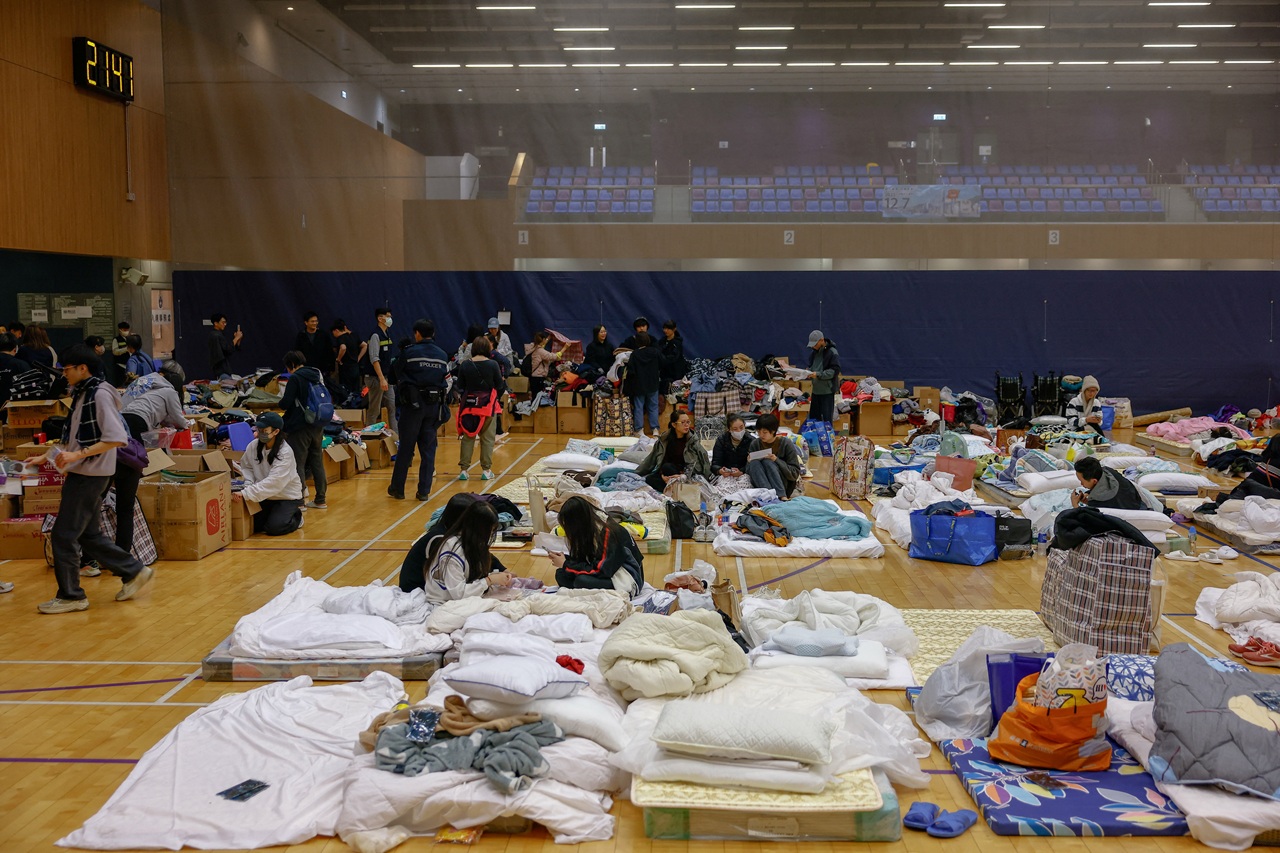
The human cost is staggering and deeply personal. Among the dead was a firefighter, whose commitment to saving lives cost him his own. Survivors speak of chaotic evacuations. Corridors filled with choking smoke, alarms never heard, windows sealed shut, forced people to rely on neighbours knocking and shouting in panic.
One elderly resident, 71, broke down in tears as she spoke of her wife, believed to be trapped. Another longtime resident, after forty years in the building, said he fled with only the clothes on his back, unsure whether he would ever return.
This tragedy is not just one more statistic. It is a glaring testament to how shortcuts in safety and lack of oversight, even in affluent, advanced cities, can yield swift and brutal consequences. For Hong Kong, a city accustomed to high-rises and narrow alleys, this fire lays bare a brutal truth. Density without rigorous regulation can become a death trap.
In the aftermath, as rescue and recovery efforts continue, the questions for residents, authorities and policymakers are urgent. How deeply must renovation and development practices be re-examined across the city? Hong Kong may have extinguished the flames, but the fire of scrutiny, grief and demand for accountability is just beginning.