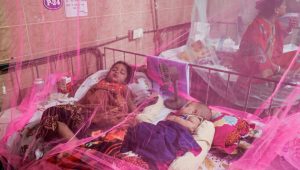


In a small Dhaka home, 80-year-old Saleha Khatun is a living testament to Bangladesh’s escalating stroke crisis. She has survived three strokes, but the battle has left her paralyzed, short-tempered, and her family financially shattered.
Her story is not an isolated one. It is the stark human face of a national health emergency that experts warn is creating a crippling “double burden” on millions of households and eroding the national economy.
Saleha Khatun’s tragedy began not with a sudden event, but with a quiet, untreated enemy – hypertension.
According to a 2023 World Health Organization (WHO) report on Bangladesh, there were 19.4 million adults with hypertension. A more recent WHO report indicates that as of 2024, only 3.6 million of these adults had their condition under control.
Diagnosed years ago, her blood pressure returned to dangerous levels, accompanied by mild forgetfulness that later became dementia.

“The first stroke was subtle, a sudden dizziness and collapse. The second, occurring during an unrelated eye surgery, was more complex, requiring two weeks of hospitalization and costs soaring past Tk50 thousand. The third and most devastating event left the entire right side of the body paralyzed,” recalls her grandson Hajrat Hania.
It also inflicted behavioral changes that demanded constant care. The cumulative cost of treatment, medication, and rehabilitation reached approximately Tk80 thousand — a sum that can devastate a family’s savings.


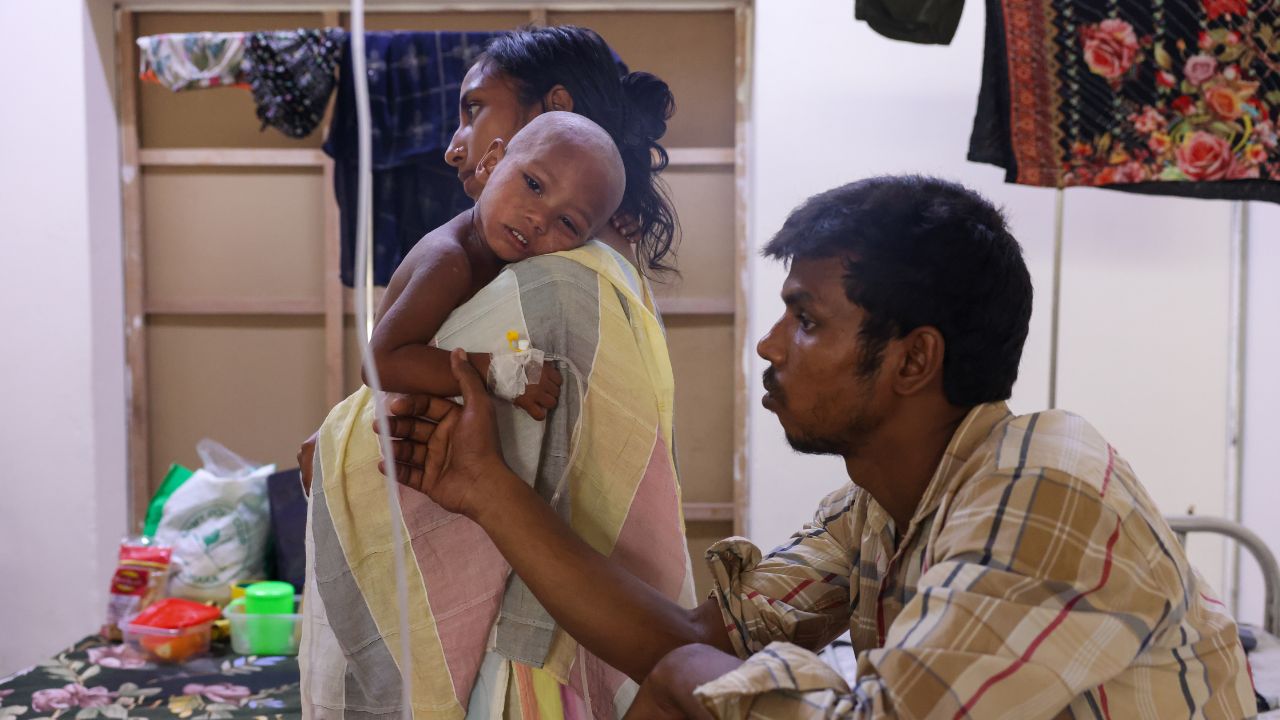
Saleha’s story is heartbreakingly common in Bangladesh, where stroke has quietly become one of the most devastating non-communicable diseases. As the nation’s third leading cause of death and second leading cause of disability, stroke severely impacts the economy. The high number of disability-adjusted life-years lost (485 per 10,000 people) shows that every stroke case is a direct hit to national productivity, driving poverty and dependency.
When stroke afflicts working-age individuals — a demographic increasingly vulnerable due to high risk factors like hypertension (prevalence near 30%), high salt diets, and poor air quality — the impact ripples far beyond the household.
Recent studies show that the annual incidence of stroke in Bangladesh has crossed 300,000 new cases, with more than 70% of survivors left with some form of disability.
The economic cost is equally alarming. Experts estimate that families spend Tk 3 lakh to 5 lakh on treatment and rehabilitation per patient, while national productivity suffers as working-age individuals are forced out of employment.
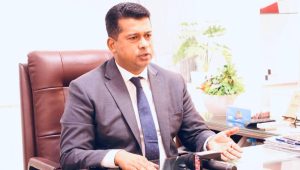
“This is the double burden we speak of,” explains Professor Dr. Syed Abdul Hamid, Institute of Health Economics at the University of Dhaka. “A family must simultaneously bear two crushing blows: the loss of the patient’s income and the exponential rise in medical costs.”
Professor Hamid notes that stroke-related expenses are rapidly increasing. Immediate, acute costs like hospitalization and emergency care now average between Tk 1.5 lakh to 2 lakh.
Worse are the long-term expenses: rehabilitation alone can cost nearly Tk4 lakh annually, depending on the severity of the patient’s disability.
To protect families like Saniya Khatun’s, Professor Hamid proposed a National Health Fund for stroke and other chronic NCD patients, aiming for a Tk20,000 crore annual corpus from government seed money, a Tk1 daily mobile levy, a 10% sugary drink tax, and corporate CSR contributions.
“If implemented, the fund would cover treatment and rehabilitation, and provide allowances for those unable to work,” he said, stressing it would ensure patients are cared for “with dignity and compassion” rather than seen as a burden.
As World Stroke Day 2025 calls for “greater awareness, prevention, and support,” stories like Saleha’s urge us to look beyond the hospital wards — to see the quiet battles fought daily in Bangladeshi homes, where love and resilience strive to outlast disease and despair.