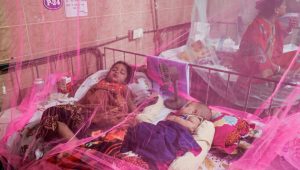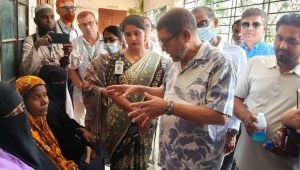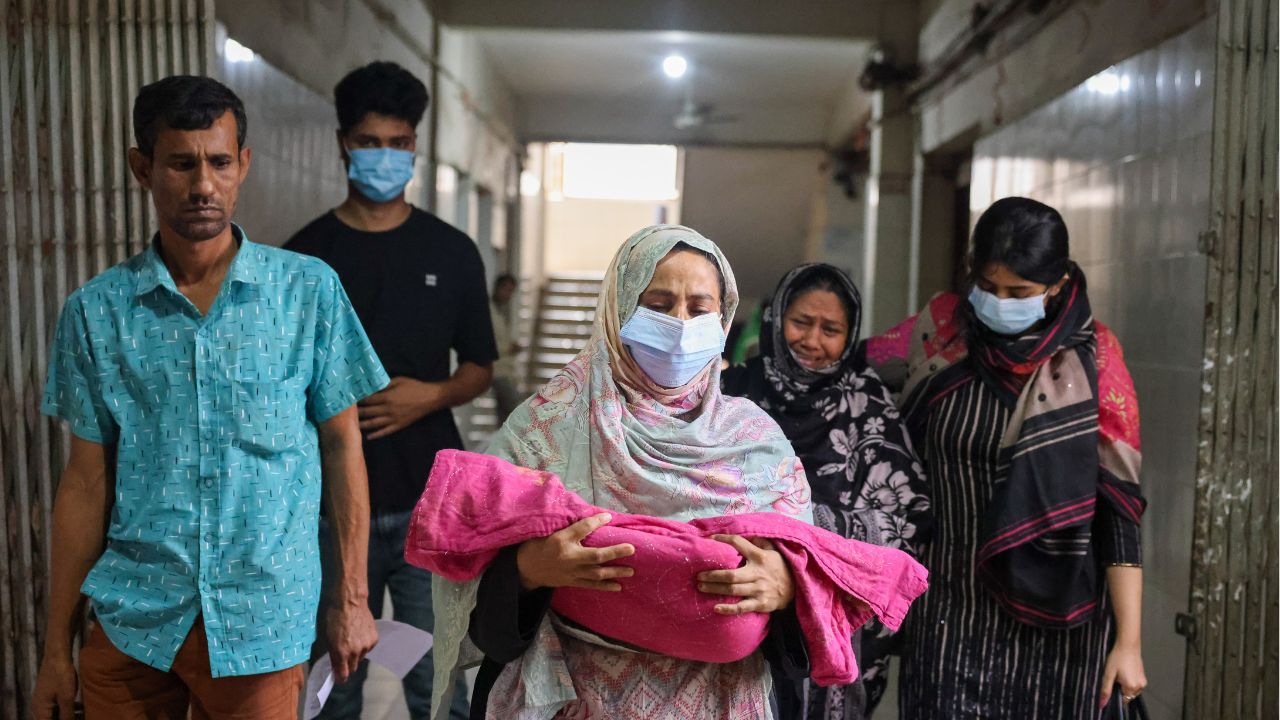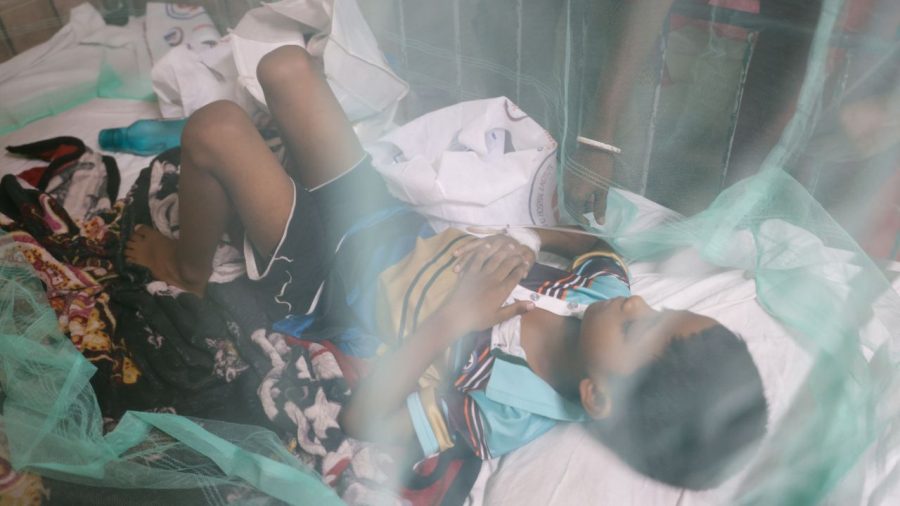

Dengue is spreading increasingly beyond Dhaka this year, with Khulna, Chattogram and Barishal accounting for a large share of hospital admissions as experts point to gaps in mosquito control and local preparedness.
Health experts and entomologists said the rising burden outside the capital highlights the need for early and targeted mosquito-control measures before transmission becomes widespread.
Doctors at hospitals in these regions said they are handling significantly more dengue patients than in previous years.
The geographic pattern of dengue has also changed. While infections were largely concentrated in Dhaka and Barishal last year, the outbreak has become more widespread this year, with Khulna and Chattogram emerging as major hotspots.
Khulna has recorded 9,645 hospital admissions so far this year, up from 5,473 in 2025, making it one of the areas carrying a much larger share of the national dengue burden.
Till Friday, Dhaka division outside city corporations recorded the highest number of cases at 9,912. Chattogram reported 8,478 cases and Barishal 8,290. Dhaka South and Dhaka North recorded 7,142 and 6,826 cases respectively.
Khulna City Corporation has divided wards into zones based on infection levels. Wards 17, 18, 22, 23, 24, 25, 27, 28, 29 and 30 have been marked as red zones.
Wards 22, 28, 29 and 30 were earlier identified as the most vulnerable areas, with data showing a rapid rise in infections.

Ahsan Habib, professor of Biotechnology and Genetic Engineering at Khulna University, linked part of the rise to climate change.
He told TIMES that changing rainfall patterns, prolonged rain and increased waterlogging had contributed to the spread of dengue.
He also called for genomic sequencing to determine whether the dengue virus has mutated or a new variant has emerged.
Khulna City Corporation Administrator Nazrul Islam Manju said fogging alone could not eliminate mosquitoes.
“Public awareness and active participation by city residents are most important in this fight,” he told TIMES.




He said mobile courts had been operating alongside fogging since early August, while a month-long larvicide campaign had also started.
The city corporation’s Chief Health Officer Sharif Shammuiul Islam said Khulna has around 80,000 houses, with an estimated 10,000-20,000 having rooftop gardens or other areas that workers cannot always access.
He urged residents to keep their surroundings clean and prevent water from accumulating during the rainy season.
Chattogram has also reported a significant dengue burden, with 8,478 cases this year.
Eliminating Aedes breeding sites has become a major challenge there. A joint survey by Chattogram City Corporation and the health department identified 155 locations in the city as mosquito larvae hotspots.
Mohammad Sarful Islam, an officer responsible for mosquito and malaria control at the city corporation, said the health department had identified eight wards as highly vulnerable to dengue.
He said the city corporation’s cleaning drive to reduce mosquito breeding was continuing.
Hospitals in Chattogram are also treating patients from outside the city. Chattogram Medical College Hospital is receiving patients from the city as well as critically ill patients from neighbouring districts, including Noakhali and Khagrachhari.
Dr Hamidullah Mehedi, assistant professor of medicine at Chattogram General Hospital, said mosquito-control efforts needed better coordination, particularly at the 155 identified hotspots.
He called for regular searches for mosquito larvae at educational institutions and public and private establishments, along with immediate removal of stagnant clean water from homes.
Without such measures, he warned, the dengue situation between September and November could become worse than in previous years.
Entomologist and Jahangirnagar University Zoology Professor Kabirul Bashar said dengue could spread at a “geometric rate” if transmission was not contained at the early stage of an outbreak.
“Failure to contain dengue transmission at the beginning is what has led to the current situation outside Dhaka,” he told TIMES.
Bashar stressed the need for public participation in mosquito control, saying, “I will ensure that there are no mosquitoes in my home or around my premises.”
Public health expert and former IEDCR chief scientific officer Mushtuq Husain said mosquito-control interventions differed significantly between Dhaka and areas outside the capital.
Dhaka has received substantial spending and interventions to reduce mosquito populations, whereas “there is nearly no intervention outside Dhaka,” he told TIMES.
According to Mushtuq, municipalities and city corporations outside Dhaka often lack the manpower and resources required for mosquito control.
He said increasing the workforce overnight was not possible and suggested training volunteers to identify Aedes breeding sites and detect fever cases.
He proposed two-to-five-day practical training for volunteers by entomologists, environmental scientists and public health experts so they could help identify breeding sites and detect dengue cases.