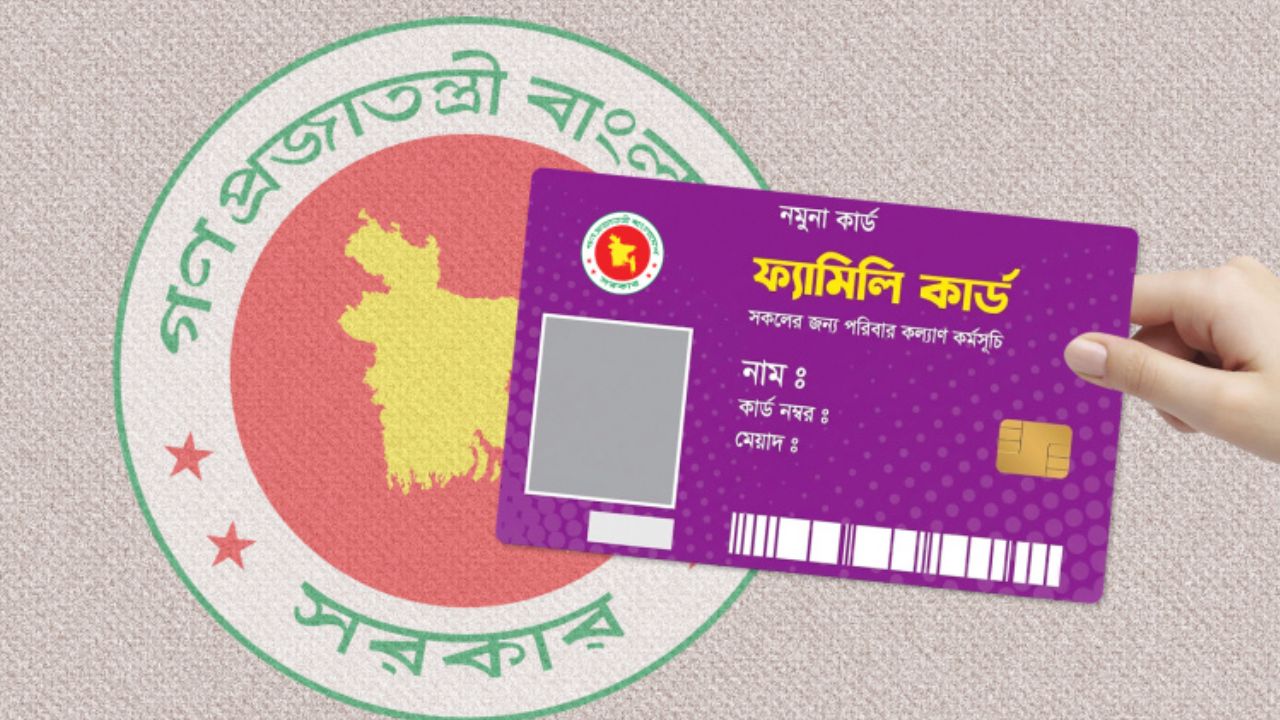



At a time when the government is demanding strict austerity, a proposal seeks to set aside an eye-watering Tk50 crore solely for the prime minister to launch the distribution of Family Cards.
The amount is among the Tk1,909 crore proposed to survey and identify beneficiaries, buy tabs and produce smart cards under the BNP’s flagship Family Card scheme.
The substantial budget for the launch has raised eyebrows, with governance watchdogs describing the allocation as a case of “the music costing more than the feast”.
“Tk50 crore is a staggering sum that could have directly aided countess struggling families,” said Badiul Alam Majumdar, secretary of good-governance campaigner Shushashoner Jonno Nagorik (SHUJAN). “Squandering it on a grand ceremony completely defeats the object.”
Project Director Md Mosharraf Hossain defended the buffer, insisting that budgeting Tk50 crore did not automatically mean blowing through the lot. “It is true the allocation is there, but that doesn’t mean every penny will be spent,” he said.
In the budget, Tk14,000 crore has been allocated for the Family Card scheme, one of the BNP’s key election pledges.
Meanwhile, the pilot rollout is already off to a rocky start.

A TIMES of Bangladesh spot visit to Karail slum, part of the prime minister’s own constituency in Dhaka, revealed glaring flaws in beneficiary selection. Truly low-income households are being left in the cold, while relatively wealthy locals, including landlords, have managed to snag cards.
Planning Commission sources confirm the scheme has been rolled into the revised Strengthening Social Protection for Improved Resilience, Inclusion and Targeting (SSPIRIT) project, managed by the Department of Social Services. The revised proposal recently passed through the Project Evaluation Committee, which recommended approval subject to spending cuts across several areas.
With no provision made in the original 2026-27 budget, officials are now racing against time. Department Director General Shah Mohammad Mahbub wrote to the Social Welfare Secretary on 18 July requesting an urgent transfer of Tk1,511.34 crore from block allocations.
The next day, Mohammad Selim Hossain, senior assistant secretary at the Social Welfare Ministry, said that official directives had been issued to the Planning Commission, Finance Division, and Economic Relations Division to take the required action.




Under the revised budget proposal, an eye-watering Tk550 crore is earmarked for the current fiscal year to produce and distribute NFC-enabled smart Family Cards.
The technological overhaul also includes Tk221.33 crore for 66,815 tablets and five supercomputers to handle nationwide data collection, alongside Tk80 lakh to host seminars across eight divisions.
A further Tk4.7 crore is set aside for data collection, processing, and staff training, while Tk8 crore will cover travel allowances for Department of Social Services (DSS) officials monitoring field operations.
To identify genuine beneficiaries nationwide, the project plans to recruit 60,000 surveyors. In total, workforce costs for surveying, data collection, and processing come to a whopping Tk676.5 crore.
According to DSS officials, the SSPIRIT project, scheduled to run until June 2030, was originally approved in 2025 with a budget of Tk904.17 crore. However, after the government opted to roll the Family Card programme into the existing setup rather than launch a standalone scheme, the revised cost ballooned to Tk2,813.78 crore.
The Project Evaluation Committee (PEC) subsequently reshuffled the allocations, capping the Family Card implementation at Tk1,909 crore.
To cope with the expanded workload, the revised plan includes outsourcing eight data-entry and five computing services, as well as hiring 10 vehicles, two off-roaders and eight microbuses.
Officials insist the Family Card is a top-priority social protection scheme. Following a 65-unit pilot scheme last fiscal year, plans are underway to expand it nationwide, starting with a comprehensive survey to pinpoint households in need.
Project Director Md Mosharraf Hossain told TIMES that formal funding requests had already been submitted. He explained that the initial Tk550 crore allocation aims to deliver smart cards to 41 lakh people in the first fiscal year, with further rollouts to follow in phases.
Mosharraf added that the recruitment of data collectors and supervisors is already under way to expedite distribution, with the survey set for completion by August in partnership with the Bangladesh Bureau of Statistics.
No official at the Ministry of Social Welfare agreed to speak on record without prior clearance from its secretary.
Although official guidelines mandate that marginalised, landless, and female-headed households take precedence, local residents claim these rules exist only on paper.
According to ministry figures, 37,567 female-headed households in 14 districts received Family Cards during the first phase, with almost 15,000 allocated to Karail, Sattala, and Bhashantek combined.
However, reports of mismanagement are already casting a shadow over the upcoming nationwide expansion.
In the Korail slum, locals described how high-need families were bypassed in favour of relatively prosperous residents. Autorickshaw driver Md Shanto recalled taking his pregnant wife to the event hoping for a card, but was turned down, while his landlord snagged a card instead.
Highlighting systemic failures, SHUJAN Secretary Badiul Alam Majumdar noted that open ward meetings, enshrined in the Union Parishad Act since 2007 to ensure public accountability and prevent political patronage, are being systematically bypassed.
“These safeguards are almost entirely ignored,” Majumdar said. “Properly implementing them is the only way to guarantee fair distribution.”