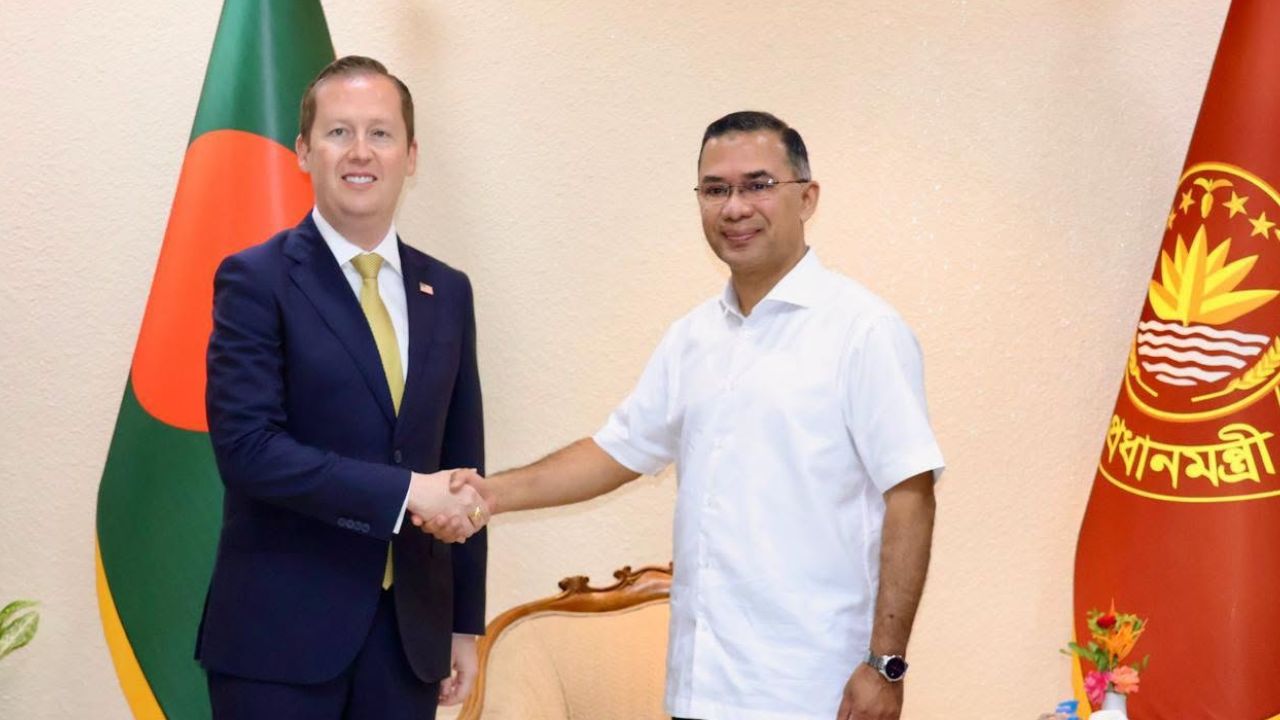

US Special Envoy for South and Central Asia Sergio Gor has wrapped up his Dhaka visit with a clear message of Washington’s confidence in Prime Minister Tarique Rahman’s leadership and a renewed commitment to strengthening bilateral and economic ties.
Ambassador Gor also signalled the US intention to deepen economic engagement. Prime Minister’s Office spokesperson Mahdi Amin said a US business delegation comprising around 45 representatives from 25 leading companies is scheduled to visit Bangladesh later this month to explore investment opportunities and meet government and private-sector stakeholders.
The three-day visit, which ended on Saturday, also suggests that Dhaka has, at least for now, managed to maintain a delicate diplomatic balance between the United States and China. It came just over a month after Tarique’s visit to Beijing, where he received strong political and economic backing from Chinese President Xi Jinping.
Like Beijing, Washington sought to convey confidence in Bangladesh’s new leadership. During his meeting with the prime minister, Gor said stability had returned to Bangladesh under Tarique Rahman’s leadership.
Diplomatic analysts view both the message and the planned business mission as signs that Washington is prepared to translate its positive political signals into tangible economic engagement.

One former diplomat said diplomacy often involves reassuring partners through dialogue and transparency.
“Whatever discussions took place behind closed doors, it appears Washington is satisfied that Bangladesh’s growing relationship with Beijing remains within an acceptable framework,” he said.
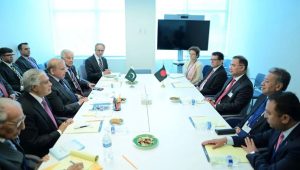
Foreign Minister Md Khalilur Rahman and Sergio Gor held two meetings within a week—first on the sidelines of a regional gathering in Manila and later in Dhaka—providing opportunities to exchange views on a range of bilateral and regional issues.
Bilateral focus
Following his meeting with Gor on Thursday, Khalilur Rahman said the discussions centred on trade, investment, energy, immigration and the Rohingya crisis. Although regional strategic issues had been expected to feature prominently, the talks remained largely focused on bilateral cooperation.


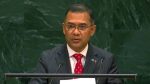
“We discussed different aspects of our bilateral relations, including investment, energy and immigration. Because of time constraints, we could not go into detail, but we discussed the general direction for moving the relationship forward,” he said.
After the meeting, Gor wrote on X that the US State Department had reviewed the security situation in Bangladesh and lowered the country’s overall travel advisory from Level 3 to Level 2, while maintaining additional restrictions for a few specific areas.
According to a foreign ministry press release, Gor’s meeting with the prime minister also covered the Rohingya crisis, US investment, agricultural warehousing, information technology cooperation and other areas of mutual interest.
The envoy stressed the need for a sustainable political solution to the Rohingya crisis and noted Bangladesh’s potential to become a future partner in the PAX Silica initiative.
Despite expectations of broader geopolitical discussions, officials from both sides indicated that the visit focused primarily on strengthening practical bilateral cooperation.
Balancing two major powers
Bangladesh has long sought to maintain constructive relations with both Washington and Beijing despite intensifying strategic competition between the two global powers.
Diplomatic observers said the close succession of high-level engagements with China and the US reflected Dhaka’s continuing effort to pursue a balanced foreign policy without aligning exclusively with either side.
One former diplomat said the public messaging surrounding Gor’s visit suggested that Washington now had a clearer understanding of Bangladesh’s engagement with China following the Prime Minister’s Beijing trip.
“The next challenge for Dhaka will be to explain the significance of the US envoy’s visit to Beijing in the same transparent manner,” he said.
Another former diplomat noted that, while official statements highlighted bilateral cooperation, the visit itself carried broader strategic significance.
“Special envoys are rarely dispatched merely to discuss routine bilateral issues. It is reasonable to assume that broader strategic considerations were also part of the engagement, even if they were not disclosed publicly,” he said.
The visit ultimately underscores Bangladesh’s continuing effort to strengthen relations with both major powers while preserving the strategic autonomy that has long been a cornerstone of its foreign policy.