
The dawn of 19 July 2024 broke over a nation gripped by a chilling silence, soon shattered by the rhythmic thrum of helicopters and the sharp crack of gunfire. It was a day when the sky turned grey with smoke and the streets of Bangladesh became a stage for a grim procession of the dead.
This was not merely a date on a calendar, but a blood-stained chapter in the nation’s history, marking a definitive collision between the absolute power of the state and the unyielding resistance of its people.
Even two years later, the echoes of those few hours remain a haunting reminder of the day the country’s political trajectory shifted forever.
The toll of resistance
The day marked the second phase of the “Complete Shutdown” called by student protesters. As the administration felt the reins of control slipping, the then Awami League regime imposed a nationwide curfew effective from midnight on 19 July.
In a televised address, the party’s General Secretary, Obaidul Quader, announced that law enforcement had been given “shoot at sight” orders.
To enforce this decree, the army was deployed across the country to bolster the civil administration and “restore order.” The capital, Dhaka, was rendered a ghost town, its arteries frozen by fear and military presence.
Yet, neither the threat of bullets nor the curfew could extinguish the fire of the movement.
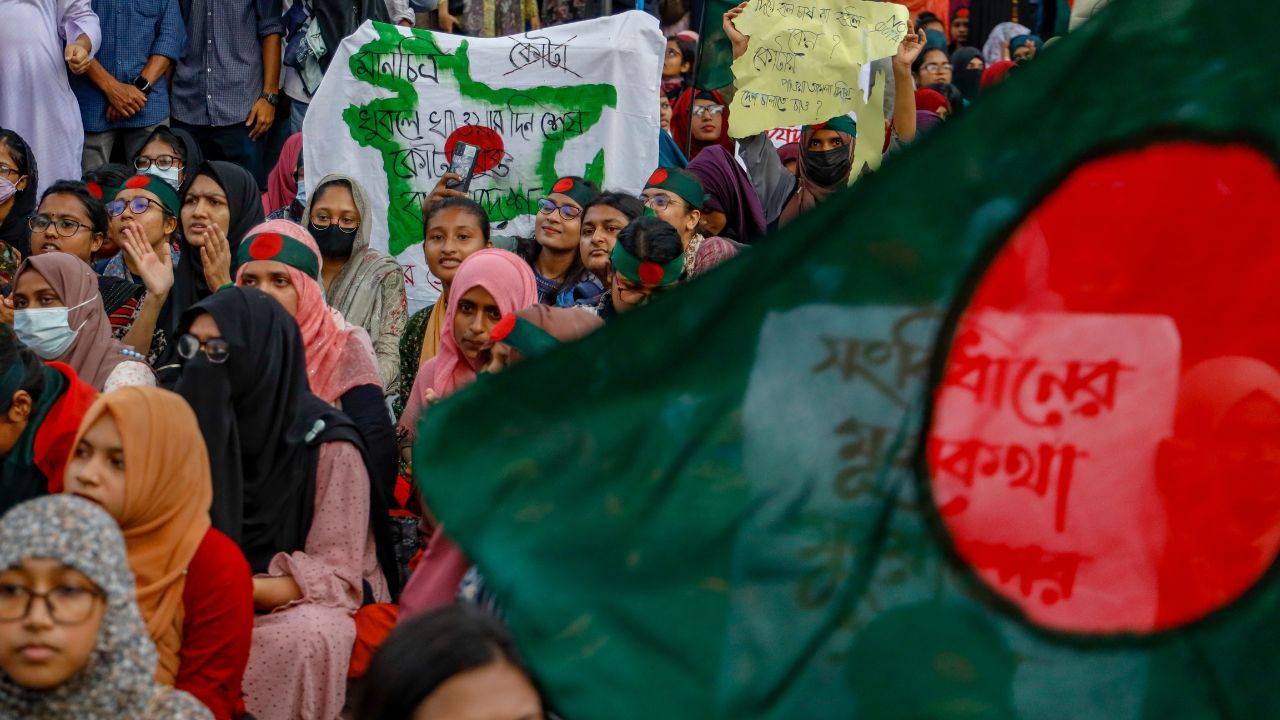
Following Friday prayers, the confrontation reached a fever pitch. In an unprecedented show of solidarity, parents joined the ranks of students from schools, colleges, universities, and madrasas, driven by fury over the state’s violence against their children.
The ensuing battles between protesters and security forces left the nation scarred.
Official counts recorded 56 deaths on 19 July alone, pushing the three-day toll to 103. However, independent reports suggested a far more devastating reality, with at least 148 people killed and hundreds more nursing horrific injuries.

Battle for Rampura, Badda, and Mirpur
The violence reached its zenith in the Rampura and Badda corridors. Protesters, some mere adolescents, erected makeshift barricades using felled trees and electric poles, leaving the thoroughfares carpeted in brickbats.
By midday, the area near the television centre became a killing zone; a student was shot dead on the spot by BGB fire, while several others later succumbed to their wounds.
By the afternoon, Mirpur had transformed into a literal war zone. As thick black smoke choked the horizon, RAB helicopters circled overhead, raining bullets and sound grenades upon those below.
Even the sanctuary of the home was violated. Safkat Samir, an 11-year-old child, was shot dead inside his own residence.
Adding to the family’s grief, Mohammad Ismail Hossain, a member of the Dhaka Metropolitan Awami League, reportedly obstructed the autopsy, forcing the parents to bury their son without a post-mortem.
The atmosphere was so thick with terror that residents claimed even pigeons were falling dead from the sky. Fierce clashes also erupted in Mohammadpur, Beribadh, and Dhanmondi, where protesters faced law enforcement supported by ruling party activists.
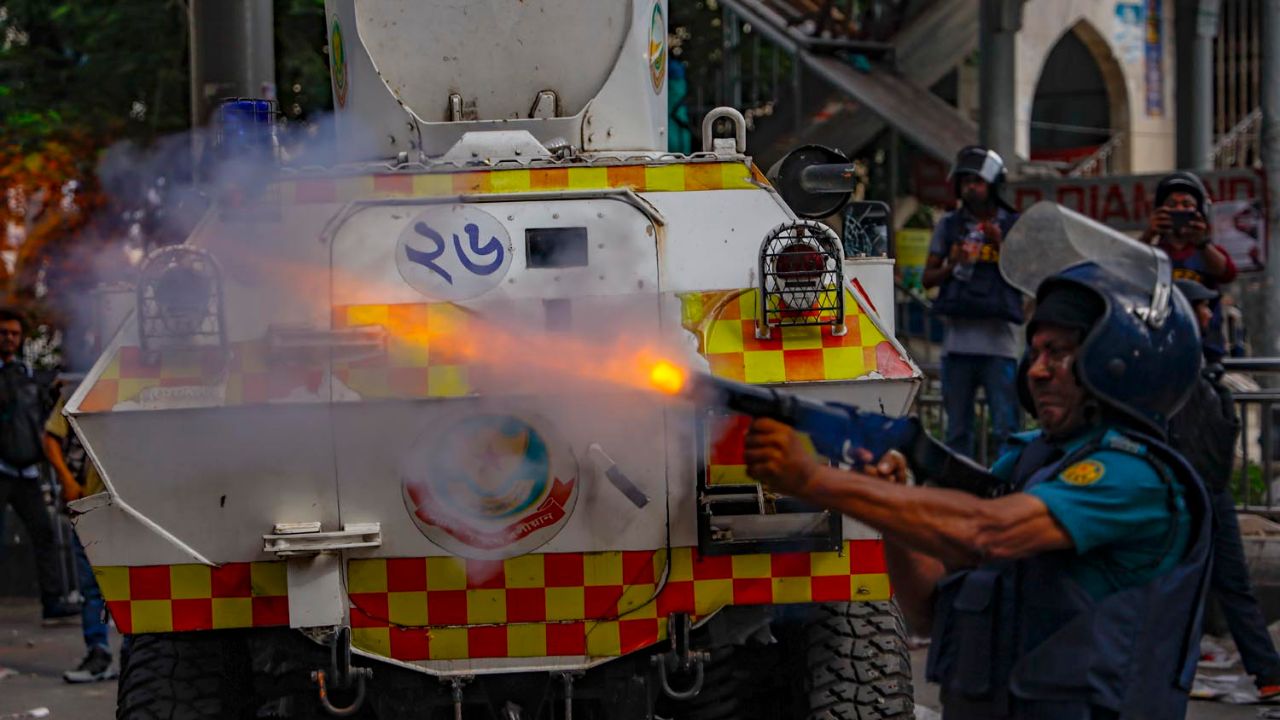

In Mohammadpur, another child was wounded by gunfire from a helicopter.
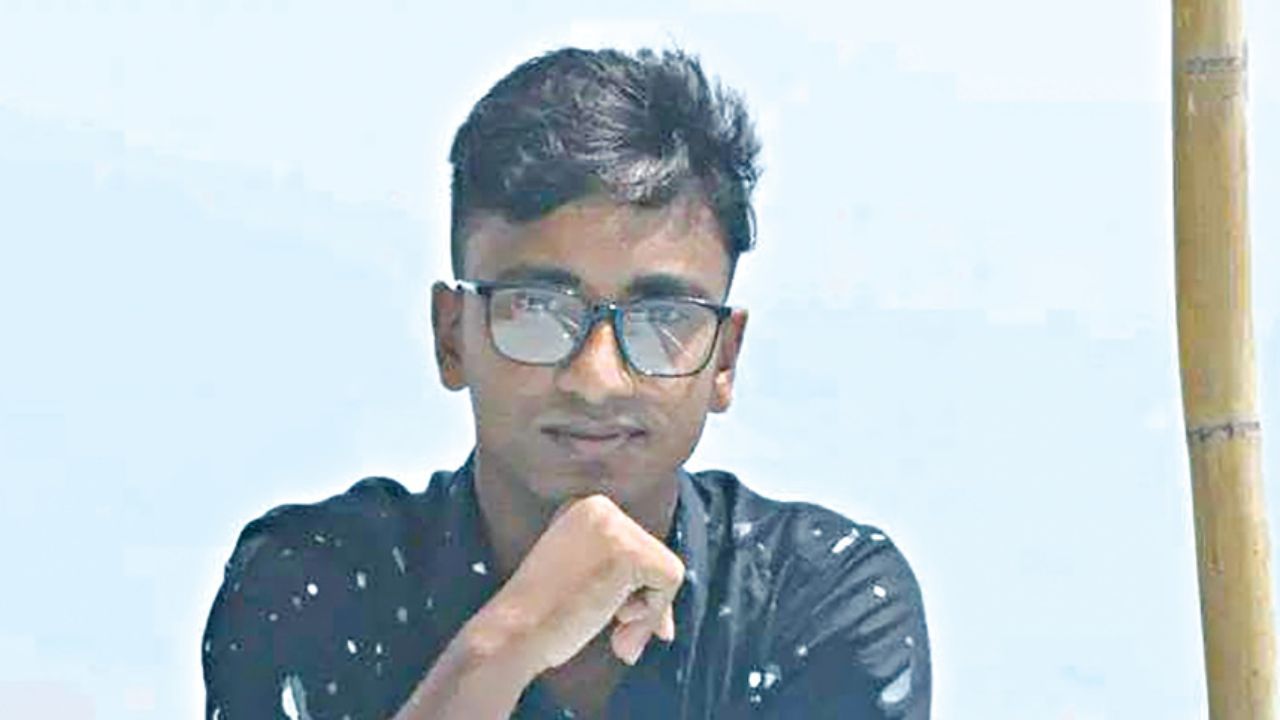
The carnage spread far beyond the capital. Four people were shot dead in Rangpur, two near the Madhabdi municipal office in Narsingdi, and Al-Amin, a 24-year-old student of Bangladesh Open University, was killed in Savar’s Radio Colony.
In Sylhet, the journalistic community was devastated when ATM Turab of Dainik Naya Diganta was riddled with over a hundred shotgun pellets while covering the unrest in Bandarbazar.
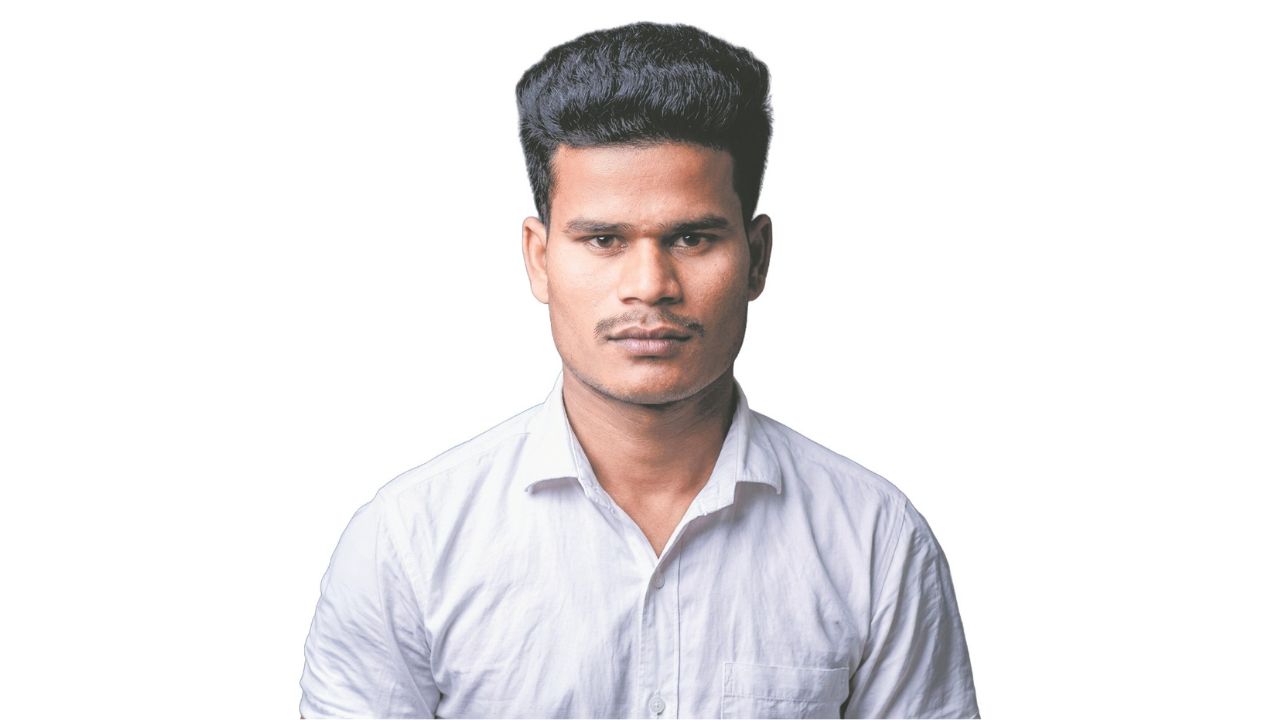
In Bogura, 16-year-old Saim Shuvo fell to pellet wounds, while 17-year-old Sagar was killed in Mymensingh during a clash with Awami League supporters. In Bhairab, police fired into a crowd surrounding the station, injuring over a hundred students.
The Narsingdi Jailbreak
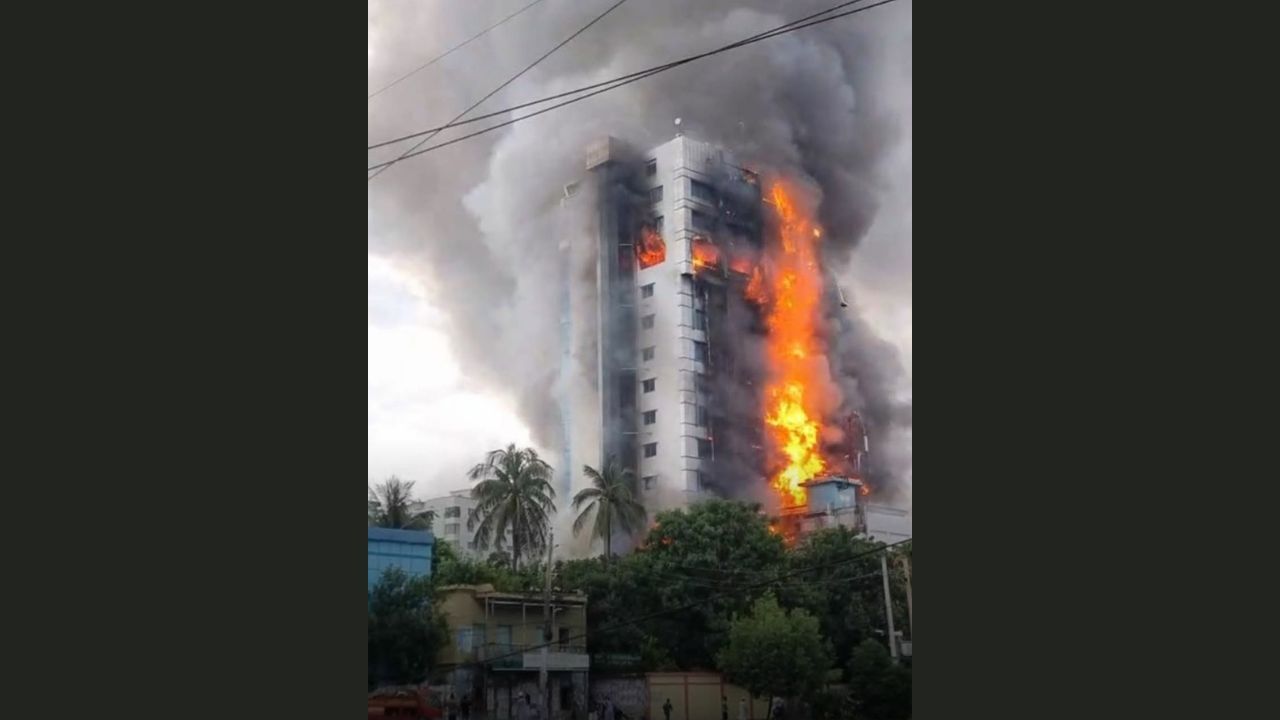
The uprising saw a wave of arson targeting state and party infrastructure. Protesters vandalised and torched the Mirpur 10 and Kazipara metro stations, the Dhaka North City Corporation (DNCC) office, and the BRTA headquarters.
In Narayanganj, the PBI district office, five police vehicles, and a fire engine were set ablaze, while 26 buses belonging to Awami League MP Shamim Osman were reduced to charred shells. The Awami League office in Tangail’s Kalihati was also put to the torch.
In one of the most dramatic events of the day, protesters stormed the Narsingdi District Jail. After breaching the gates and setting the facility on fire, 826 inmates escaped, including seven members of the Ansarullah Bangla Team and two female members of JMB.
Chaos allowed for the looting of 85 weapons and over 1,000 rounds of ammunition.
The digital darkness
19 July marked the second day of a total, five-day nationwide internet blackout. Cloudflare Radar data showed that internet traffic in Bangladesh plummeted to near zero by 9pm, effectively severing the nation from the world.
The Bangladesh Association of Software and Information Services (BASIS) estimated that the IT and e-commerce sectors suffered losses exceeding Tk800 million in just 24 hours.
The government’s narrative regarding the blackout was riddled with contradictions. Initially, Zunaid Ahmed Palak, the Minister of State for Posts, Telecommunications, and Information Technology, admitted to a deliberate suspension of mobile internet to curb “rumours.”
However, by the same afternoon, he pivoted, blaming a fire at data centres in Mohakhali started by “miscreants.” He famously insisted, “The government did not shut down the internet; it shut down on its own.”
Demands for justice and midnight detentions
In the face of such carnage, the students remained unbowed. At RUET, teachers conducted a symbolic protest, covering their mouths with black cloth. By 9:30pm, Abdul Kader, a coordinator of the Anti-Discrimination Student Movement, broadcast a 9-point demand.
The leadership, including Hasnat Abdullah, stressed that their movement remained peaceful and non-partisan, condemning the arson attacks.
The demands were extensive: a public apology from Prime Minister Sheikh Hasina, the resignation of the Home and Transport Ministers, the removal of complicit police and university officials, accountability for the Chhatra League, and legal immunity for all protesters.
They vowed the shutdown would persist until these terms were met.
Simultaneously, a high-level meeting took place at the State Guest House Padma.
The then student coordinators Sarjis Alam, Hasnat Abdullah, and Hasib Al Islam met with then-law minister Anisul Huq, education minister Mohibul Hassan Chowdhoury, and state minister for information and broadcasting Mohammad Ali Arafat to present an 8-point demand.
However, the state’s velvet glove hid a leaden fist. Even as talks occurred, the DMP banned all public assemblies in Dhaka indefinitely, and train services were suspended.
At midnight, the movement’s central coordinator, Nahid Islam, was detained, alongside Nurul Huq Nur, president of Gono Odhikar Parishad.
Evolution beyond a quota protest
The ruling party appeared visibly disoriented.
Despite the morning’s ban on gatherings, the Awami League held its own rally at Bangabandhu Avenue by noon. Obaidul Quader sought to frame the crisis as a conspiracy, blaming the BNP-Jamaat alliance for “hijacking” the students’ cause and calling for “united resistance.”
Mohammad Ali Arafat further politicised the tragedy, dismissing the protesters as “third-party terrorists” and “Jamaat-BNP” activists based on their “physical appearance.”
On the opposition side, BNP Joint Secretary Ruhul Kabir Rizvi was arrested as the party’s rally near the Press Club was forcibly dispersed. The BNP, however, remained firm in its total support for the students’ “Complete Shutdown.”
Meanwhile, in Rajshahi, 12 people were injured in an attack on a BNP gathering by Awami League affiliates.
The events of 19 July proved that the movement had evolved far beyond a quota protest; it had become a mass uprising for fundamental state reform.
As one student poignantly observed that day, there were only two paths remaining, “Either the Awami League – the fascist government – would stay in this country, or the people would stay and run the country their way.”