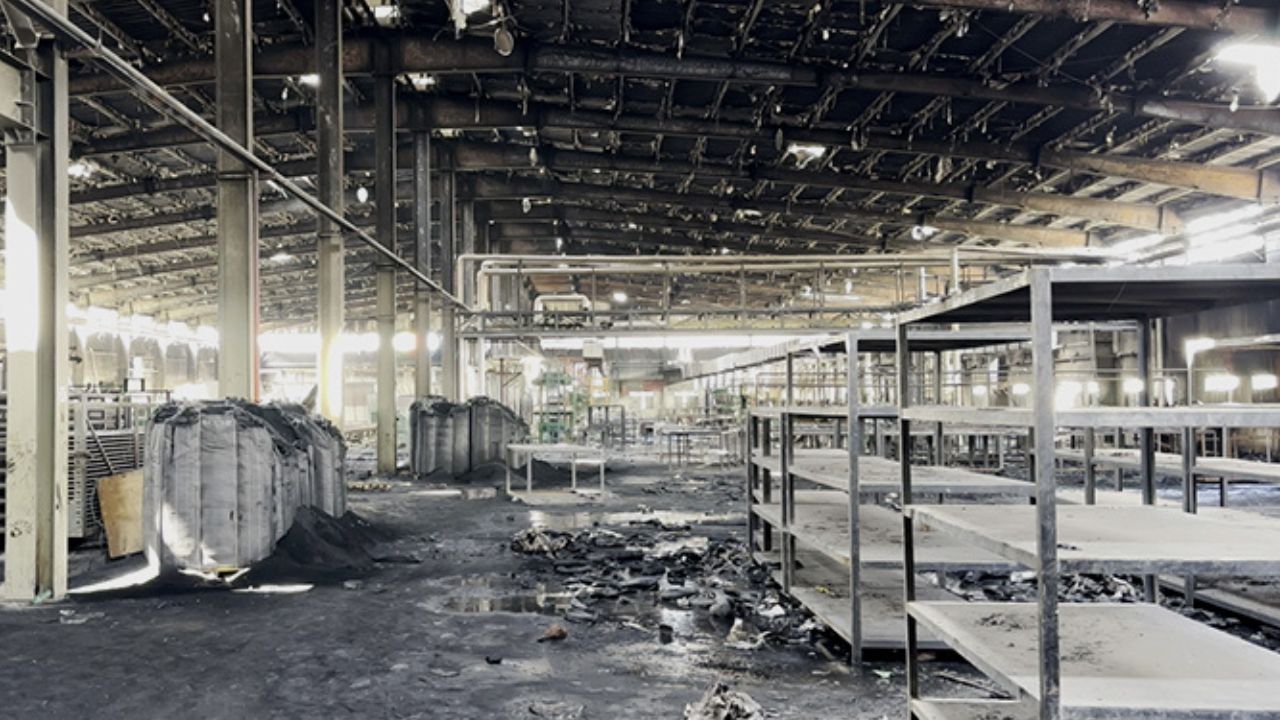

The charred, six-storey frame in Rupshi, Rupganj, stands as a silent monument to one of Narayanganj’s darkest hours. Its roof lies caved in, its walls scarred by flame. Inside the abandoned shell, unrecovered human remains are still believed to lie, a haunting reminder of an unresolved disaster.
Two years after the inferno at Gazi Tyres, the families of 182 missing people remain trapped in agony. They have neither received the remains of their loved ones nor seen any meaningful progress toward identifying them.
The disaster erupted following widespread looting at the vast manufacturing plant, owned by Golam Dastagir Gazi, a minister in the former Awami League government, shortly after the regime’s collapse on 5 August 2024.
Although authorities compiled a list of 182 missing individuals, their families are left suspended between grief and desperate hope.
A official investigation committee submitted a 32-page report recommending the immediate demolition of the ruined structure, DNA testing on recovered bones, and the formal identification and handover of remains to grieving families.
To date, not a single recommendation has been executed.
Despite the vast scale of the disaster, a facility worth hundreds of crores of taka destroyed and nearly 200 souls vanished, the tragedy has quietly slipped from the public eye. Relatives openly accuse the authorities of cold indifference.

When questioned, Narayanganj Deputy Commissioner Mohammad Raihan Kabir admitted he was largely out of the loop. “I don’t know much about this matter,” he said, before later adding that factory owners had been instructed to clear the site to allow a search.
Police appeared equally disengaged. Superintendent of Police Zimanur Rahman Munshi redirected queries to Additional SP Tarek Al Mehdi, who conceded that officers have failed to trace any of the 182 victims.
“We are tracking mobile phone locations and active signals,” Mehdi told TIMES of Bangladesh. “The investigation is nearly complete, and a report will be submitted soon.”
The night the factory burned
The tragedy unfolded on 5 August 2024, the day the Awami League government fell.
Gazi Tyres was looted and set ablaze, forcing an immediate shutdown and the disconnection of utilities.
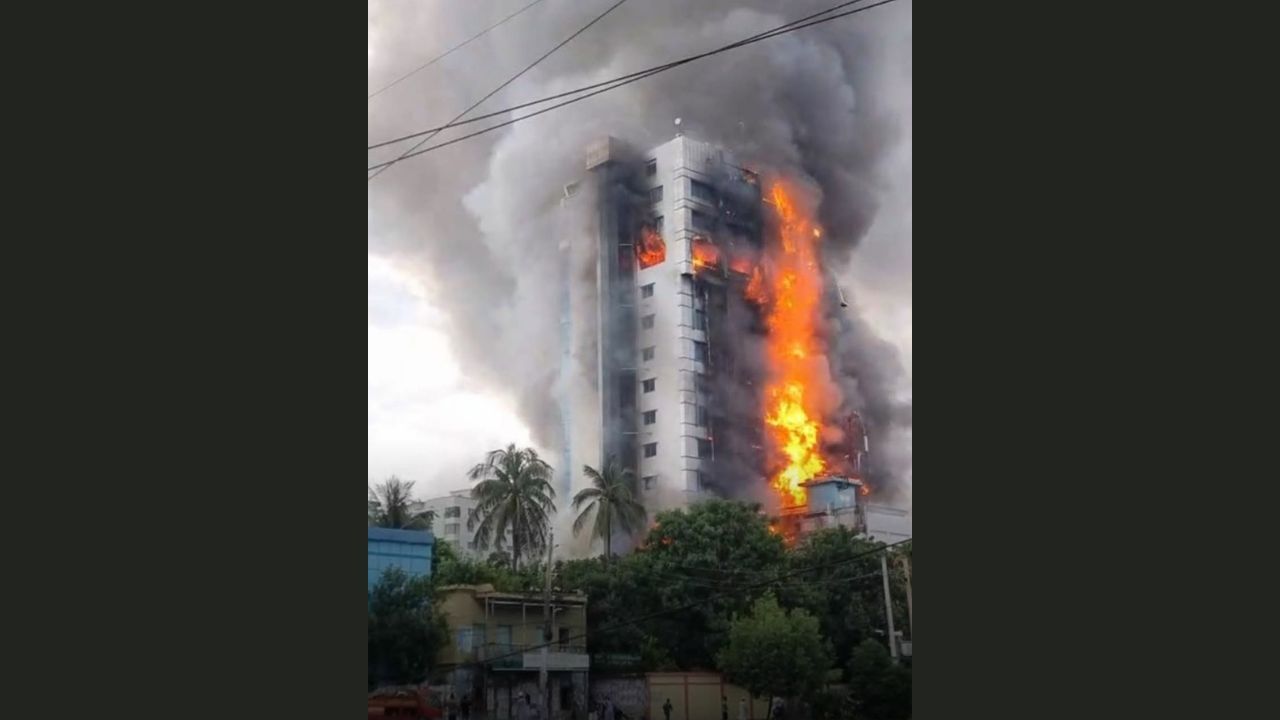

Chaos erupted again on 25 August following news of owner Golam Dastagir Gazi’s arrest. As rival groups clashed, hundreds stormed the site.
Allegedly, looters torched the ground floor of the six-storey building and slammed the shutter gates shut, trapping those inside. Fuelled by raw manufacturing materials, the inferno raged for five days.
As the smoke cleared, desperate families gathered outside. When initial headcounts exceeded 100, Fire Service officials halted their tally, leaving students and local administrators to compile the final list of 182 missing. Yet, citing structural danger, authorities abruptly suspended search operations.
Heartbroken relatives braved the hazardous ruins themselves, recovering bone fragments and handing them to officials on the promise of DNA identification.
That promise remains unfulfilled.
A report gathering dust
An eight-member investigation panel formed by then-DC Muhammad Mahmudul Haque submitted a 32-page report in September 2025. While ruling the disaster an arson attack, it named no culprits.
The committee put forward ten key recommendations, including demolishing the damaged structure to enable a full search, conducting DNA testing, and returning remains to grieving families.
Over a year later, not a single recommendation has been implemented. No further searches have taken place, no remains have been returned, and officials offer only vague silence regarding the DNA testing process.
Families still waiting
For the families of the missing, the nightmare never ended.
On 8 July, grieving relatives gathered outside the residence of local MP Mostafizur Rahman Bhuiyan Dipu, pleading with the administration to return their loved ones’ remains so they could perform final religious rites.
Among the missing are brothers Sabbir and Shahadat Shikdar, along with their brother-in-law Jamir Ali.
Their sister, Synthia, described how losing two breadwinners plunged the family into deep financial distress. After taking a job at a soap factory, she was forced to take leave to care for her dangerously ill nephew, leading to her dismissal.
“We’ve lost count of our visits to the police, the DC, and the SP,” Synthia told Times of Bangladesh. “The police chief ignores us completely. It feels as if we aren’t even human. At the DC’s office, we’re turned away at the door. We just want a proper search. We deserve to know if our family is dead or alive.”
Monir, another missing person, disappeared after heading toward the flames to investigate the looting. His elder brother, Zakir Hossain, travelled from Sunamganj to search for him.
“Seeing the authorities do nothing, I joined others inside the gutted factory,” Zakir recalled. “We retrieved numerous bones and handed them over. But the administration simply sat on their hands.”
When asked, Narayanganj DC Mohammad Raihan Kabir shifted the burden back to the victims, “If someone comes forward claiming the bones, we will conduct DNA tests. Since no one made a claim, no tests were done.”
Factory owner Golam Dastagir Gazi remains incarcerated.
Repeated attempts to reach representatives from Gazi Group for comment were unsuccessful.