


Democracy is often reduced to elections. But an election is only the beginning of democracy, not its destination. The real test starts after the votes are counted: whether institutions remain independent, whether political opponents are treated as legitimate competitors rather than enemies, whether citizens can speak freely, whether the law applies equally to everyone, and whether those in power accept accountability.
This distinction has become increasingly important as democracy faces pressure across the world. The V-Dem Democracy Report 2026 warns that democratic backsliding is no longer confined to traditionally fragile democracies. Nearly one-quarter of the world’s countries were undergoing autocratisation in 2025, while established democracies were also experiencing democratic erosion. V-Dem reports deterioration in areas including freedom of expression, free and fair elections and legislative oversight and constitutional constraints on executive power. The lesson is that democracy can be weakened not only by military coups or the abolition of elections but also gradually; from within democratic institutions themselves.
Countries that have successfully consolidated democracy show that elections must function within a broader institutional framework. The United Kingdom, despite recent political turbulence, continues to rely on parliamentary accountability, an independent judiciary, a competitive political environment and established constitutional conventions. Germany shows how democratic institutions can protect constitutional order even under intense political competition. South Korea has showed that strong institutions, an active civil society and peaceful political participation can help democracy withstand serious political crises. These examples show an important principle; democracy succeeds when political power is constrained by institutions and guided by democratic norms.
Democracy requires respect for minorities, political pluralism, freedom of expression, an independent judiciary, credible electoral institutions, a professional civil service and a free media. Without these safeguards, elections can become merely a mechanism for transferring power rather than an instrument for protecting people’s rights.
Democracy can also be weakened through its own institutions; political leaders may win elections and then attempt to weaken the institutions designed to hold them accountable. Political parties may use parliamentary majorities to marginalise opponents. State institutions can become politicised. The media can face pressure. Disinformation can distort public debate. And political competition can turn into political confrontation. The danger is particularly acute when political actors begin to believe that winning an election gives them unlimited authority.

A democratic mandate is a responsibility, not a licence for unchecked power. V-Dem’s latest findings reinforce this concern. Its 2026 report identifies deterioration in free and fair elections in 31 countries and declining autonomy of electoral management bodies in 28. It also records worsening legislative capacity to scrutinise executive behaviour in numerous countries. The modern threat to democracy, therefore, is often subtle. Institutions may remain formally intact while their independence gradually disappears.
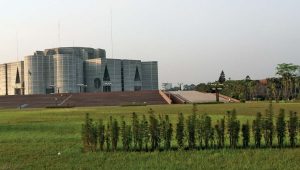
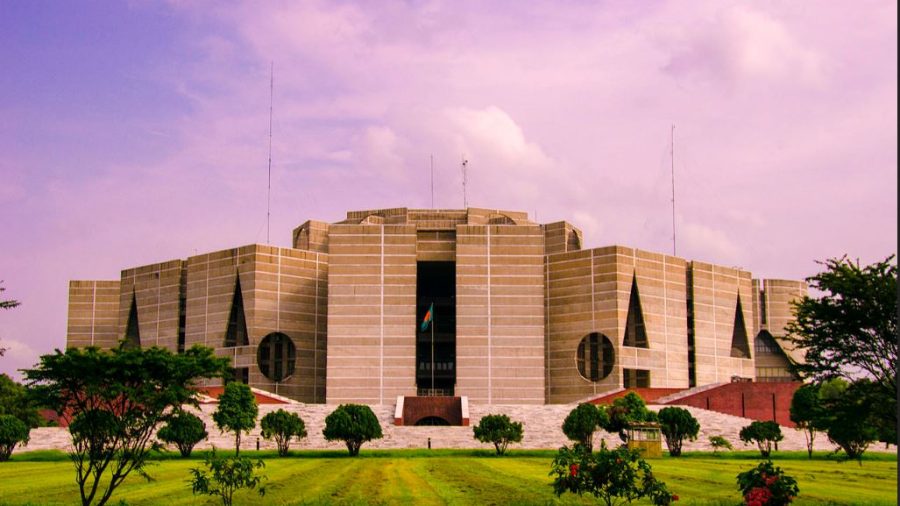
For Bangladesh, the question is particularly important at this moment. The country has experienced a major political transition following the upheaval of 2024 and the parliamentary election of February 2026. The Election Commission now lists more than 12.77 crore registered voters, 42,779 polling stations and 60 registered political parties, reflecting the enormous scale of the country’s democratic process.
Public attitudes also provide grounds for cautious optimism. An International Republican Institute (IRI) survey published in August 2026 found that 62 percent of Bangladeshis considered the state of democracy somewhat or very good. Yet 83 percent believed there was a significant disconnect between political elites and ordinary citizens.



This contrast is highly significant. People may support democracy while remaining dissatisfied with the behaviour of politicians and institutions. Bangladesh therefore faces a challenge that goes beyond conducting elections: how to transform electoral democracy into institutional democracy.
The country’s next democratic chapter should not be defined simply by who wins elections but it should be judged by whether governments respect constitutional limits, whether opposition parties can function freely, whether state institutions remain politically neutral and whether citizens feel that their rights are protected regardless of their political affiliation.
Bangladesh needs a new political culture. Parties may disagree sharply over policies, ideology and national priorities, but they must recognise one another’s constitutional legitimacy. The opposition should oppose the government. The government should tolerate criticism. Parliament should become a genuine arena for debate rather than merely a voting mechanism. The judiciary must remain independent. The Election Commission must command public confidence. The civil service should serve the state rather than individual political interests. Most importantly, political parties must understand that today’s government may become tomorrow’s opposition. Democratic rules must therefore be designed and respected for everyone – not only for those currently in power.
Bangladesh’s democratic consolidation requires several priorities. First, strengthen institutions. The Election Commission, judiciary, Parliament, anti-corruption bodies and public administration must enjoy meaningful independence. Second, protect political pluralism. Peaceful political activity and legitimate opposition must be treated as essential components of democracy. Third, ensure equal application of law. Accountability should be based on conduct, not political identity. Corruption, violence and abuse of power must be addressed regardless of who commits them. Fourth, protect freedom of expression and responsible journalism. Citizens cannot make informed democratic choices without access to reliable information. Fifth, build internal democracy within political parties. Democratic governance cannot flourish nationally if political parties themselves lack transparency, participation and accountability. Finally, develop a culture of coexistence. Bangladesh needs political competition without permanent confrontation, disagreement without hatred and accountability without political vengeance.
The greatest misunderstanding about democracy is that it begins and ends at the ballot box. Democracy is a continuous practice. It is present when a government accepts criticism, when an opposition party respects constitutional rules, when a judge can act without political pressure, when a journalist can investigate those in power, when a civil servant can perform duties professionally, and when an ordinary citizen can disagree with the government without fear.
The global democratic experience in 2026 sends a powerful warning: no democracy is permanently secure. Even established democracies can retreat, while countries undergoing political transition can either consolidate democratic institutions or repeat the cycle of political domination.
Bangladesh therefore stands before an important opportunity. The country does not merely need another successful election; it needs a successful democratic culture.
The ultimate measure of democracy should not be how effectively a government wins power, but how responsibly it exercises power, how peacefully it accepts opposition, and how faithfully it protects the rights of those who did not vote for it.
The views expressed in this article are solely those of the author
The writer is a banker and ex-student, Dept. of International Relations, University of Dhaka