


One day, Sadia Monowara Usha hopes to see the sky reflected in the clear waters of the Bhairab River. On a moonlit night, she dreams of watching the moon shimmer on its surface.
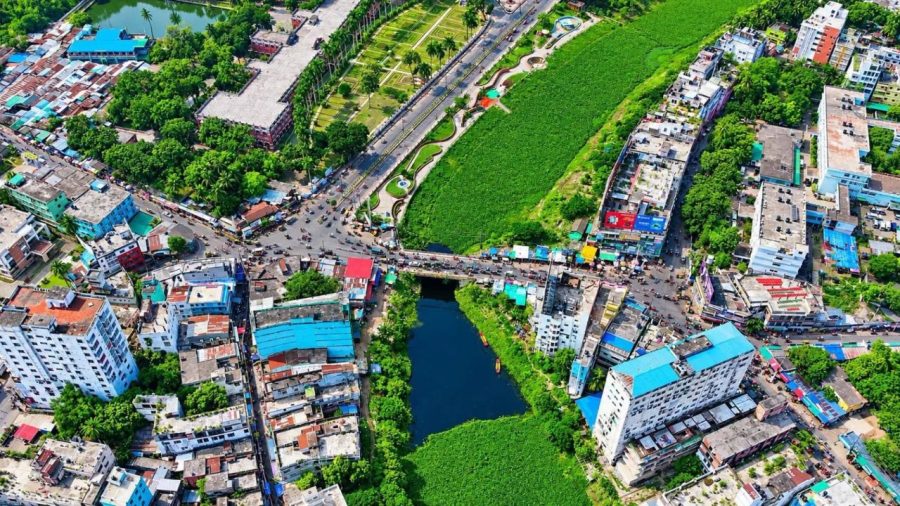
For now, however, the river flowing through the heart of Jashore is a far cry from that dream. Its water has turned dark from waste discharged by hospitals, restaurants and residential buildings, while thick layers of water hyacinths have turned parts of it into a dumping ground.
For Usha, a physician who grew up beside the river, watching its decline was deeply painful. So, instead of waiting for someone to act, she took the initiative herself, drawing inspiration from the famous song, “Jodi tor dak shune keu na ashe, tobe ekla cholo re” (If no one responds to your call, walk alone).
She stepped into the polluted water and began removing water hyacinths. Pictures of her efforts, shared on Facebook, soon inspired others to join her campaign to restore the river.
On the morning of 9 November, more than 50 young men and women gathered along the Bhairab and stepped into its foul-smelling water to clear the hyacinths through voluntary labour.
Around 100 volunteers have since joined the campaign under the banner of WAF Foundation. Members of different organisations, political groups and local communities have also taken part. Their efforts have already cleared substantial stretches on both sides of the Darratana Bridge.

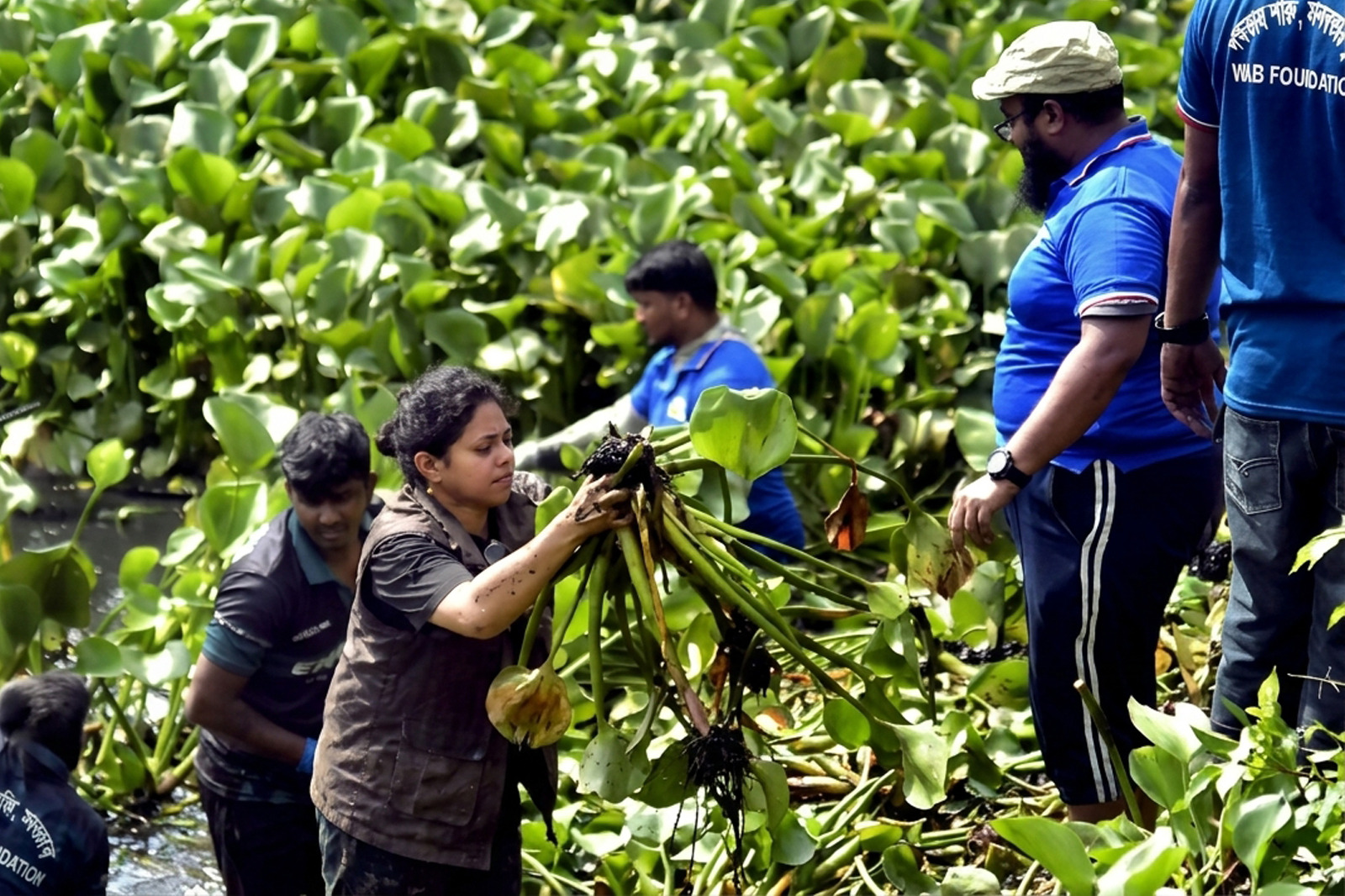
Volunteer Tarik Mahbub told TIMES that despite the risks posed by hospital waste, injection needles and broken glass in the river, he joined after seeing Usha’s Facebook post.
The initiative has also drawn members of the Jashore Rajshahi University Forum and Jono Uddyog Jashore, an organisation working on river restoration and pollution prevention.
Lawyer Mostafa Humayun Kabir, a forum member, said he could not remain at home while Usha was trying to save the river single-handedly.
For Usha, the Bhairab is more than an environmental concern. She grew up in Jashore’s Ghop and Barandipara areas, and the river is deeply connected to her childhood and the city’s heritage.



A student of the 20th batch of Khulna Medical College, she is a 39th Bangladesh Civil Service health cadre officer and currently works at the Directorate General of Health Services in Dhaka. She has also served in the Democratic Republic of Congo as part of a United Nations peacekeeping mission.
Despite her professional commitments, she has continued to return to her hometown’s river, removing water hyacinths every morning.
“As a physician, I know that staying healthy requires more than medicine and lifestyle changes. A clean environment is equally important. But the Bhairab, once the lifeline of our city, has turned into a large drain,” she said.
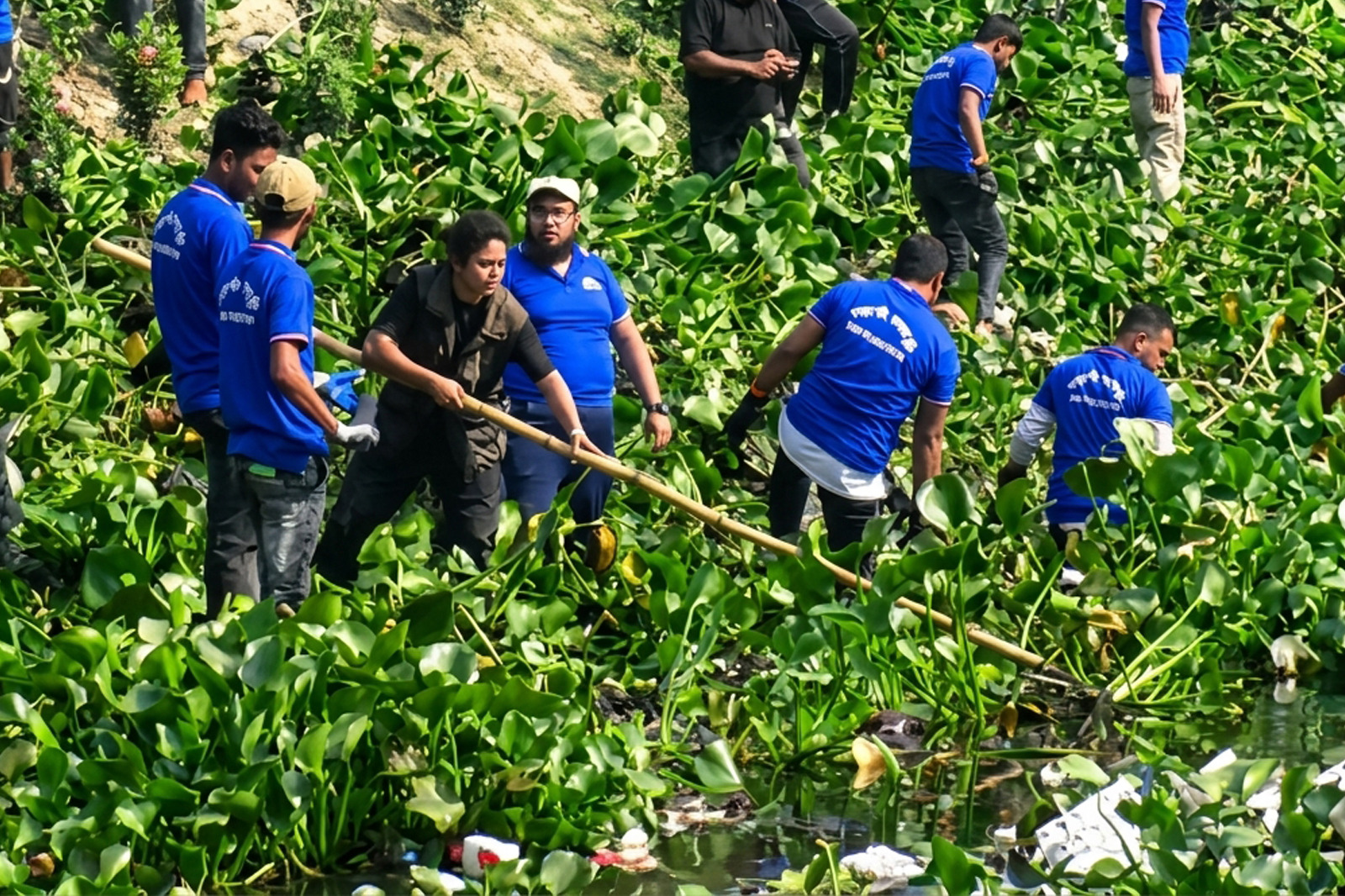
The volunteers’ efforts have brought temporary relief, but restoring the river will require sustained government action.
Between 2018 and 2023, around Tk300 crore was spent on dredging the Bhairab to restore tidal flows. However, inadequate maintenance has allowed water hyacinths and waste to accumulate again.
Bithika Sarkar, manager of Jono Uddyog Jashore’s local centre, said the river’s width, including its banks, had decreased from 263 feet before dredging to 100 feet afterwards. She stressed that voluntary efforts alone could not solve its problems.
Jashore Municipality has welcomed the campaign. Its water and sewerage department engineer Kamal Hossain said the municipality would take steps to stop waste dumping and involve the Water Development Board and other relevant agencies.

Usha’s dedication also caught the attention of State Minister for Power, Energy and Mineral Resources Anindya Islam Amit, who sent her Tk1 lakh in recognition of her efforts.
But she politely returned the money.
In a letter to the minister, she said the campaign was committed to a no-donation policy and sought something more valuable than financial assistance.
“We remain firm in our decision not to accept money. We want your presence. If you come and look at the river for just one minute, it will achieve more than Tk1 crore could,” she wrote.
For Usha, the dream remains simple: a flowing river with clean water, reflecting the sky and moon once again.
“As a physician, I never give up hope of helping patients recover. In the same way, I will not give up hope of saving the Bhairab. This dream is no longer mine alone; many people have joined me,” she said.
The river is yet to be restored, but one woman’s determination has already achieved something remarkable: bringing a community together to reclaim a part of its heritage.