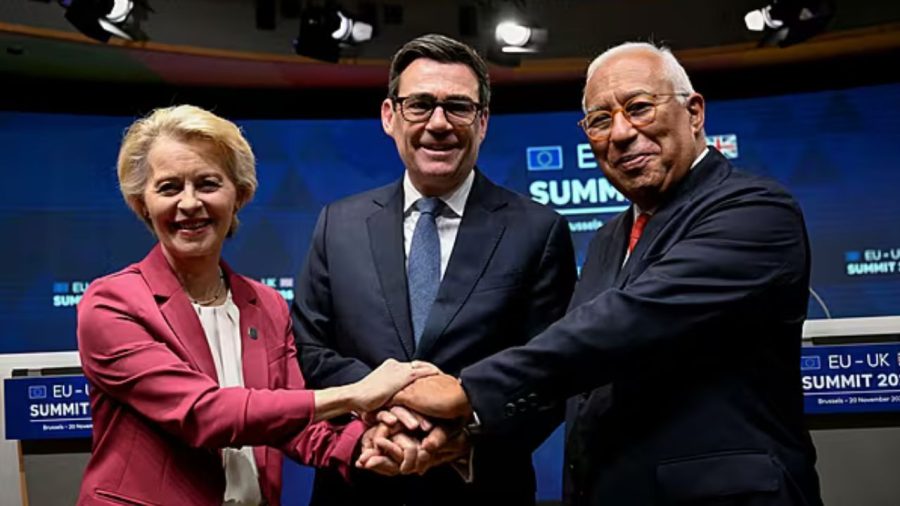



The United Kingdom and European Union have reached a landmark agreement across three key policy areas aimed at mending economic and diplomatic ties a decade after the 2016 Brexit referendum.
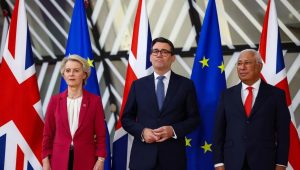
Following a summit in Brussels on Friday, British Prime Minister Andy Burnham described the outcome as a good deal for Britain that would rebuild the bridges broken all those years ago, reports BBC.
Addressing European Commission President Ursula von der Leyen and European Council President Antonio Costa at the start of talks, Burnham said the accord marks a good day for both Britain and Europe that will deliver tangible benefits to citizens on both sides.
Three core pillars of the agreement
Downing Street confirmed that the negotiated package could boost Britain’s gross domestic product (GDP) by 0.5 per cent, raising an earlier estimate of 0.4 per cent.
At the heart of the accord is a sanitary and phytosanitary agreement designed to eliminate checks and streamline administrative paperwork on agricultural and food goods traded between the UK and the 27-nation bloc.
Estimated to be worth £5.1 billion ($6.7bn) to the British economy, the measure aims to ease export obstacles for businesses — including Tim Jones, an English cheesemaker — whilst keeping supermarket food prices down for consumers.

The second pillar links the emissions trading systems of both sides, exempting key industrial exports such as steel from border carbon levies.
The third pillar establishes a youth mobility scheme, enabling up to 100,000 young people under 30 from each territory to live, work, study, or travel across borders for up to three years.
Key obstacles and remaining friction
Despite the breakthrough, significant hurdles remain before a deeper relationship reset can take effect.



A primary point of friction involves university tuition fees, with Brussels requesting that EU students attending British universities pay domestic rates rather than substantially higher international fees.
London has resisted the proposal over concerns regarding university finances. An EU official, speaking on condition of anonymity, noted that negotiators have set a six-month deadline to resolve the tuition issue.
Another unresolved matter centres on Britain’s request for access to “Made in Europe” provisions under the EU’s planned Industrial Accelerator Act, which aims to require Chinese automakers to produce vehicles within the bloc using local suppliers to qualify for key subsidies and public procurement contracts.
Brussels has indicated a willingness to grant access, provided London aligns with its import restrictions on Chinese electric vehicles.
Implementation timelines and future options
A UK government spokesperson told Al Jazeera that negotiations have concluded and both sides will now proceed with legal implementation processes, while continuing discussions on remaining areas.
Reporting from Brussels, Rosie Birchard, a reporter for Al Jazeera, pointed out that no physical document was signed or inked on Friday, indicating that months or years of formal negotiations and legal work lie ahead.
Burnham indicated that his administration plans to examine longer-term options for bilateral relations, ranging from maintaining existing arrangements to entering the EU customs union or eventually rejoining the bloc.

However, the prime minister emphasised that rejoining remains only one potential path and is far from imminent, as it would require approval from British voters as well as unanimous consent from EU member states.
Ursula von der Leyen, president of the European Commission, highlighted the shared global challenges since Brexit – including the COVID-19 pandemic and Russia’s war in Ukraine – confirming that the EU remains open to broader strategic brainstorming.
Domestic political debate and public opinion
The agreement has reignited intense political debate across the UK. Nigel Farage, leader of Reform UK, called Burnham naive and accused the EU of using the summit to strong-arm the prime minister out of inexperience, warning that the Brexit debate has returned.
Within the governing Labour Party, some lawmakers expressed support for closer European alignment while advising the prime minister to tread carefully to avoid reopening political divisions, as Conservative opposition figures voiced sharp criticism.
Sonja Hyland, Ireland’s ambassador in London, highlighted a continuing lack of clarity regarding Britain’s long-term Brexit objectives, calling on London to decide clearly on its goals.
Meanwhile, a YouGov poll showed that 54 per cent of UK citizens view a referendum on rejoining the EU within the next five years as acceptable, though public opinion remains divided over whether such a vote should be prioritised.