


Following seven years of extensive investigations and judicial deliberations, the International Court of Justice (ICJ) has delivered a historic ruling finding Myanmar guilty of committing genocide against its minority Rohingya population.
According to an Al Jazeera explainer, the decision rendered by the United Nations’ principal judicial body in The Hague represents the court’s very first genocide conviction since its establishment in 1945.
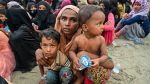
For the 1.2 million Rohingya refugees residing in overcrowded camps across Bangladesh and the more than 500,000 who remain trapped under severe persecution in Rakhine State, the verdict delivers long-awaited international recognition after decades of atrocities perpetrated by the Myanmar military and non-Rohingya armed factions.
Crucially, international legal analysts point out that the decision establishes a pivotal legal precedent by demonstrating that a sovereign state’s intent to commit genocide can be inferred from a cumulative pattern of conduct, rather than requiring explicit written commands from military commanders.
Consequently, experts emphasize that this ruling carries profound implications for South Africa’s active genocide application against Israel regarding its ongoing military campaign in Gaza.
Although Palestinian political analyst Ahmed Najar said the Myanmar verdict will not directly determine the outcome of the Gaza litigation, he highlighted that it fundamentally shapes the legal framework through which allegations in Gaza will ultimately be judged.
What forms the basis of South Africa’s genocide lawsuit against Israel?
South Africa formally initiated legal proceedings against Israel at The Hague on 29 December 2023, approximately three months after Israel launched its offensive in Gaza, alleging that Israel was actively committing genocide against the enclave’s Palestinian inhabitants.
In its initial filing, Pretoria requested that the ICJ urgently issue emergency provisional measures directing Israel to suspend its military operations immediately to prevent further harm to civilians.

Following two days of oral arguments in January 2024, the panel ruled that claims of genocide were “plausible” and directed Israel to implement all necessary steps to prevent genocidal acts, despite Israel’s defence that its campaign constituted a legitimate response to the 7 October 2023 Hamas-led attacks which killed around 1,200 people in southern Israel.
Subsequent intervention by the court followed in March 2024, when judges ordered Israel to facilitate the unhindered entry of food into Gaza to avert impending famine. In May 2024, the ICJ issued a third order mandating an immediate halt to Israel’s military assault on Rafah.
However, independent evaluations by Human Rights Watch and Amnesty International concluded that Israel failed to abide by any of these binding court orders.
When South Africa presented its preliminary case in January 2024, the reported casualties in Gaza stood at 23,000, including 10,000 children.
To date, the death toll has escalated to nearly 75,000 people, among them an estimated 21,000 children, in addition to thousands buried under rubble.
Moreover, at least 1,662 people have been killed since an October 2025 US-brokered ceasefire was announced between Israel and Hamas.

A final judgment on the merits is anticipated to take several years, with South Africa scheduled to submit its next formal memorial in November 2027.
How do the legal and evidentiary realities in Myanmar and Gaza compare?
The genocide case brought by The Gambia against Myanmar in November 2019 contains striking structural and evidentiary parallels to South Africa’s action against Israel.
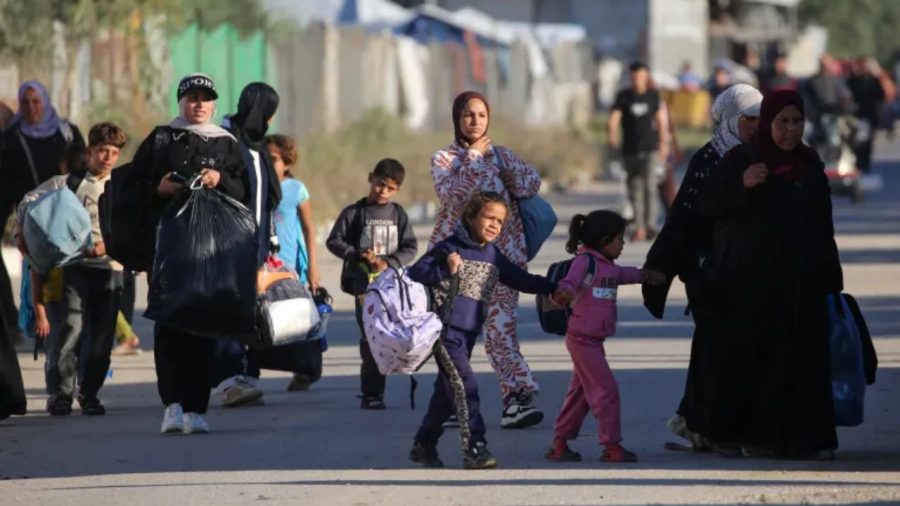
In both contexts, displaced populations have endured terrible physical conditions, with refugee tent camps swept away by heavy storms while civilian casualties persist – demonstrated in Gaza by recent strikes on Nasser Medical Complex and in Myanmar by ongoing violence from military and rebel forces.
When military operations commenced in 2017, the Tatmadaw claimed its actions were counter-insurgency “clearance operations” triggered by Arakan Rohingya Salvation Army (ARSA) attacks on police posts, just as Israel has defended its operations in Gaza as counterterrorism targeted against Hamas rather than civilians.
Despite official denials, both cases featured extensive visual evidence and survivor testimonies. Myanmar denied committing atrocities even as satellite photos and survivor accounts documented razed villages, mass executions, and commander hate speech.
Similarly, in Gaza, where 2.1 million Palestinians are currently confined to a 128-square-kilometre zone representing just 35 per cent of the territory behind Israel’s “Yellow Line,” extensive digital proof has emerged.
In the Myanmar case, nine of the 15 ICJ judges concluded that genocide was the “only reasonable inference” to be drawn from the evidence. ICJ President Yuji Iwasawa confirmed that security forces slaughtered thousands of civilians, committed systemic sexual violence, inflicted extreme harm on children, and fired upon refugees escaping toward Bangladesh.
The court further established that Myanmar permitted civilian militias to join attacks, ignored command accountability, acted with clear genocidal intent, and breached earlier 2020 provisional orders.
Consequently, the court ordered Myanmar to provide comprehensive reparations, including safe return, property compensation, accounting for missing persons, family reunification, and guarantees of non-repetition.
Why is the Myanmar precedent significant for the Gaza suit and foreign powers?
Proving genocide under the 1948 Genocide Convention requires satisfying an exceptionally high evidentiary threshold, specifically demonstrating the intent to destroy a protected group in whole or in part through five prohibited acts, four of which Myanmar was convicted of committing.

Because the ICJ only holds jurisdiction over sovereign states, proving state-level intent has historically proven difficult. For instance, in 2007, the ICJ found that Serbia was not directly responsible for genocide in Srebrenica, ruling only that it had failed to prevent or punish genocide carried out by Bosnian Serb troops, even though UN tribunals had convicted individual commanders.
However, Professor Triestino Mariniello of Liverpool John Moores University noted that the contemporary ICJ has shown greater flexibility, ruling that genocide can occur even when a state asserts a justification of self-defence.
By establishing that state intent can be inferred from a cumulative pattern of conduct rather than explicit written orders, the Myanmar judgment provides South Africa with a far clearer legal roadmap, according to Ahmed Najar.
Independent bodies, including UN expert panels and the International Association of Genocide Scholars, have already concluded that genocide has occurred in Gaza.
Moreover, Anas Mustapha of CAGE International emphasized that the court explicitly rejected “counterterrorism” as a permissible legal defence for systemic destruction, dismantling a doctrine long utilized by Western powers during military interventions in Iraq and Afghanistan.
The legal precedent set in The Hague also creates serious complications for international governments that risk being implicated as accessories to genocide.
The United States, which previously imposed sanctions against International Criminal Court (ICC) officials over arrest warrants for Israeli Prime Minister Benjamin Netanyahu, monitored the ICJ verdict closely amidst concerns of potential friction.
Unlike the ICC, both the US and Israel are United Nations member states and automatically subject to ICJ jurisdiction.
Prior to the verdict, US Ambassador to the UN Mike Waltz criticized South African jurist Navi Pillay – who served on the ICJ panel – accusing her of lowering the legal threshold for proving genocide to weaponize those standards against Western militaries.
Meanwhile, Germany supported The Gambia’s case against Myanmar by urging judges to examine evidence of child abuse, sexual violence, and forced displacement – the very criteria that observers note define conditions in Gaza.
Germany itself is currently defending against a lawsuit launched at the ICJ by Nicaragua in March 2024 over alleged violations of the Genocide Convention stemming from its military exports to Israel.