Malaysia said on Friday it will resettle 10,000 Rohingya refugees in Turkey through a structured skills training programme, in what would be one of the largest resettlement efforts involving the persecuted minority since the military crackdown on their native Rakhine state in 2017, reports AFP.
Deputy Prime Minister Ahmad Zahid Hamidi said in a statement that the Cabinet had approved the proposal following his recent official working visit to Turkey. He presented it as part of efforts to address the situation of Rohingya refugees in Malaysia in a “coordinated, effective and humane manner”.
The announcement came a day after the International Court of Justice (ICJ) ruled, in a landmark decision, that the killings and widespread sexual violence inflicted on the Rohingya by Myanmar’s security forces in 2017 amounted to state-sponsored genocide. The UN’s top court in The Hague also ordered that refugees be granted safe passage home and awarded compensation.

Under the plan, participants will take part in a Technical and Vocational Education and Training programme in Turkey lasting three to six months. It will concentrate on practical skills sought by employers across various industries in Turkey. Ahmad Zahid said this would leave participants better equipped to find work and contribute to the Turkish economy, subject to the country’s rules and regulations.
“I welcome the government of Turkey’s agreement to receive 10,000 Rohingya refugees,” he said, calling it an important step in Malaysia’s efforts to find a long-term solution to an issue that has long posed challenges for migration management and national security. He said the initiative could serve as a model for how countries can work together to manage refugee resettlement.

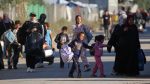

Malaysia will work with Turkish authorities, the UN refugee agency UNHCR and other relevant bodies to coordinate the selection of participants, their training, documentation and resettlement, he said. Implementation, he added, will take account of industry needs, the consent of the individuals concerned and applicable international rules. Turkey’s foreign ministry did not immediately respond to a request for comment.
It was not immediately clear whether the Rohingya who would be selected for resettlement in Turkey would also take part on a voluntary basis. Ahmad Zahid, however, said the initiative was in line with the principles guiding UNHCR in seeking lasting solutions for refugees, including resettlement in a third country “with due regard for their safety, protection and dignity”.
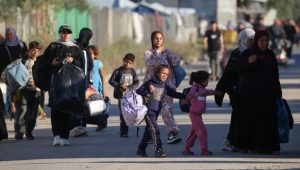
The refugee issue has long been a challenge for Malaysia, which hosts foreign asylum seekers who are mostly from Myanmar. The country has also faced pressure to return Rohingya refugees to Myanmar amid rising tensions with local communities. According to UNHCR, it had about 193,000 registered refugees from Myanmar at the end of February, roughly two-thirds of them Rohingya. Malaysia has sent more than 10,000 Myanmar nationals back since January.

In late September, Malaysia repatriated about 1,500 Myanmar nationals under what authorities described as a voluntary programme. Rights groups warn that such schemes could put migrants at risk by returning them to conflict-ridden Myanmar. In October, the Malaysian government said it would seek clarification from authorities in Myanmar over reports that hundreds of recently returned migrants were being held in detention.
The Rohingya are a persecuted, mostly Muslim minority. They make up two-thirds of the 190,000 Myanmar refugees and asylum seekers in Malaysia, according to the United Nations. Malaysia, which shelters one of Southeast Asia’s biggest refugee populations, is not a signatory to the 1951 Refugee Convention and does not formally recognise their status.