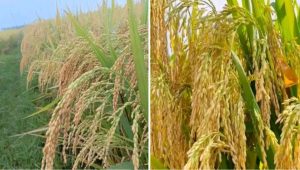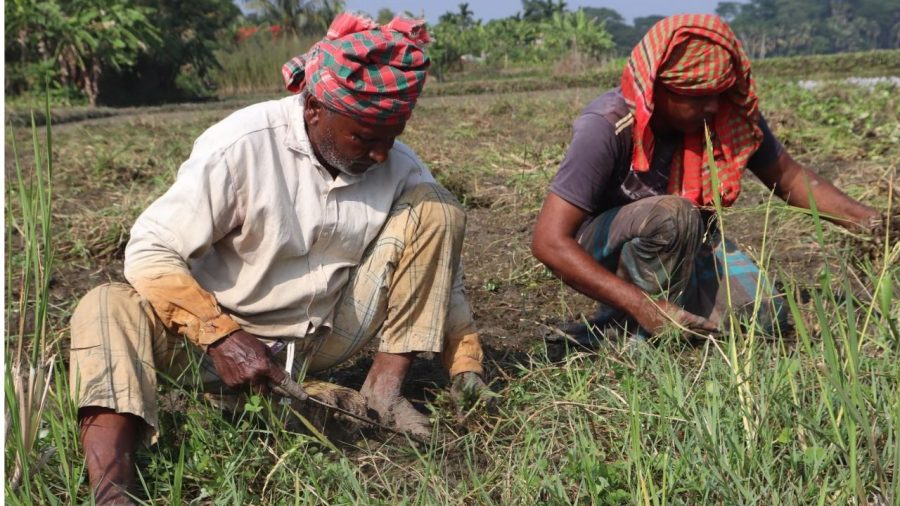



Farmers in Pirojpur’s Nazirpur upazila are planning to reduce Boro paddy cultivation this season after suffering losses last year, as low paddy prices, rising input costs and higher labour wages make farming increasingly unprofitable.
Several farmers say they failed to recover their production costs last season and fear further losses this year, particularly as fuel and pesticide prices have increased.
Shubhashis Mandal, a farmer from South Jhanjhania village in Nazirpur, spent around Tk36,000 cultivating and harvesting paddy on one bigha of land last year. Although the plot yielded approximately 35 to 40 maunds of paddy, he could not recover his investment because of low selling prices.
He said farmers received no more than Tk800–900 per maund (40kg) last season, leaving them with losses.
With fuel and pesticide prices rising, Shubhashis expects production costs to increase further this year. He is also worried about whether fertiliser will be available on time.

Another farmer from the same village, Jyotish Mandal, cultivated Boro paddy on eight bighas of land last year but has decided to reduce the area to five bighas this season.
Abdus Salam, who cultivated Boro on four and a half bighas last year, plans to reduce his cultivation by one and a half bighas.
“A shortage of labourers prevented me from harvesting all my paddy last year. I even left some standing in the fields because the harvesting cost would have exceeded the money I could earn from selling it,” Salam said.




Farmers say labour shortages and rising wages have added to their difficulties, with a farm labourer’s daily wage now reaching around Tk1,200.
Many farmers have also been unable to sell their previous season’s harvest at expected prices.
Khokon Sikder, another farmer from South Jhanjhania, said weak demand from wholesale buyers had made it difficult to sell paddy.
Farmers said they previously sold paddy for more than Tk1,100 per maund. Given current production costs, they now need to receive Tk1,300–1,400 per maund to make a profit. However, the highest price they received last year was Tk900 per maund.
The situation is particularly concerning in low-lying areas of Nazirpur and other parts of Pirojpur, where Boro is the only crop grown annually. These areas account for a substantial share of the district’s total paddy production.
Farmers have already begun preparing seedbeds, with transplantation of Boro seedlings expected to begin within the next month.

Nazirpur Upazila Agriculture Officer Esratunnesa Easha acknowledged that farmers did not receive their expected prices for paddy last season.
“We provide technical assistance to farmers, but low paddy prices may affect cultivation this year,” she said, adding that determining market prices was not the responsibility of the agriculture department.
According to Easha, Boro paddy was cultivated on 12,600 hectares in Nazirpur last year, while the target for the current season has been set at 12,500 hectares.
Despite farmers’ concerns, the district-wide cultivation target has increased marginally.
Data from the Pirojpur office of the Department of Agricultural Extension show that Boro paddy was cultivated on 34,005 hectares across the district last year. The cultivation target for the current season has been set at 34,020 hectares.